

Tuesday 25 February 2025
Physicists have long been fascinated by the mysteries of the universe, and one area that has garnered significant attention is the phenomenon of particle creation in curved spacetime. In a recent study, researchers have made significant strides in understanding this complex process, shedding new light on the behavior of particles in the presence of strong gravitational fields.
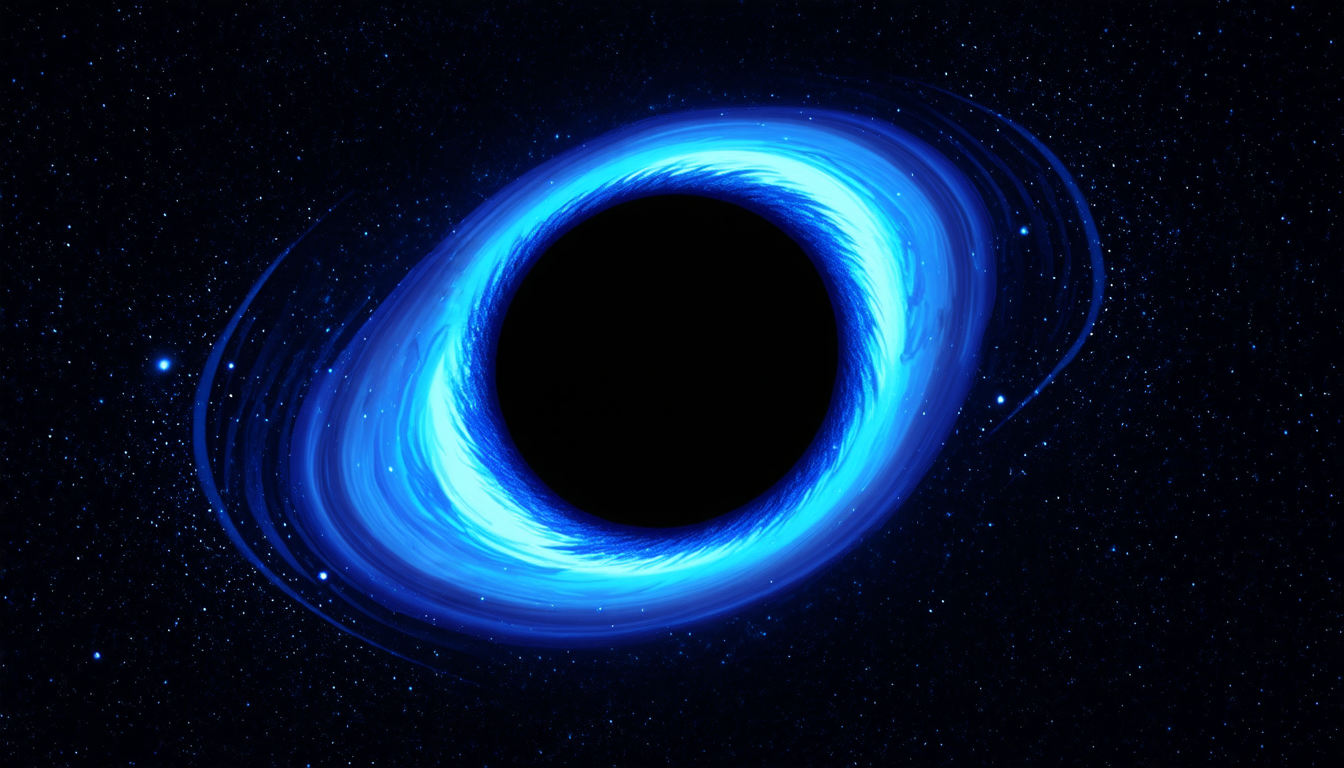
The concept of particle creation in curved spacetime was first proposed by physicist Stephen Hawking in the 1970s, as part of his groundbreaking work on black holes. According to Hawking’s theory, matter and energy can be created from nothing, a phenomenon known as quantum radiation or Hawking radiation. This process occurs when a black hole is surrounded by a cloud of particles, which are drawn towards the event horizon, only to be recreated into new particles.
While Hawking’s work provided valuable insights into this phenomenon, it was limited in scope and did not fully capture the complexities of particle creation in curved spacetime. In recent years, researchers have made significant advances in understanding this process, using a combination of theoretical models and experimental data to gain a deeper understanding of the underlying mechanisms.
One key area of research has focused on the role of conformal anomalies in particle creation. Conformal anomalies are mathematical constructs that arise from the interaction between gravity and matter, and they play a crucial role in shaping the behavior of particles in curved spacetime. By studying these anomalies, researchers have been able to gain new insights into the properties of particles created in strong gravitational fields.
Another area of research has focused on the use of non-local actions to describe particle creation. Non-local actions are mathematical constructs that capture the effects of quantum gravity at very small distances and high energies. By using these actions, researchers have been able to study the behavior of particles in curved spacetime with unprecedented precision, gaining valuable insights into the underlying mechanisms.
The results of these studies have significant implications for our understanding of the universe. For example, they provide new insights into the behavior of black holes, which are regions of spacetime where gravity is so strong that not even light can escape. They also shed new light on the origins of matter and energy, which were thought to be created in the early universe.
Furthermore, these studies have significant implications for our understanding of the fundamental laws of physics. By studying particle creation in curved spacetime, researchers are gaining a deeper understanding of the interplay between gravity, matter, and quantum mechanics, which is essential for developing a complete theory of quantum gravity.
Cite this article: “Unveiling the Mysteries of Particle Creation in Curved Spacetime”, The Science Archive, 2025.
Particle Creation, Curved Spacetime, Stephen Hawking, Black Holes, Quantum Radiation, Hawking Radiation, Conformal Anomalies, Non-Local Actions, Quantum Gravity, Fundamental Laws Of Physics.





