

Tuesday 25 February 2025
As technology continues to advance, our reliance on data and machine learning algorithms grows stronger. But what happens when this data is scattered across multiple devices and networks? Enter hierarchical federated learning (HFL), a new approach that enables machines to learn from each other without sharing their raw data.
In traditional machine learning, large datasets are gathered and processed centrally before being analyzed for insights. However, in HFL, devices and networks work together to learn from each other’s smaller, decentralized datasets. This not only reduces the amount of data that needs to be transferred but also preserves individual privacy by keeping sensitive information local.
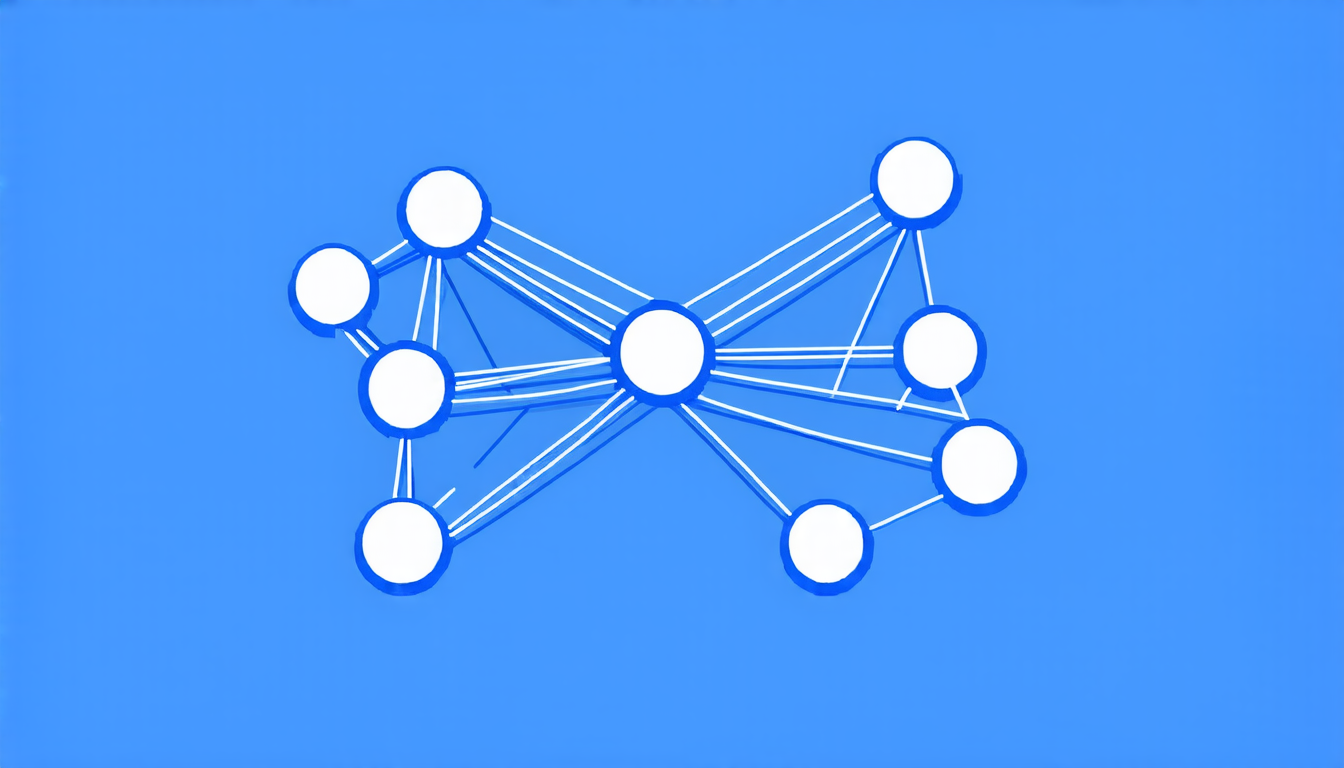
To achieve this, HFL uses a hierarchical structure where devices are grouped into clusters, and these clusters are aggregated at a higher level. This process is repeated until the final model is learned. The key innovation lies in how each device learns from its neighbors without sharing its own data. By doing so, HFL creates a decentralized learning system that’s not only more efficient but also more private.
One of the major challenges facing HFL is reconfiguring the network structure as devices join or leave the system. This requires a dynamic orchestration framework that can adapt to changing conditions while minimizing communication costs and preserving model accuracy. To address this, researchers have developed a novel reconfiguration validation algorithm (RVA) that predicts the impact of changes on the overall system.
The RVA works by monitoring the performance of each device in real-time and predicting how new configurations will affect the system as a whole. If a change is expected to degrade model performance or exceed communication budgets, the RVA can revert back to the original configuration. This approach ensures that the system adapts to changing conditions while maintaining optimal performance.
To evaluate the effectiveness of HFL and RVA, researchers conducted experiments on a realistic cluster of devices using the Kubernetes ecosystem. The results showed that HFL was able to achieve significant improvements in model accuracy within limited communication budgets. Moreover, the RVA proved effective in detecting events that would degrade model performance and adapting to changing conditions.
The potential applications of HFL are vast and varied. In healthcare, for example, it could enable decentralized learning systems that can analyze medical data from multiple devices without compromising patient privacy. In finance, HFL could facilitate secure transactions by allowing banks to learn from each other’s transaction patterns without sharing sensitive information.
As our reliance on machine learning continues to grow, the need for efficient and private learning systems becomes increasingly urgent.
Cite this article: “Hierarchical Federated Learning: A Decentralized Approach to Efficient and Private Machine Learning”, The Science Archive, 2025.
Hierarchical Federated Learning, Machine Learning, Decentralized Learning, Data Privacy, Network Structure, Reconfiguration Validation Algorithm, Real-Time Monitoring, Model Accuracy, Communication Budgets, Kubernetes Ecosystem.





