

Tuesday 25 February 2025
Computer Vision has long been a crucial component of artificial intelligence, allowing machines to understand and interpret visual data like images and videos. But despite significant advances in recent years, reconstructing complex indoor scenes remains a challenging task.
Reconstructing these scenes requires not only accurately identifying individual objects but also understanding their spatial relationships and the overall structure of the environment. This is particularly difficult when dealing with textureless regions, where traditional methods struggle to provide accurate depth information.
In a new paper, researchers propose a novel approach called 2DGS- Room that tackles this problem by combining seed-guided 2D Gaussian splatting with geometric constraints. The method starts by generating a sparse point cloud from a set of RGB images and then uses a seed points guidance strategy to control the distribution of 2D Gaussians, which are used to refine the depth map.
The researchers also incorporate monocular depth and normal priors to provide additional constraints for details and textureless regions respectively. Additionally, multi-view consistency constraints are employed to mitigate artifacts and further enhance reconstruction quality.
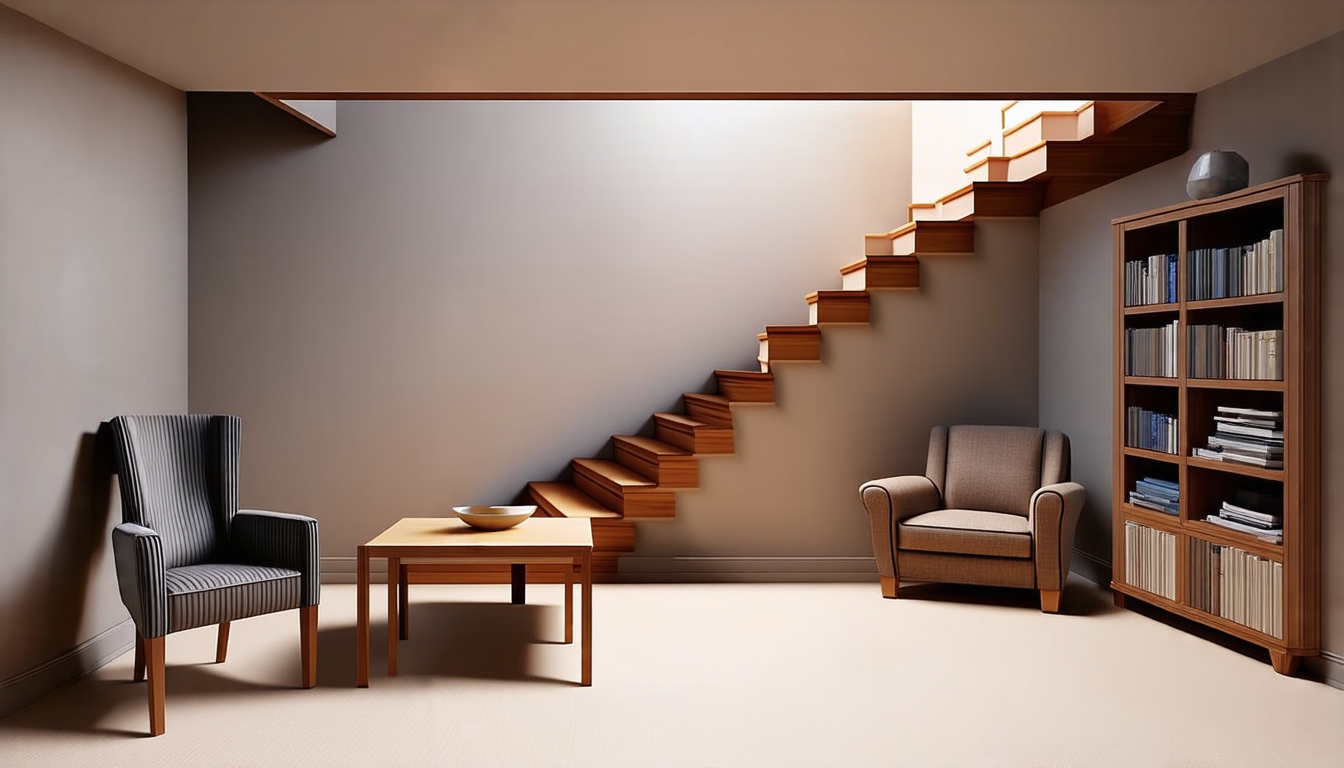
The results are impressive, with 2DGS-Room achieving state-of-the-art performance in indoor scene reconstruction. The method is able to accurately capture complex structures, such as staircases and corridors, while also preserving fine-grained details like furniture and decorations.
One of the key advantages of 2DGS-Room is its ability to handle textureless regions, where traditional methods often struggle. By incorporating geometric constraints and normal priors, the method is able to provide accurate depth information even in areas with limited visual cues.
The researchers also demonstrate the effectiveness of their method by rendering high-quality RGB images from the reconstructed scenes, showcasing the potential for applications like virtual reality and augmented reality.
Overall, 2DGS-Room represents a significant step forward in computer vision research, offering a powerful tool for reconstructing complex indoor scenes. Its ability to accurately capture spatial relationships and handle textureless regions makes it an attractive solution for a range of applications, from robotics and autonomous vehicles to architecture and urban planning.
Cite this article: “Reconstructing Complex Indoor Scenes with 2DGS-Room: A Novel Approach in Computer Vision”, The Science Archive, 2025.
Computer Vision, Artificial Intelligence, Indoor Scene Reconstruction, 2D Gaussian Splattering, Seed-Guided, Geometric Constraints, Monocular Depth Priors, Normal Priors, Multi-View Consistency, Textureless Regions.





