

Wednesday 26 February 2025
Artificial Intelligence has made tremendous progress in recent years, and one of the most exciting developments is the ability to generate realistic images and videos. This technology has been used in a wide range of applications, from creating photorealistic graphics for movies and video games to generating fake news footage.
But what about 3D objects? For a long time, it was difficult and expensive to create realistic 3D models of objects, which limited the use of computer-generated imagery (CGI) in fields such as architecture, product design, and filmmaking. However, with the advent of artificial intelligence, this is no longer the case.
Researchers have developed algorithms that can take a simple 2D image or even just a text description of an object, and generate a highly detailed and realistic 3D model. This technology has the potential to revolutionize many industries, from product design and manufacturing to architecture and filmmaking.
One of the key challenges in generating 3D models is ensuring that they are not only visually accurate but also geometrically correct. This means that the object’s shape, size, and proportions must be precise, as well as its texture and material properties. AI algorithms can analyze a vast amount of data, including images and 3D scans, to learn the patterns and relationships between different objects and their features.
For example, an algorithm might look at hundreds of images of cars and learn how the shape of the car’s body changes when viewed from different angles. It could then use this knowledge to generate a highly detailed 3D model that accurately captures the car’s curves and contours.
Another challenge is ensuring that the generated 3D models are not only realistic but also consistent across different views and lighting conditions. AI algorithms can solve this problem by generating multiple views of the object from different angles and lighting conditions, and then combining these views into a single, cohesive model.
The potential applications of this technology are vast and varied. In product design, for example, AI-generated 3D models could be used to create highly detailed prototypes quickly and efficiently, without the need for expensive and time-consuming physical prototyping. In filmmaking, CGI artists could use AI-generated models to create realistic characters, environments, and objects that blend seamlessly with live-action footage.
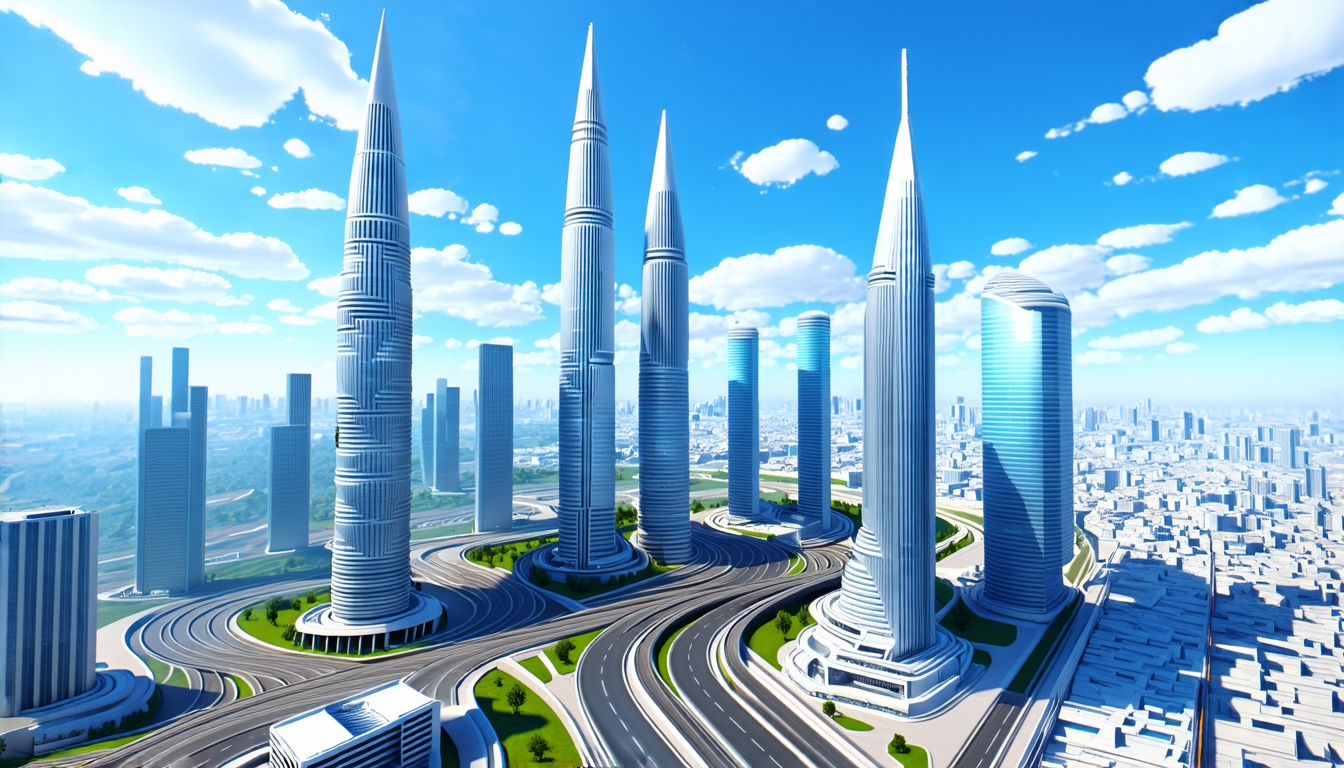
In architecture, AI-generated 3D models could be used to create photorealistic renderings of buildings and cities, allowing architects and urban planners to visualize and test their designs in a highly realistic way.
Cite this article: “AI-Powered 3D Modeling: Revolutionizing Industries with Photorealistic Accuracy”, The Science Archive, 2025.
Artificial Intelligence, Computer-Generated Imagery, 3D Models, Object Recognition, Text-To-Image Generation, Photorealism, Geometric Accuracy, Material Properties, Product Design, Architecture





