

Wednesday 26 February 2025
A team of researchers has developed a new method for automatically identifying the edges of galaxies, allowing them to study these distant objects in unprecedented detail.
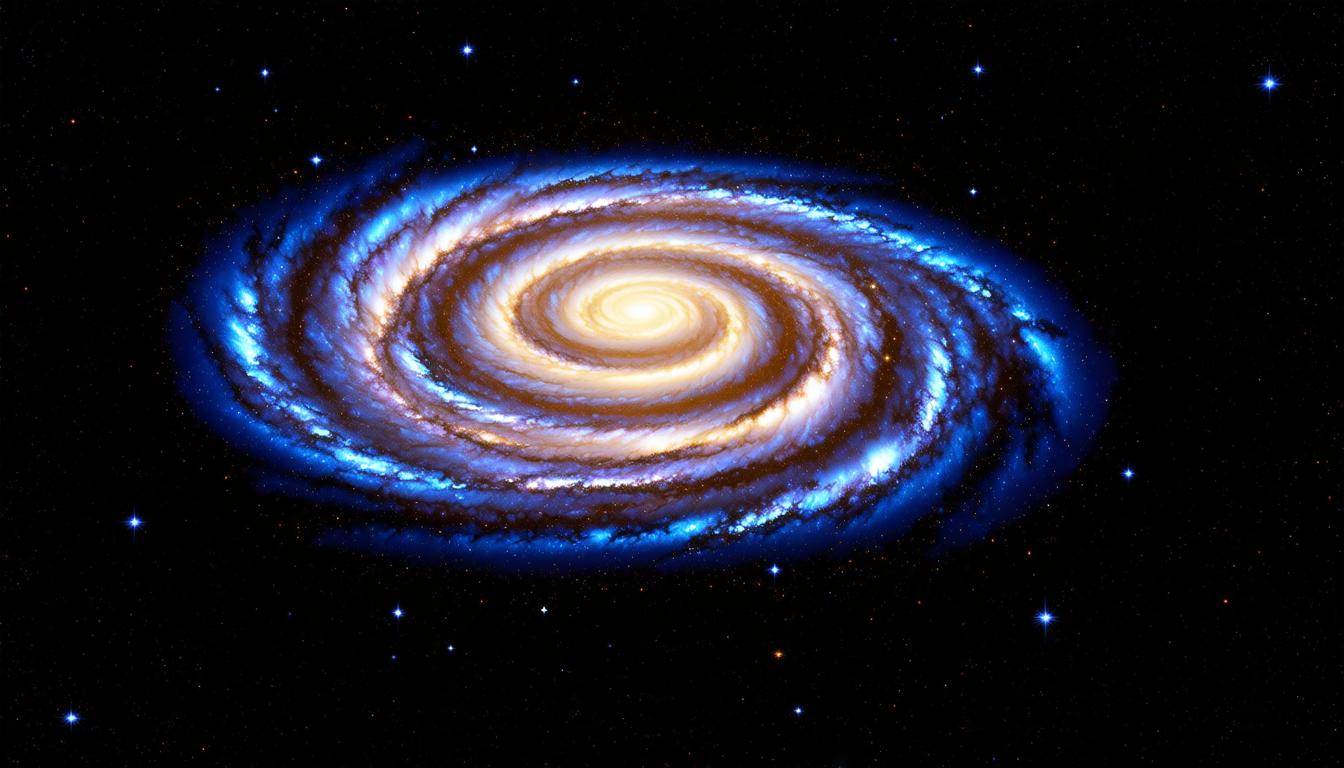
Galaxies are vast and complex systems, made up of billions of stars, gas, and dust. To understand how they form and evolve over time, astronomers need to be able to accurately measure their sizes and shapes. However, this can be a difficult task, especially for galaxies that are far away or have irregular morphologies.
The new method, developed by researchers at the University of Valladolid in Spain, uses artificial intelligence (AI) to analyze images of galaxies taken by space telescopes such as the Hubble Space Telescope and the upcoming Euclid mission. The AI algorithm, called Segment Anything Model (SAM), is able to identify the edges of galaxies with high accuracy, even when they are distorted or contaminated by other objects.
The researchers tested SAM on a large dataset of galaxy images, and found that it was able to accurately identify the edges of galaxies in over 90% of cases. This is significantly better than previous methods, which relied on manual analysis by human astronomers.
One of the key advantages of SAM is its ability to handle complex galaxy morphologies, such as those with multiple spiral arms or irregular shapes. This makes it particularly useful for studying galaxies that are distant or have unusual properties.
The researchers believe that SAM has the potential to revolutionize our understanding of galaxies and their role in the universe. By allowing astronomers to study galaxies with unprecedented detail, SAM could help us better understand how they form and evolve over time, and what role they play in shaping the structure of the universe.
In addition to its scientific applications, SAM also has practical implications for astronomers. For example, it could be used to quickly and accurately identify galaxies that are suitable for follow-up observations with other telescopes, such as the James Webb Space Telescope.
Overall, the development of SAM is an important step forward in our understanding of galaxies and the universe. Its ability to accurately identify galaxy edges using AI has the potential to transform the field of astronomy, and could lead to new insights into the nature of the cosmos.
Cite this article: “AI-Powered Method Revolutionizes Galaxy Edge Identification”, The Science Archive, 2025.
Galaxies, Artificial Intelligence, Edge Detection, Astronomy, Space Telescopes, Galaxy Morphologies, Euclid Mission, Hubble Space Telescope, James Webb Space Telescope, Machine Learning





