
Saturday 22 February 2025
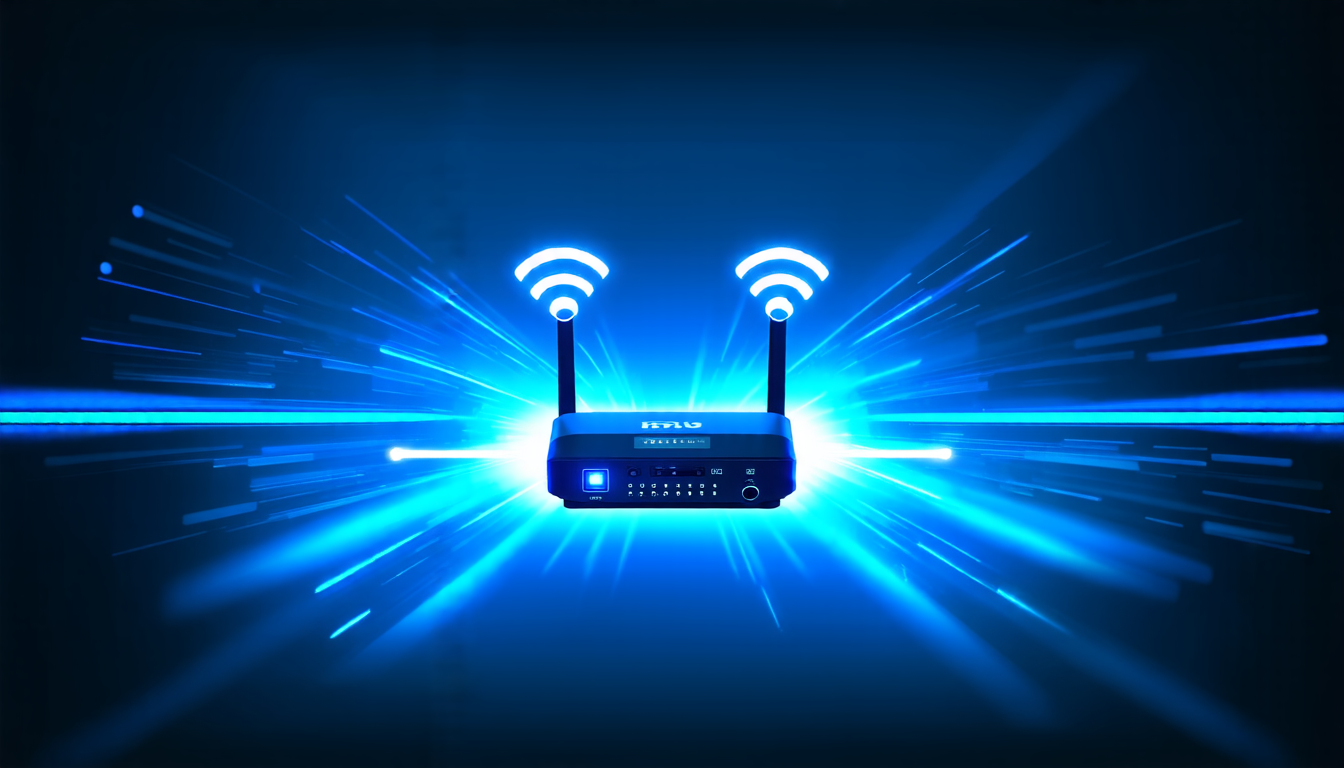
A team of researchers has developed a new approach to designing wireless communication systems that can transmit and receive data at the same time, without interference. This technology, known as full-duplex, has long been considered the holy grail of wireless communication, but it’s been difficult to achieve due to the challenges of suppressing self-interference.
In traditional wireless communication systems, devices can only transmit or receive data at a given time, not both simultaneously. This is because when a device transmits a signal, it also creates interference that can disrupt its own ability to receive signals. To get around this problem, devices use techniques like frequency division duplexing (FDD) and time division duplexing (TDD), which separate transmission and reception into different time slots or frequency bands.
But these approaches have limitations. FDD, for example, requires a dedicated frequency band for uplink and downlink data, while TDD can be affected by changes in the delay spread of the channel.
The researchers’ approach uses artificial intelligence (AI) to learn how to design transmit and receive beams that minimize self-interference. The AI system is trained on a dataset of measurement noise and the structure of the self-interference channel, which is modeled as a Rician fading channel.
To test their approach, the researchers simulated a full-duplex wireless system with two 8-element antenna arrays spaced apart by 10 wavelengths. They found that their approach was able to suppress self-interference to below the noise floor and achieve sum spectral efficiencies that approached the full-duplex capacity.
The researchers also explored the impact of the structure of the self-interference channel on performance. They found that a more deterministic, spherical-wave self-interference channel resulted in better performance, while a more random, Gaussian channel led to poorer results.
The implications of this research are significant. Full-duplex wireless communication systems could enable new applications like simultaneous transmission and reception of data, voice, and video signals, which would greatly improve the user experience. Additionally, full-duplex systems could be used in scenarios where devices need to transmit and receive data at the same time, such as in IoT sensor networks or vehicular communication systems.
While there are still many challenges to overcome before full-duplex wireless communication systems become a reality, this research represents an important step forward. By leveraging AI to design optimal transmit and receive beams, researchers may be able to develop practical solutions for suppressing self-interference and achieving efficient full-duplex operation.
Cite this article: “AI-Powered Full-Duplex Wireless Communication Systems: A Step Towards Seamless Data Transmission and Reception”, The Science Archive, 2025.
Wireless Communication, Full-Duplex, Artificial Intelligence, Self-Interference, Rician Fading Channel, Antenna Arrays, Simulation, Sum Spectral Efficiency, Iot Sensor Networks, Vehicular Communication Systems.
Reference: Jeong Min Kong, Ian P. Roberts, “Active Beam Learning for Full-Duplex Wireless Systems” (2024).