

Sunday 23 February 2025
A team of researchers has made significant progress in understanding how artificial intelligence (AI) can be used to analyze complex networks, such as social media and biological systems.
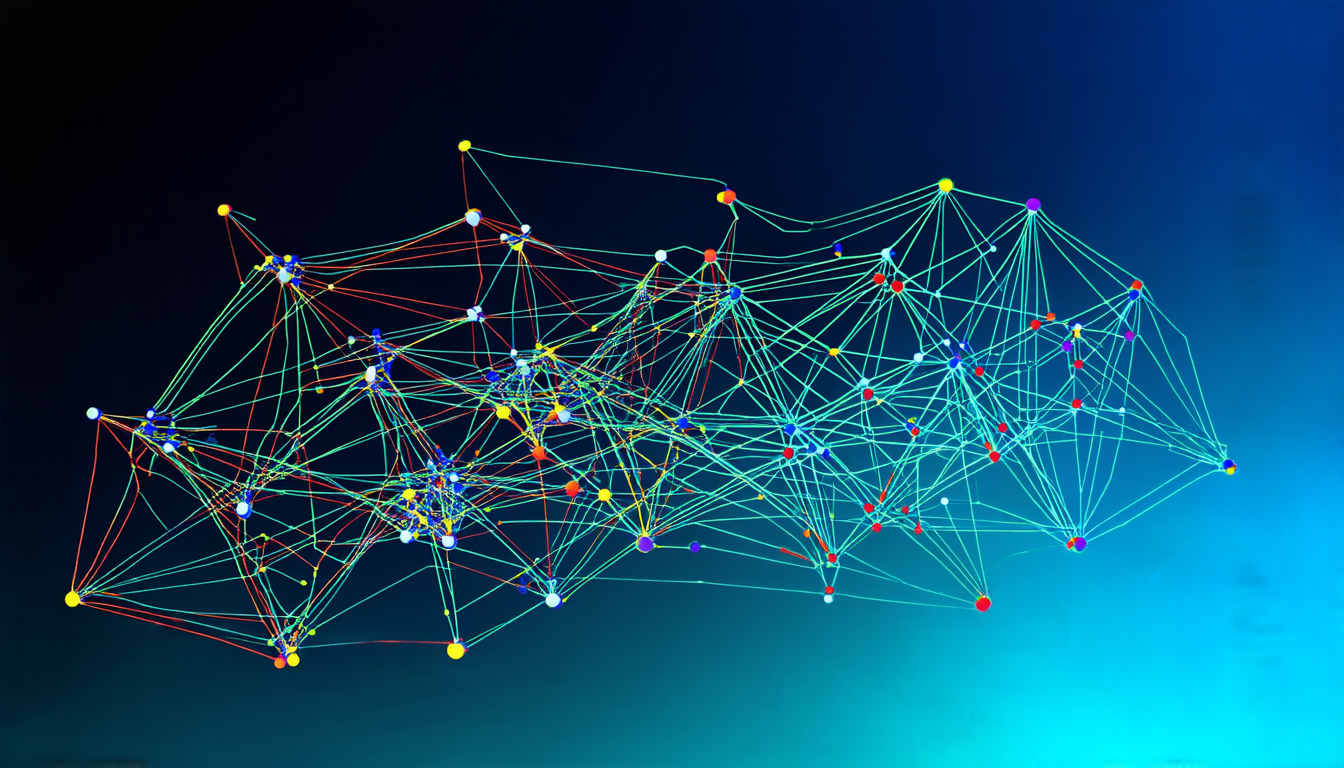
The study, published in a recent issue of Nature Communications, focused on developing new methods for analyzing graph neural networks (GNNs), which are AI models designed to process and learn from data represented as graphs. These graphs typically consist of nodes connected by edges, and can be used to represent complex relationships between entities such as people, proteins, or social media users.
One of the key challenges in developing GNNs is understanding how they propagate information through a graph. In other words, how do nodes communicate with each other and update their representations based on the information received from their neighbors?
The researchers developed a new theoretical framework that provides a deeper understanding of this process. They found that the way information propagates through a graph depends not only on the structure of the graph itself, but also on the temporal dynamics of node interactions.
In particular, they discovered that nodes that are part of a community or cluster within the graph tend to update their representations more quickly than nodes that are isolated or disconnected from these communities. This is because information tends to spread more easily within communities, allowing nodes to learn from each other and adapt to changes in the network.
The researchers also developed new methods for training GNNs using this understanding of temporal dynamics. They found that by incorporating these dynamics into the training process, they could improve the performance of their models on a range of tasks, including node classification and link prediction.
One potential application of these techniques is in the analysis of complex biological networks, such as those found in cells or social networks. By using GNNs to analyze these networks, researchers may be able to gain new insights into how they function and evolve over time.
The study also has implications for the development of AI models that can learn from dynamic data streams, such as those generated by sensors or social media platforms. By incorporating temporal dynamics into their training process, these models may be able to better adapt to changing conditions and make more accurate predictions about future events.
Overall, this research represents an important step forward in our understanding of how GNNs can be used to analyze complex networks. The development of new methods for incorporating temporal dynamics into GNN training is likely to have significant implications for a range of fields, from biology and social network analysis to AI and machine learning.
Cite this article: “Unlocking Temporal Dynamics in Graph Neural Networks”, The Science Archive, 2025.
Artificial Intelligence, Graph Neural Networks, Complex Networks, Social Media, Biology, Temporal Dynamics, Node Interactions, Community Detection, Link Prediction, Machine Learning.





