

Sunday 23 February 2025
Artificially intelligent agents are becoming increasingly adept at navigating complex systems, but a major challenge remains: ensuring they can generalize their skills to new and unfamiliar environments.
Reinforcement learning, a type of AI training, involves an agent interacting with its surroundings to learn how to achieve a specific goal. However, this approach often relies on large amounts of data collected in a controlled environment, which can limit the agent’s ability to adapt to real-world scenarios.
Now, researchers have developed a novel framework that tackles this problem by combining two key techniques: domain randomization and meta-reinforcement learning. The result is an AI agent capable of learning generalizable policies that can be applied across various settings.
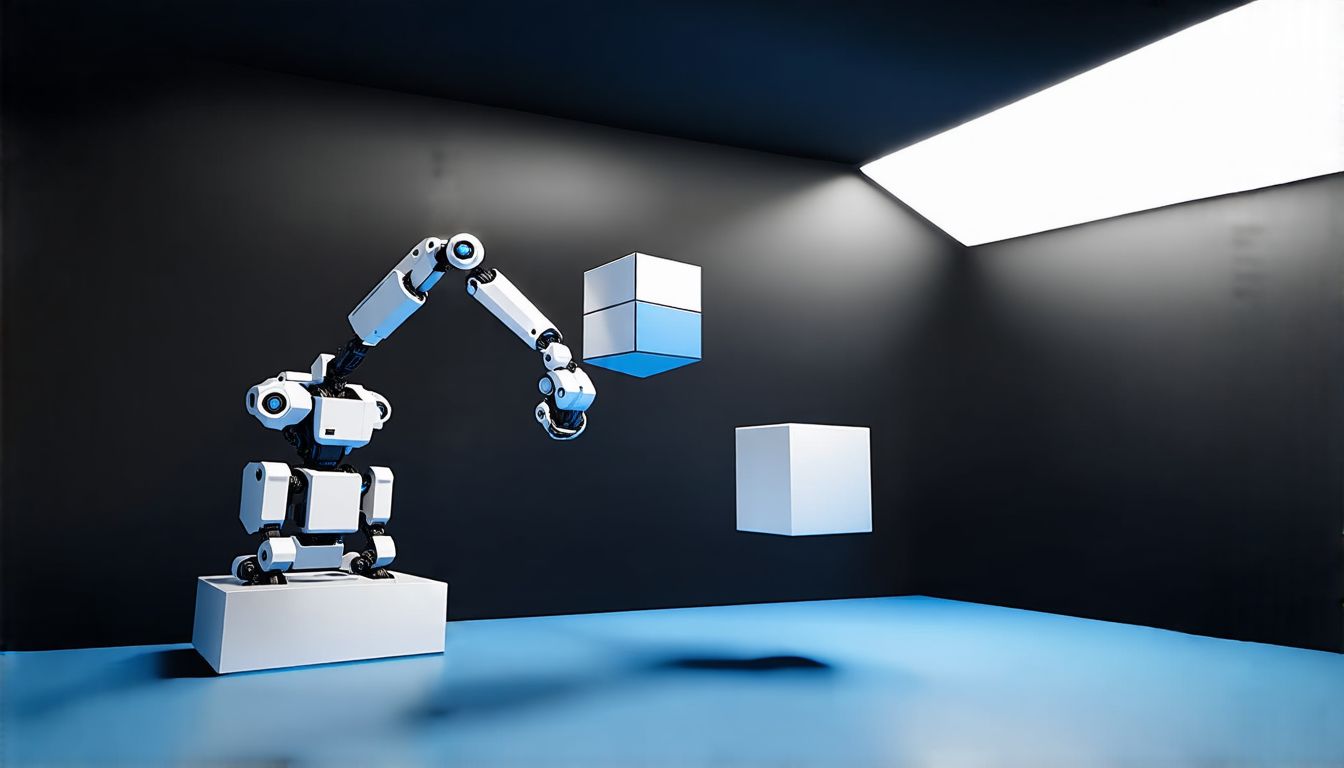
The first technique, domain randomization, involves introducing random variations into the training environment to simulate real-world uncertainties. This approach helps the agent develop robustness by forcing it to adapt to changing conditions. For instance, a robotic arm might need to grasp objects in different positions and orientations to learn effective grasping strategies.
Meta-reinforcement learning takes this a step further by using the domain randomization data to train a higher-level policy that can generalize across multiple environments. In other words, the agent learns how to learn from its experiences in various domains, rather than just being trained on a single environment.
The researchers tested their framework on a simulated robotic arm and found that it was able to adapt quickly to new scenarios, such as grasping objects with different shapes or textures. The AI agent’s performance improved significantly when compared to traditional reinforcement learning approaches, which rely solely on data collected in a controlled environment.
This breakthrough has significant implications for the development of autonomous systems, such as self-driving cars and drones, which must be able to generalize their skills across various environments and conditions. By leveraging domain randomization and meta-reinforcement learning, researchers can create more robust and adaptable AI agents that are better equipped to handle real-world complexities.
The potential applications of this technology extend beyond robotics and autonomous systems, as well. For instance, medical diagnosis AI models could benefit from generalizable policies that can adapt to new patient data or imaging techniques.
As the field of artificial intelligence continues to evolve, researchers will need to focus on developing more sophisticated and adaptable AI agents that can generalize their skills across various settings. The combination of domain randomization and meta-reinforcement learning offers a promising solution to this challenge, paving the way for more effective and resilient AI systems in the future.
Cite this article: “Generalizable AI Agents: A Breakthrough in Robotics and Beyond”, The Science Archive, 2025.
Artificial Intelligence, Reinforcement Learning, Domain Randomization, Meta-Reinforcement Learning, Robotics, Autonomous Systems, Self-Driving Cars, Drones, Medical Diagnosis, Generalizability





