

Sunday 23 February 2025
The autonomous vehicles of tomorrow won’t just be able to navigate roads without human intervention – they’ll also be able to communicate with each other and traffic infrastructure in real-time, allowing for smoother and safer travel.
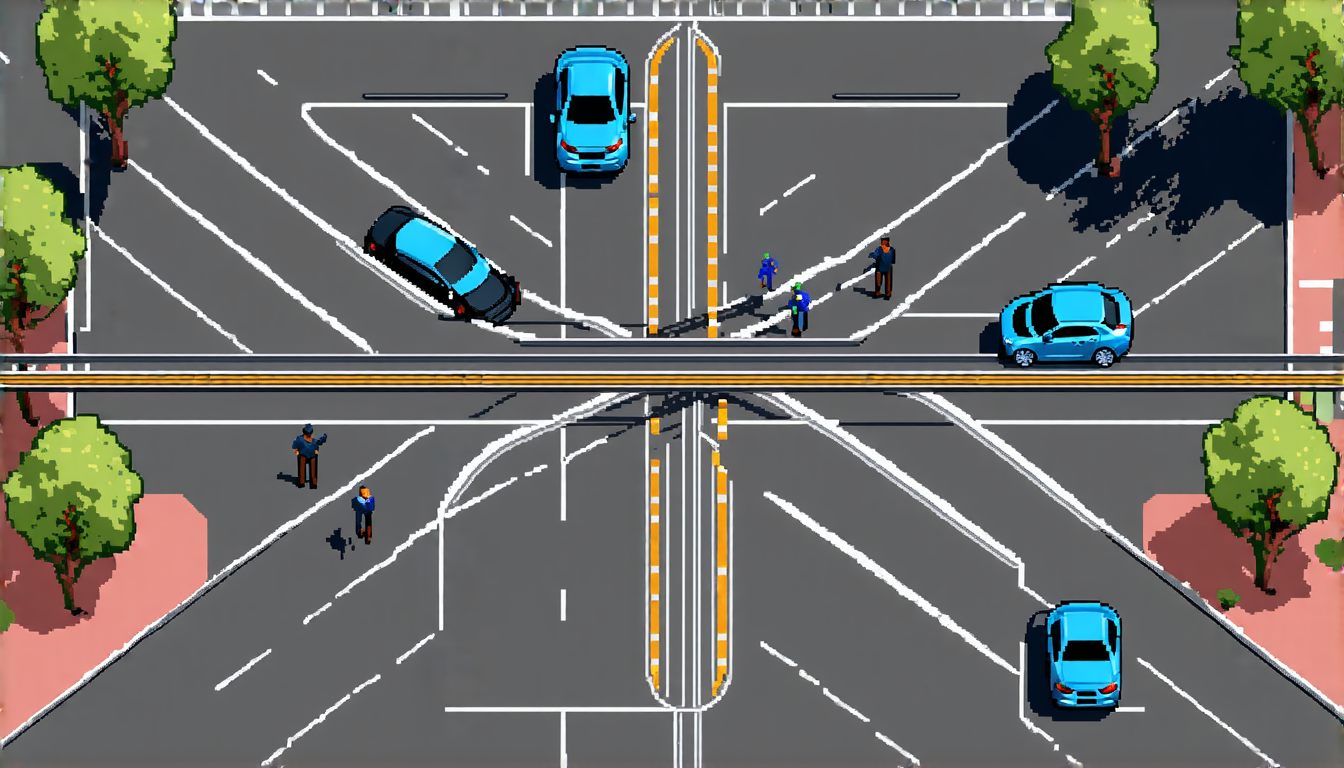
One of the biggest challenges facing the development of self-driving cars is how to handle complex intersections, where multiple lanes and directions of traffic converge. It’s a problem that has stumped engineers for years, but a new paper proposes a solution that relies on coordinated control between vehicles and infrastructure.
The key idea is to treat intersections like a shared resource, where all parties – including humans and autonomous cars – work together to optimize traffic flow. This requires advanced sensors and communication systems, as well as sophisticated algorithms that can quickly analyze data from multiple sources and make decisions in real-time.
In the paper, researchers describe a novel approach to coordinating vehicle movements at unsignalized intersections, where there are no traditional traffic lights or stop signs. The system uses a combination of camera and lidar sensors to detect vehicles approaching the intersection, as well as their speed and direction. This information is then shared with other vehicles and the infrastructure, allowing everyone to adjust their movements accordingly.
For example, if a human driver approaches an unsignalized intersection too quickly, the system can alert them to slow down or stop through a dashboard display. Meanwhile, autonomous cars can be programmed to automatically adjust their speed and trajectory to avoid conflicts and ensure smooth traffic flow.
The benefits of this approach are numerous. For one, it can significantly reduce congestion and wait times at intersections, which is especially important for cities where traffic is already a major problem. Additionally, the system can help prevent accidents by reducing the risk of human error – whether that’s from speeding, distracted driving, or simply not paying attention to traffic signs.
Of course, there are still many technical hurdles to overcome before this kind of system can be implemented in real-world traffic. But the potential payoff is huge, and researchers are optimistic about the possibilities for improving safety, efficiency, and sustainability in our transportation systems.
As autonomous vehicles become more common on roads, we’ll need innovative solutions like these to ensure they’re able to interact safely and efficiently with human drivers. And who knows – maybe one day, our daily commutes will be smoother, safer, and even enjoyable thanks to the wonders of coordinated control and smart infrastructure.
Cite this article: “Coordinated Control: The Future of Autonomous Vehicle Intersections”, The Science Archive, 2025.
Autonomous Vehicles, Self-Driving Cars, Traffic Flow, Intersections, Sensors, Communication Systems, Algorithms, Real-Time Data, Infrastructure, Smart Traffic Management





