

Sunday 23 February 2025
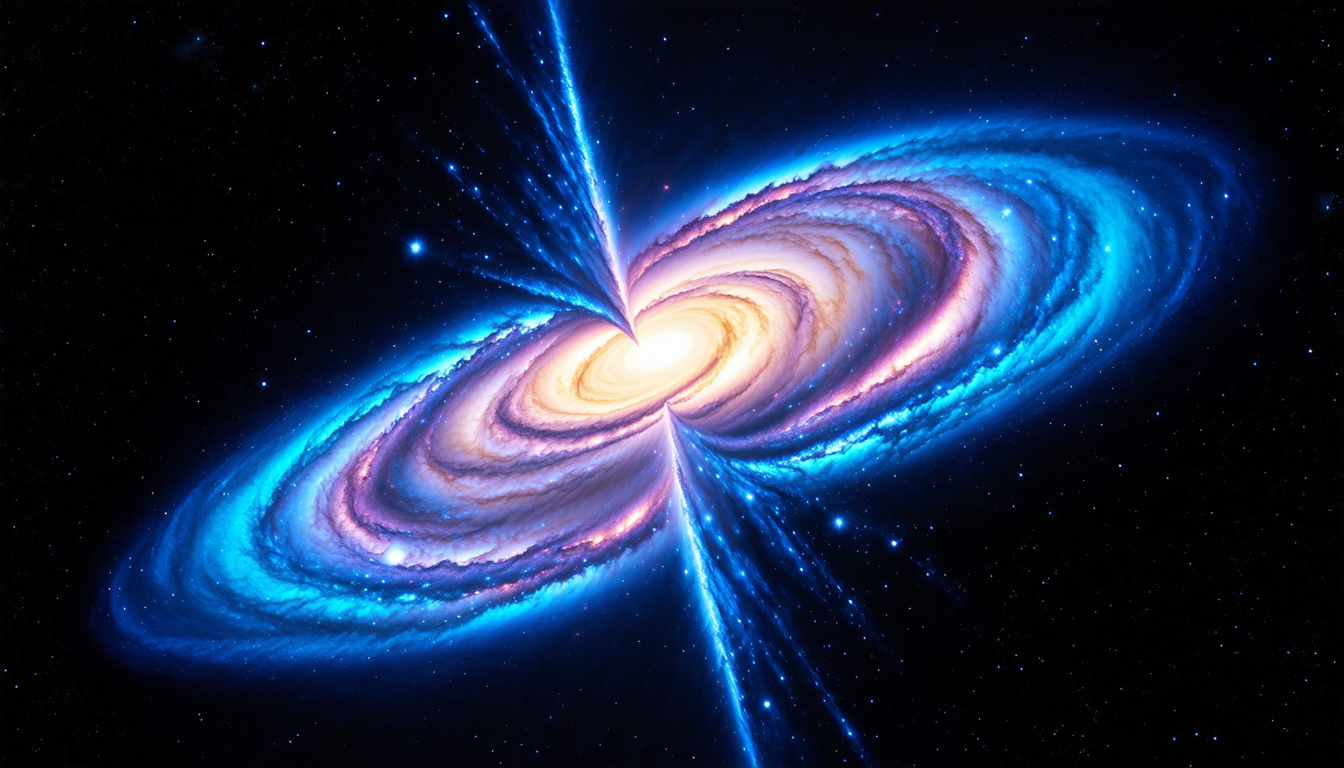
The earliest galaxies in the universe, thought to be the building blocks of stars and planets, have been found to leak radiation in unexpected ways. A new study suggests that mergers between these ancient galaxies can boost the escape of ionizing radiation, making it easier for light to travel through the surrounding gas.
Galaxies at high redshifts, around 5 billion years ago, are thought to be the precursors to modern galaxies like our own Milky Way. They are typically small and irregularly shaped, with chaotic star formation rates. The latest research, published in Astronomy & Astrophysics, used a sophisticated computer simulation to investigate how these early galaxies interacted and merged.
The study found that when two of these high-redshift galaxies collide, it can trigger an increase in the production of ionizing radiation, which is light with enough energy to strip electrons from atoms. This radiation is essential for reionizing the universe, a process where neutral gas becomes ionized as stars form.
The simulation revealed that mergers can inject new fuel into the central regions of galaxies, boosting star formation rates and increasing the production of ionizing radiation. At the same time, the merger itself can disrupt the gas within the galaxy, creating channels for radiation to escape more easily.
The research suggests that these early galaxies may have been more effective at producing ionizing radiation than previously thought, thanks to their frequent mergers. This could have played a crucial role in reionizing the universe, allowing light to travel further and making it possible for us to see distant objects today.
The study also sheds light on how our own galaxy may have evolved over billions of years. By understanding the processes that occurred in high-redshift galaxies, scientists can gain insights into the formation and evolution of modern galaxies like our own Milky Way.
While the research provides a new perspective on the early universe, it also highlights the complexity of these ancient galaxies. The simulation used to study the mergers is just one of many tools that scientists use to understand the behavior of high-redshift galaxies, and further research is needed to confirm the findings.
Ultimately, this study offers a glimpse into the dynamic and turbulent history of the earliest galaxies in the universe. By studying their interactions and mergers, scientists can unravel the mysteries of reionization and gain a deeper understanding of how our own galaxy came to be.
Cite this article: “Mergers in Ancient Galaxies Boost Ionizing Radiation”, The Science Archive, 2025.
Galaxies, Radiation, Mergers, Star Formation, Ionizing, Reionization, Universe, Simulation, Evolution, Milky Way





