

Sunday 23 February 2025
The dynamics of active matter, a class of materials that includes living cells and self-propelled particles, have long fascinated scientists. These systems exhibit complex behavior, including phase separation, where different phases or states coexist within the same material. A recent study has shed new light on this phenomenon, providing insights into the underlying mechanisms and offering potential applications in fields such as biotechnology and materials science.
The researchers focused on a specific type of active matter, known as motility-induced phase separation (MIPS), which occurs when self-propelled particles interact with each other. In MIPS, the particles tend to cluster together, forming distinct phases or states. This process is crucial for understanding various biological systems, including bacterial colonies and epithelial tissues.
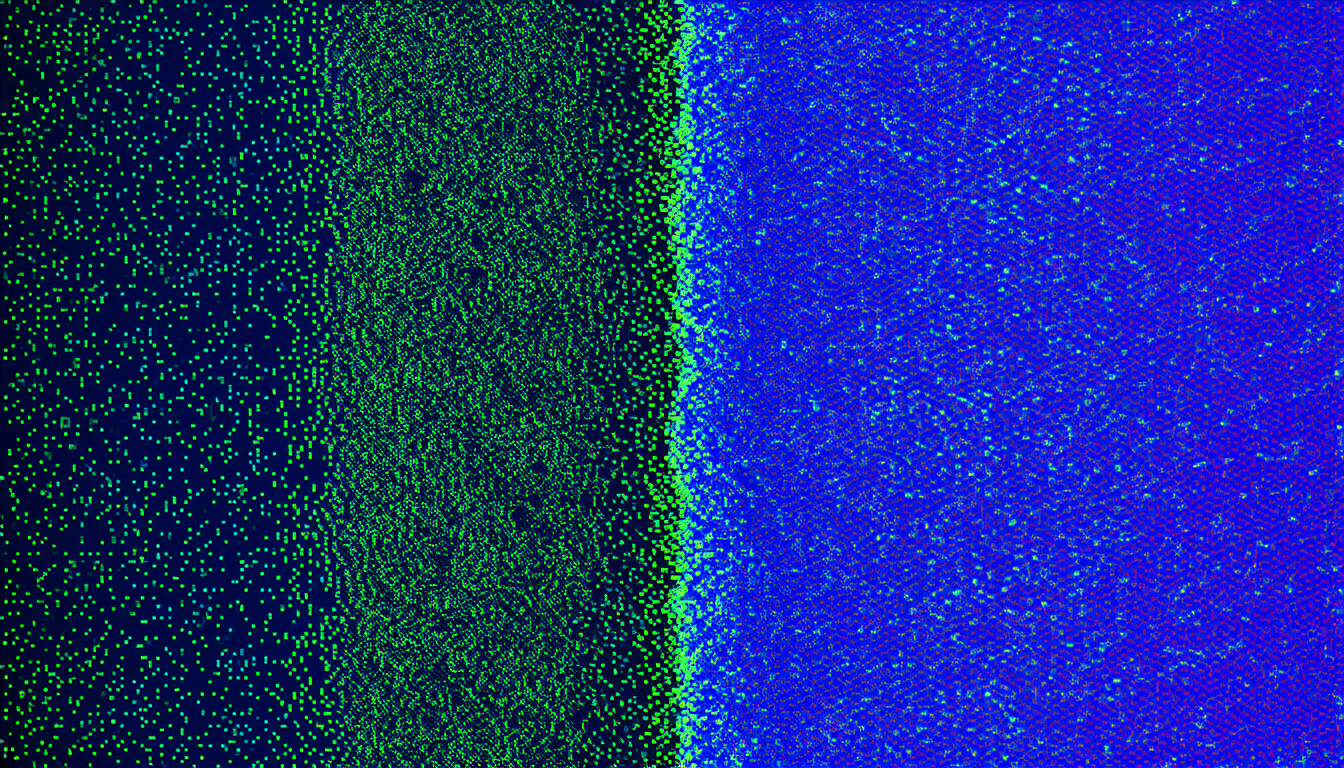
The study used a combination of theoretical models and computer simulations to investigate the dynamics of MIPS. The researchers found that the interface between the two phases exhibits unusual behavior, characterized by fluctuations and capillary waves. These fluctuations play a key role in determining the properties of the system, including the density and composition of each phase.
One of the most significant findings is the presence of an effective surface tension at the interface. This tension arises from the interactions between particles on either side of the interface and affects the shape and stability of the boundary between the two phases. The researchers discovered that this surface tension can be manipulated by adjusting the properties of the system, such as the strength of particle interactions or the size of the particles themselves.
The study also explored the role of density fluctuations in MIPS. These fluctuations are essential for understanding the behavior of the system and can have significant effects on the stability of the phases. The researchers found that the density fluctuations exhibit a non-Gaussian distribution, which is characteristic of active matter systems. This finding has important implications for our understanding of the dynamics of MIPS and its potential applications.
The results of this study have far-reaching implications for various fields, including biotechnology and materials science. For example, they could be used to develop new strategies for controlling the behavior of biological systems or designing novel materials with tailored properties. Additionally, the research provides a deeper understanding of the fundamental mechanisms underlying MIPS, which is essential for advancing our knowledge of active matter systems.
In summary, this study has made significant progress in understanding the dynamics of motility-induced phase separation. The findings provide new insights into the behavior of active matter systems and offer potential applications in fields such as biotechnology and materials science.
Cite this article: “Unveiling the Dynamics of Motility-Induced Phase Separation”, The Science Archive, 2025.
Active Matter, Motility-Induced Phase Separation, Mips, Self-Propelled Particles, Phase Separation, Biological Systems, Biotechnology, Materials Science, Surface Tension, Density Fluctuations





