

Sunday 23 February 2025
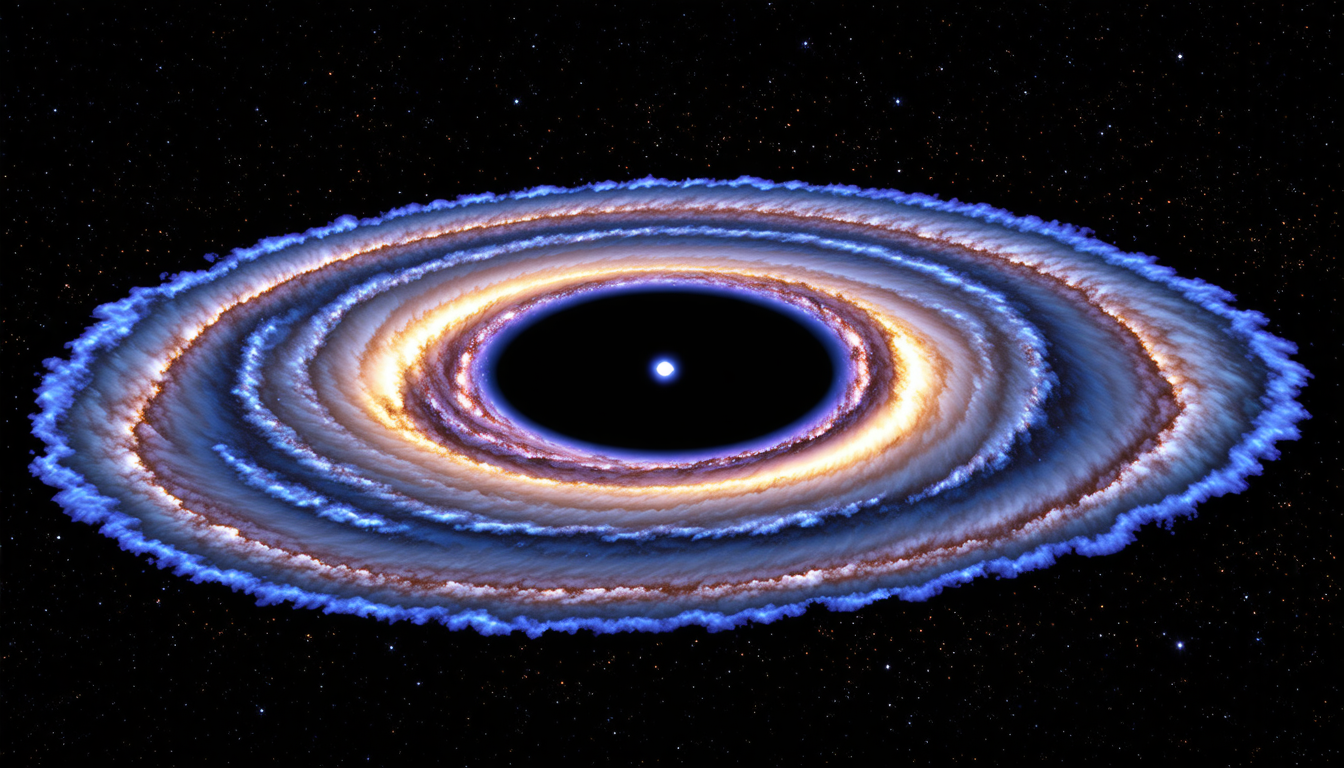
A new study has shed light on the mysterious relationship between supermassive black holes and the quenching of star formation in galaxies. For decades, astronomers have been puzzled by the fact that many galaxies seem to shut off their ability to form new stars once they reach a certain size and mass. The reason for this sudden halt is still unclear, but researchers believe it may be linked to the presence of supermassive black holes at the centers of these galaxies.
The study in question used advanced computer simulations to model the behavior of black holes and their impact on galaxy evolution. By adjusting various parameters in the simulations, such as the mass of the black hole and the rate at which stars form in the galaxy, researchers were able to explore different scenarios for how quenching occurs.
One key finding was that the spread in the masses of supermassive black holes within a given galaxy has a significant impact on the slope of the quenched stellar mass function (QCSMF). The QCSMF is a statistical measure of the number of galaxies that have stopped forming new stars as a function of their mass. A steeper slope indicates that more massive galaxies are more likely to be quenched, while a shallower slope suggests that smaller galaxies may also experience quenching.
The simulations revealed that when there is a large spread in black hole masses, the QCSMF tends to have a shallower slope. This means that even smaller galaxies may be able to host supermassive black holes and, as a result, stop forming new stars. On the other hand, if black hole masses are tightly clustered around a specific value, the QCSMF will tend to have a steeper slope, indicating that only more massive galaxies are likely to experience quenching.
The implications of these findings are significant for our understanding of galaxy evolution and the role of supermassive black holes in shaping the universe. By better understanding how black hole masses impact the QCSMF, researchers may be able to gain insights into the mechanisms driving quenching and ultimately develop more accurate models of galaxy formation.
In addition to its implications for galaxy evolution, this study also highlights the importance of considering the spread in black hole masses when modeling galaxy populations. Previous studies have often focused on the average properties of black holes within a given galaxy, neglecting the potential impact of variations in black hole mass on galaxy behavior.
Cite this article: “Black Hole Mass Variations Influence Galaxy Quenching”, The Science Archive, 2025.
Supermassive Black Holes, Galaxy Evolution, Star Formation, Quenching, Quenched Stellar Mass Function, Computer Simulations, Galaxy Populations, Black Hole Masses, Spread In Black Hole Masses, Galaxy Formation





