

Thursday 27 February 2025
A team of researchers has made a significant breakthrough in the study of light’s behavior as it passes through a series of waveguides. By carefully controlling the properties of these waveguides, they were able to recreate a phenomenon known as the Talbot effect, which was first observed over 180 years ago.
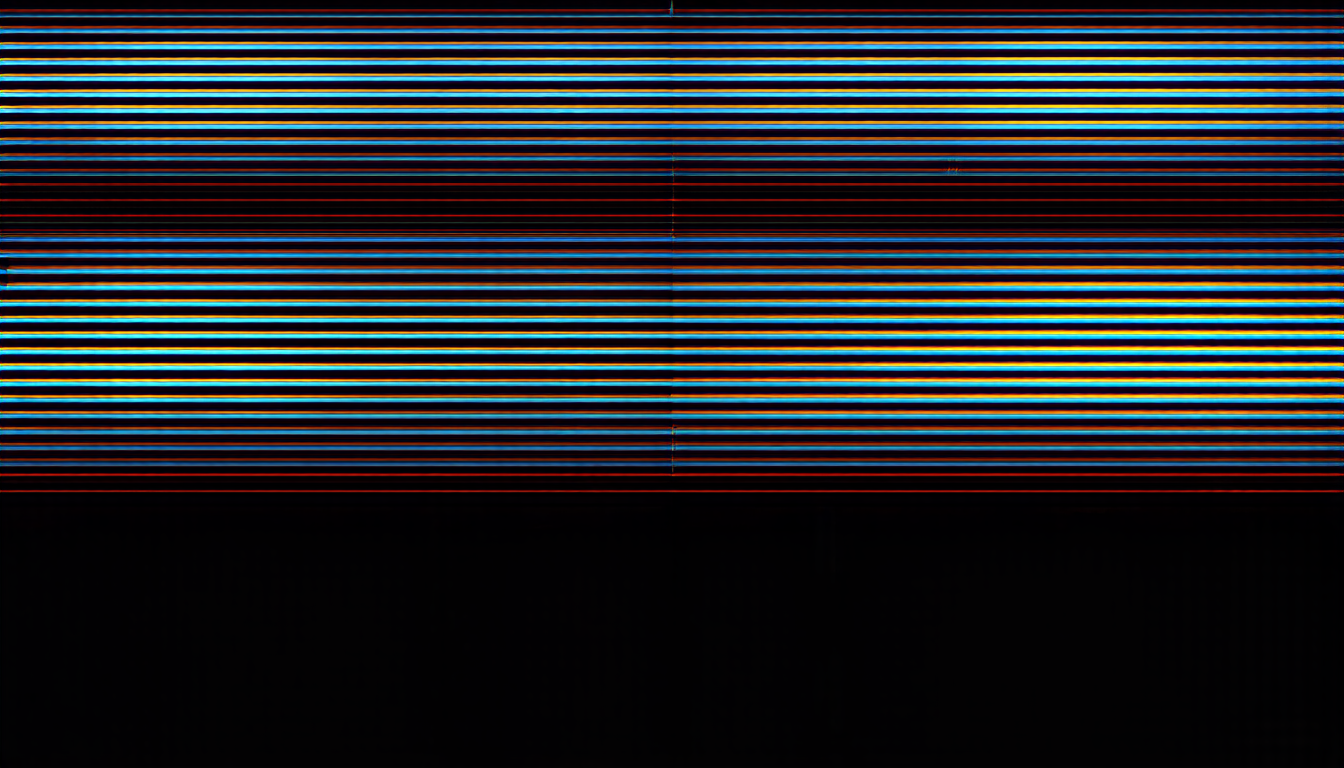
The Talbot effect is a fascinating phenomenon that occurs when a beam of light is shone through a series of slits or openings in an opaque screen. As the light passes through the slits, it creates an interference pattern on a surface behind the screen. But if you move the screen backwards and forwards by a certain distance, known as the Talbot distance, the interference pattern will repeat itself perfectly.
This effect was first observed by Henry Fox Talbot in 1836, but until recently, scientists had been unable to recreate it using modern technology. The problem is that the Talbot distance is typically very small, which makes it difficult to measure accurately.
The researchers used a type of waveguide known as a binary waveguide array (BWA), which consists of two types of waveguides arranged in an alternating pattern. By carefully controlling the properties of these waveguides, they were able to create a Talbot effect with a much larger distance than previously possible.
One of the key challenges in recreating the Talbot effect is finding the right conditions for it to occur. In this case, the researchers used computer simulations to model the behavior of light as it passed through the BWA, and then adjusted the properties of the waveguides until they achieved the desired result.
The team’s findings have implications for a wide range of fields, from optics and photonics to materials science and quantum mechanics. By understanding how light behaves in these complex systems, scientists may be able to develop new technologies with applications in areas such as telecommunications and medical imaging.
The researchers are already planning further experiments to explore the properties of Talbot effects in different types of waveguides. They hope that their work will help us better understand the fundamental behavior of light, and potentially lead to the development of new technologies with significant benefits for society.
In addition to its scientific significance, the study also highlights the importance of interdisciplinary research. The team consisted of experts from fields as diverse as physics, optics, and computer science, who worked together to achieve their goals. This type of collaboration is essential in today’s complex scientific landscape, where many problems require expertise from multiple disciplines.
Cite this article: “Recreating the Talbot Effect: A Breakthrough in Understanding Lights Behavior”, The Science Archive, 2025.
Light, Waveguides, Talbot Effect, Optics, Photonics, Materials Science, Quantum Mechanics, Telecommunications, Medical Imaging, Interdisciplinary Research.
Reference: Minh C. Tran, Truong X. Tran, “Talbot effect in binary waveguide arrays” (2025).





