

Thursday 27 February 2025
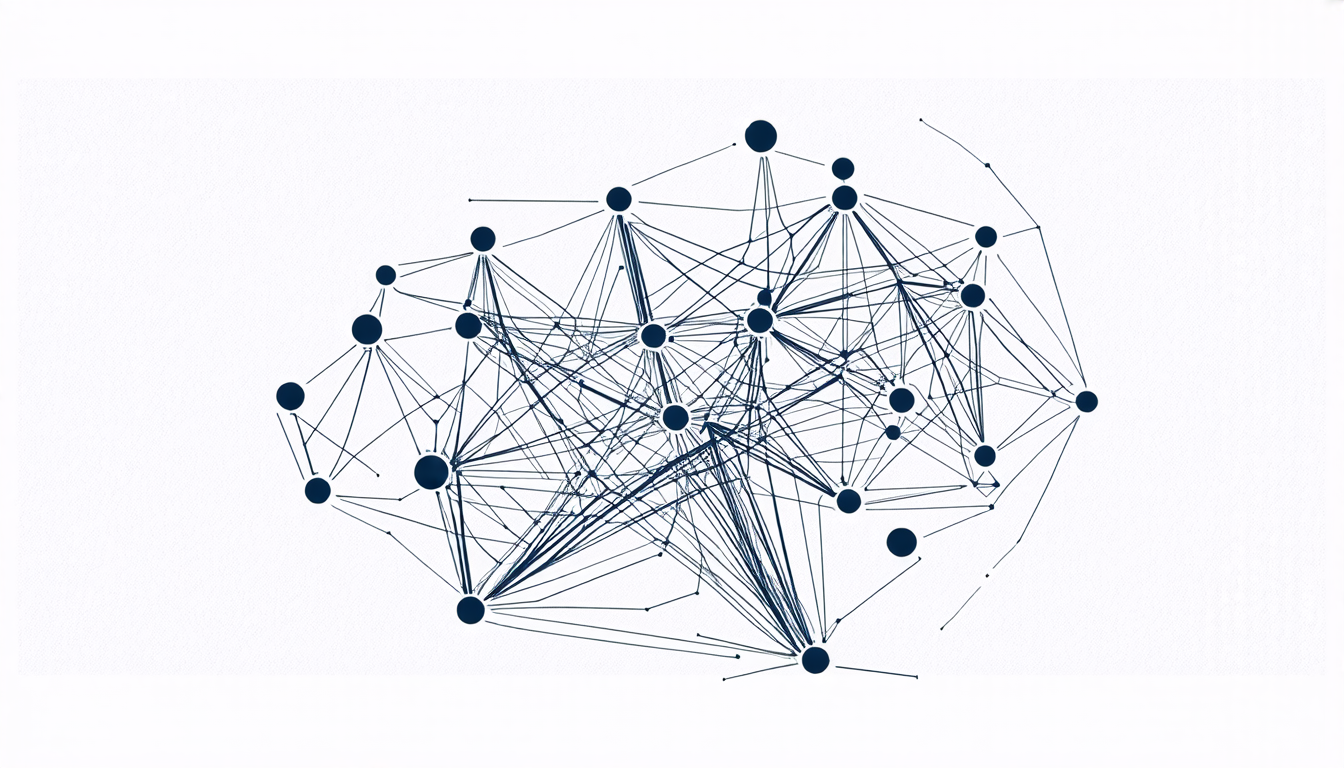
Researchers have been working on a new approach to dealing with missing data in graphs, which are commonly used to model complex networks like social media or transportation systems. The problem is that when some nodes or edges in the graph are missing or incomplete, it can be difficult to accurately predict the behavior of the entire network.
One common method for dealing with this issue is feature propagation, where the information from known nodes is propagated to unknown nodes through a process called diffusion. However, this approach has its limitations and can sometimes lead to inaccurate predictions.
A new paper published in a recent issue of IEEE Transactions on Cybernetics proposes an alternative approach called AttriReBoost (ARB), which uses a combination of feature propagation and boundary conditions to improve the accuracy of predictions in attribute-missing graphs.
The key idea behind ARB is to dynamically adjust the initialization of known nodes based on the available information. This is achieved by redefining the boundary conditions, which determine how the information from known nodes is propagated to unknown nodes. By adjusting these boundary conditions, the algorithm can better account for the missing data and make more accurate predictions.
The paper also introduces a new concept called virtual edges, which are added to the graph to improve its connectivity. These virtual edges are not actual connections between nodes but rather a way of modeling the relationships that would exist if there were no missing data. By incorporating these virtual edges into the algorithm, ARB can better capture the underlying structure of the network and make more accurate predictions.
The authors tested ARB on several real-world datasets, including social media and transportation networks, and found that it outperformed other existing methods in terms of accuracy and robustness. They also showed that ARB is able to handle a wide range of missing data patterns, from small amounts of missing data to large areas with no data at all.
Overall, the paper presents an innovative approach to dealing with missing data in graphs, which has significant implications for many fields where graph analysis is used. By providing more accurate and robust predictions, ARB can help researchers and developers build better models of complex systems and make more informed decisions.
Cite this article: “Improving Graph Predictions with AttriReBoost: A Novel Approach to Handling Missing Data”, The Science Archive, 2025.
Graph Analysis, Missing Data, Feature Propagation, Diffusion, Attrireboost, Boundary Conditions, Virtual Edges, Connectivity, Robustness, Accuracy.





