

Thursday 27 February 2025
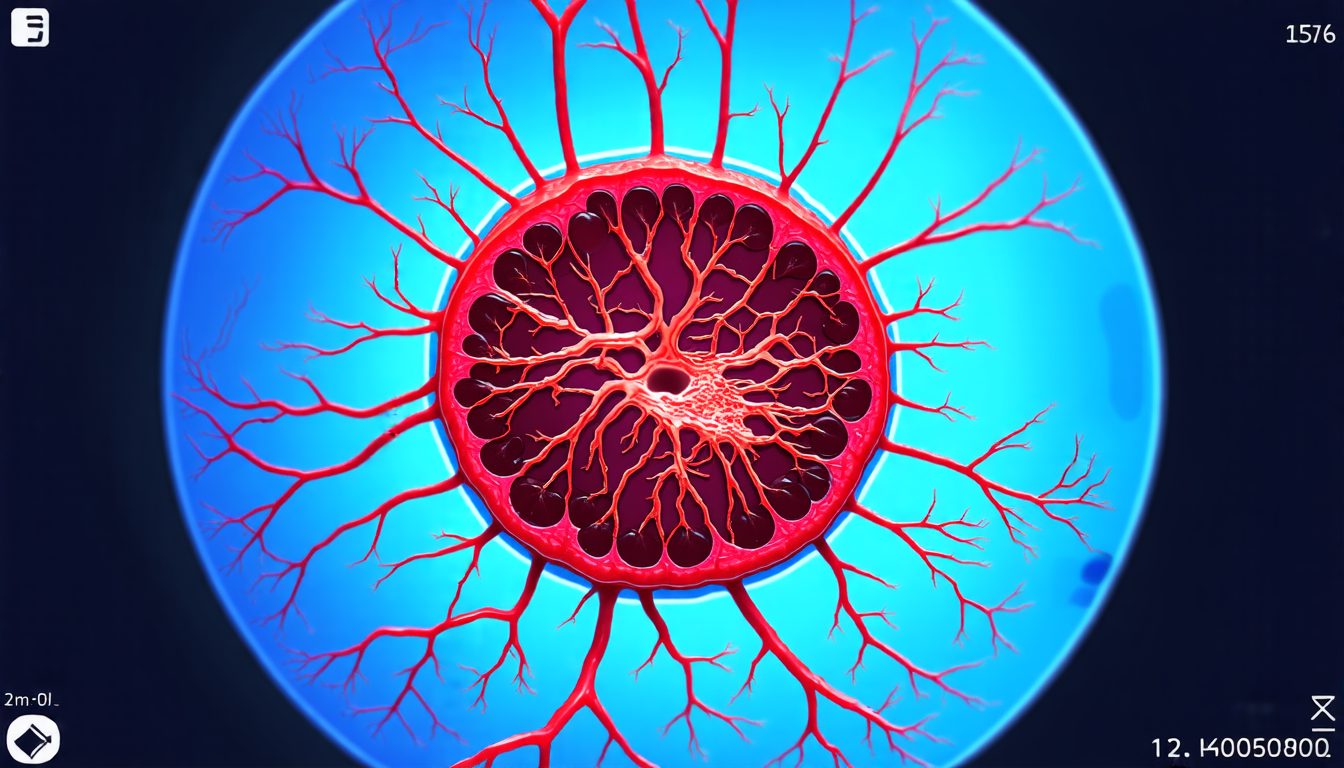
In a major breakthrough, researchers have developed a way to generate high-quality synthetic images of diabetic retinopathy (DR), a leading cause of blindness worldwide. By leveraging advanced artificial intelligence techniques, scientists can now create realistic fundus images that closely resemble real ones, which could significantly improve early detection and treatment of the disease.
Diabetic retinopathy is a complication of diabetes that damages the blood vessels in the retina, leading to vision loss if left untreated. Early detection is crucial, as timely interventions can prevent blindness. However, accessing high-quality fundus images is often challenging, particularly in resource-constrained areas where medical infrastructure is limited.
To address this issue, researchers turned to generative adversarial networks (GANs), a type of artificial intelligence that can create synthetic images indistinguishable from real ones. By training a GAN on a dataset of real DR images, scientists were able to generate high-fidelity synthetic images that preserved the intricate details and patterns found in real fundus photos.
The generated images showed remarkable similarity to their real counterparts, with subtle features such as microaneurysms – tiny abnormal blood vessels characteristic of early-stage DR – accurately reproduced. The researchers used a range of metrics to evaluate the quality of the synthetic images, including Fréchet Inception Distance (FID) and Kernel Inception Distance (KID), which indicated that the generated images were highly realistic.
To further validate the accuracy of the synthetic images, human ophthalmologists were asked to distinguish between real and fake fundus photos. Despite some minor artifacts near image boundaries, the experts found it challenging to distinguish between the two, indicating that the synthetic images were remarkably convincing.
The implications of this technology are significant. In areas where access to high-quality medical imaging equipment is limited, synthetic images could be used as a reliable substitute for real ones, enabling healthcare professionals to diagnose and treat DR more effectively. Moreover, the generated images could be used to augment existing training datasets, allowing AI-powered diagnostic systems to learn from larger and more diverse sets of data.
The researchers acknowledge that their approach has limitations, including the need for further refinement to eliminate minor artifacts and improve the accuracy of the synthetic images. Nevertheless, this breakthrough marks a significant step forward in the development of AI-powered medical imaging tools, with potential applications extending beyond DR to other areas of medicine where high-quality image generation is crucial.
Cite this article: “Generating Realistic Synthetic Images of Diabetic Retinopathy Using Artificial Intelligence”, The Science Archive, 2025.
Diabetic Retinopathy, Artificial Intelligence, Fundus Images, Generative Adversarial Networks, Gans, Synthetic Images, Medical Imaging, Ophthalmology, Blindness, Diabetes.





