

Friday 28 February 2025
The rise of autonomous vehicles has brought about a new era of innovation in the field of computer vision and machine learning. But as these vehicles become more sophisticated, they’re also becoming increasingly dependent on complex sensor suites to navigate their surroundings. Unfortunately, this reliance on multiple sensors can make them vulnerable to various types of corruption, from faulty lidar readings to poor weather conditions.
To address this issue, a team of researchers has developed the Multi-Sensor Corruption Benchmark (MSC-Bench), a comprehensive tool designed to evaluate the robustness of multi-sensor autonomous driving perception models against various forms of corruption. The benchmark includes 16 different types of corruption, ranging from motion blur and temporal misalignment to fog and snow.
The researchers tested six state-of-the-art 3D object detection models and four HD map construction models using MSC-Bench, with striking results. Many of the models struggled to maintain their performance under even moderate levels of corruption, with some showing significant declines in accuracy as severity increased. For example, camera-based HD map construction was severely impacted by snow, which obscured critical elements and made it difficult for the models to build accurate maps.
One of the most interesting findings was that many of the models performed poorly when faced with dual-source failures, such as frame lost and cross-sensor corruption. This suggests that current fusion methods may not be robust enough to handle the kinds of sensor disruptions that can occur in real-world scenarios.
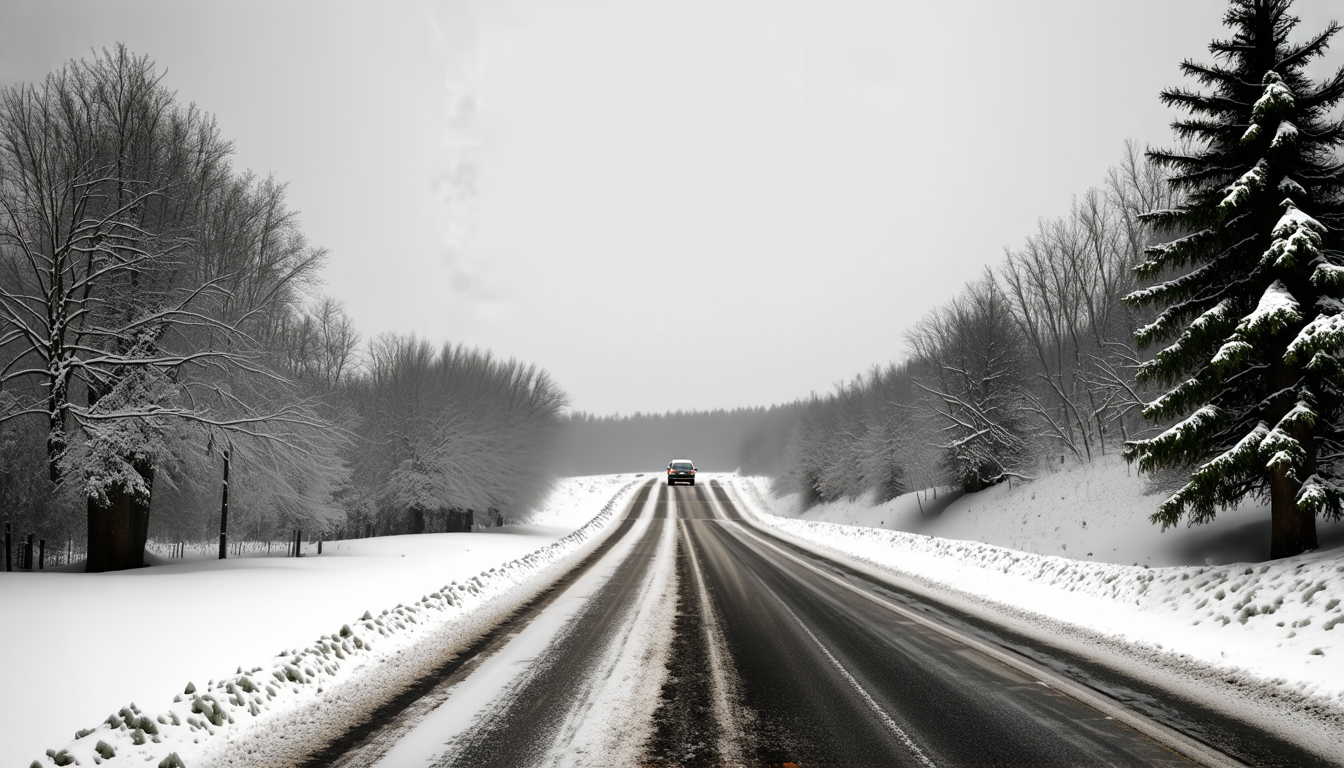
The results also highlighted the importance of evaluating model performance under adverse weather conditions. Snow, fog, and other environmental factors can significantly impact sensor data quality, making it essential for autonomous vehicles to be able to adapt to these challenges.
To address these issues, the researchers are working on developing more robust fusion methods that can effectively handle partial or missing sensor data and misalignment. They’re also exploring ways to improve model interpretability, so that developers can better understand how their models are responding to different types of corruption.
The development of MSC-Bench is a crucial step towards creating more reliable and resilient autonomous driving systems. By testing the robustness of these systems under various forms of corruption, researchers can identify areas for improvement and develop more effective solutions to ensure safe and efficient operation in real-world scenarios.
Cite this article: “Evaluating the Robustness of Autonomous Driving Systems Against Sensor Corruption”, The Science Archive, 2025.
Autonomous Vehicles, Computer Vision, Machine Learning, Sensor Corruption, Multi-Sensor Fusion, 3D Object Detection, Hd Map Construction, Weather Conditions, Robustness Testing, Benchmarking.





