

Friday 28 February 2025
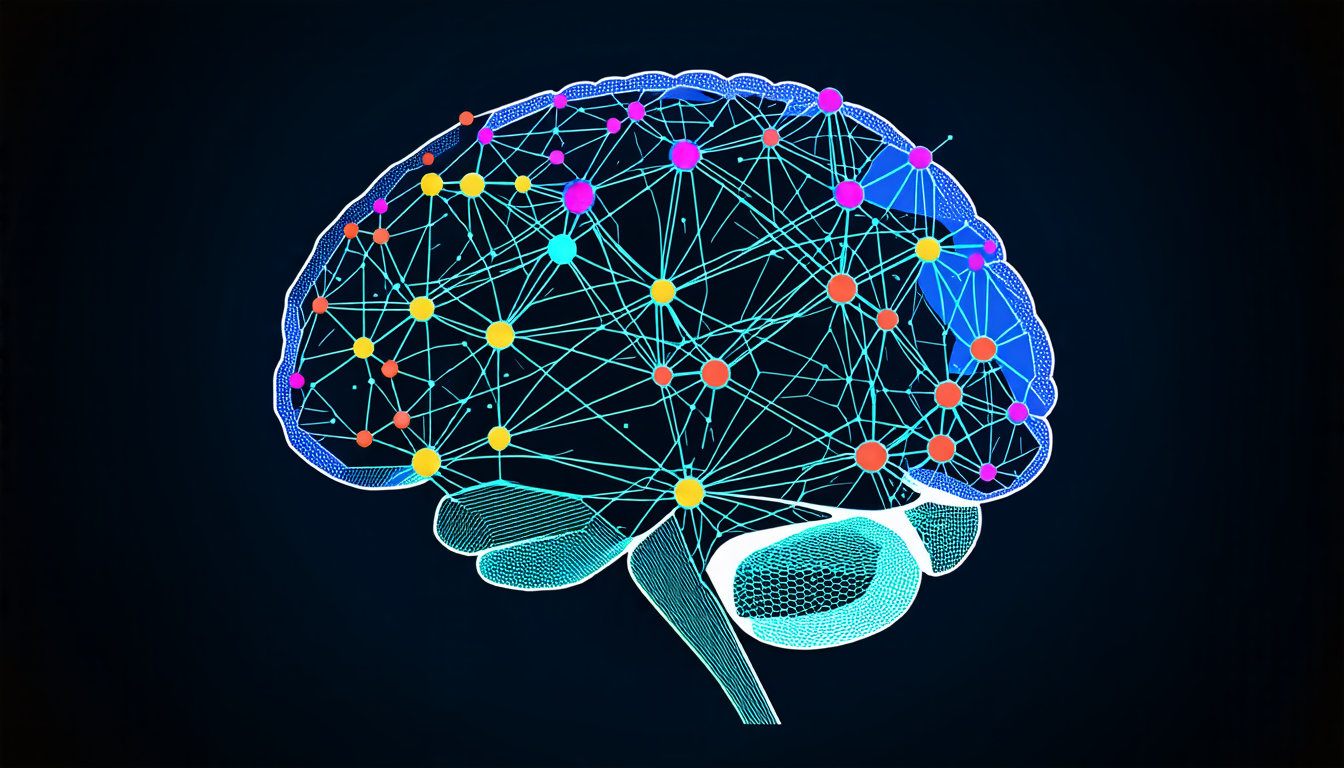
The human brain is a complex network of neurons and connections that enables us to think, learn, and behave. However, despite its intricate structure, our understanding of how the brain works remains limited. One major challenge in deciphering brain function lies in capturing the long-range dependencies between different regions of interest (ROIs). These connections are crucial for various cognitive processes, including attention, memory, and decision-making.
Researchers have made significant strides in developing machine learning models that can analyze brain networks and identify patterns associated with neurological disorders. However, most of these approaches focus on short-range dependencies within local brain regions, neglecting the long-range connections that play a vital role in brain-wide communication.
To address this limitation, scientists have developed a novel approach called Adaptive Long-Range aware TransformER (ALTER). This method utilizes biased random walk to simulate real-world brain-wide communication and capture long-range dependencies between ROIs. By integrating both short- and long-range dependencies, ALTER provides a more comprehensive understanding of brain function and its relationship to neurological disorders.
To test the efficacy of ALTER, researchers applied it to two large-scale datasets: the Autism Brain Imaging Data Exchange (ABIDE) dataset and the Alzheimer’s Disease Neuroimaging Initiative (ADNI) dataset. The results showed that ALTER outperformed existing graph learning methods in diagnosing neurological disorders, particularly autism spectrum disorder (ASD) and Alzheimer’s disease.
The study also explored the interpretability of ALTER by analyzing the attention heatmap, which highlights the most important ROIs for diagnosis. The results revealed that the hippocampal regions were consistently linked to ADNI prediction, supporting previous findings on the importance of this region in Alzheimer’s pathology.
Furthermore, the researchers investigated the sensitivity of ALTER to the number of hops and adaptive factors. They found that increasing the number of hops improved performance, while adaptive factors played a crucial role in capturing long-range dependencies.
The potential societal impact of ALTER is significant. Accurate diagnosis of neurological disorders can lead to more effective treatment and management strategies, improving quality of life for millions of people worldwide. However, it is essential to acknowledge the limitations of AI-assisted disease diagnosis, including the possibility of errors and the need for human oversight.
In summary, the development of ALTER represents a major step forward in understanding brain function and its relationship to neurological disorders. By capturing long-range dependencies between ROIs, this approach provides a more comprehensive understanding of brain-wide communication and has significant implications for diagnosing and managing neurological conditions.
Cite this article: “Unlocking Brain Function: A Novel Approach to Diagnosing Neurological Disorders”, The Science Archive, 2025.
Machine Learning, Brain Networks, Long-Range Dependencies, Neural Disorders, Graph Learning Methods, Diagnostic Accuracy, Neurological Diseases, Alzheimer’S Disease, Autism Spectrum Disorder, Adaptive Random Walk.
Reference: Shuo Yu, Shan Jin, Ming Li, Tabinda Sarwar, Feng Xia, “Long-range Brain Graph Transformer” (2025).





