
Friday 28 February 2025
For decades, demographers and actuaries have been trying to accurately predict how many people will die each year. It’s a complex task that requires understanding patterns of mortality rates across different age groups and populations. A new study has shed light on this issue by proposing an innovative approach to forecasting mortality rates.
The traditional method for predicting mortality rates is the Lee-Carter model, which was introduced in the 1990s. While it has been widely used, it has its limitations. The model assumes that mortality rates follow a single pattern across different age groups and populations. However, this assumption may not always hold true. For instance, mortality rates can vary significantly between countries or even within the same country over time.
The new study proposes an alternative approach based on compositional data analysis. This method is particularly useful when dealing with complex datasets that contain multiple variables. In the context of mortality forecasting, compositional data analysis allows researchers to analyze patterns in mortality rates across different age groups and populations.
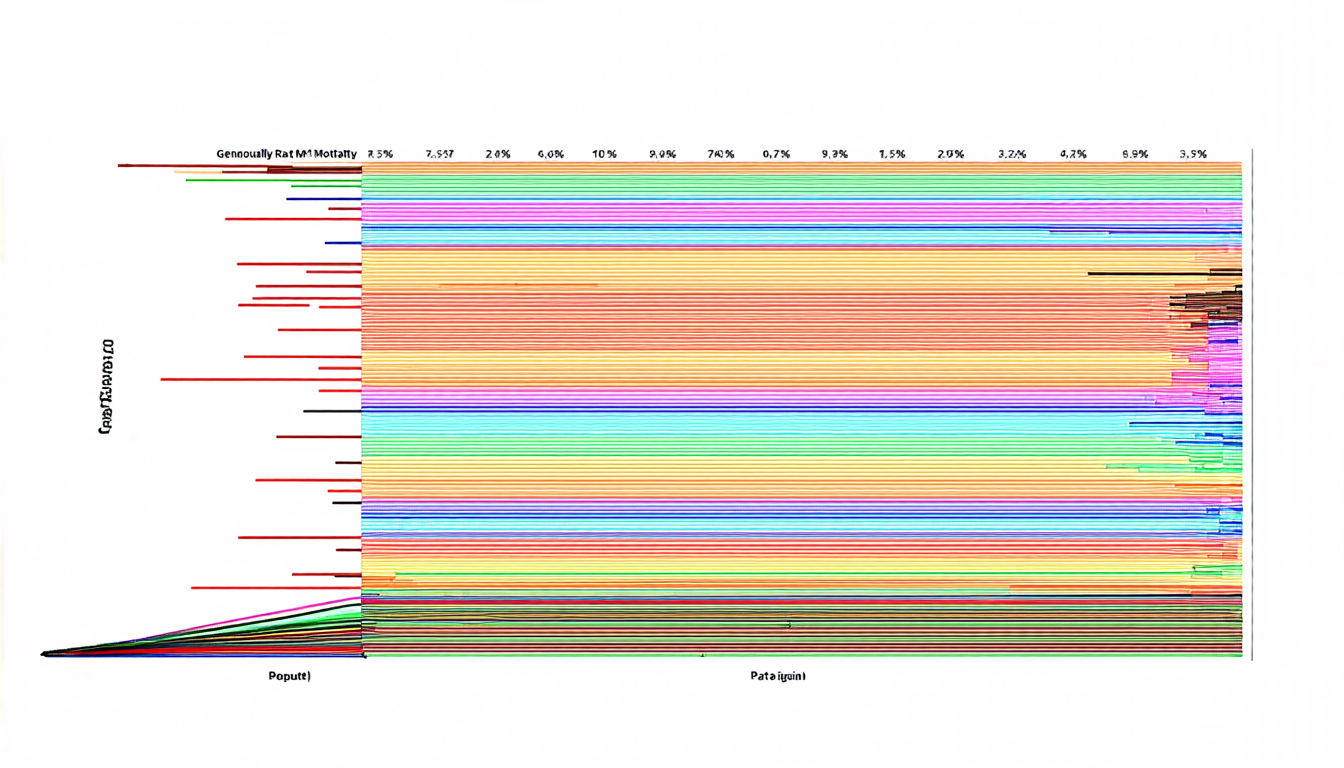
The study used a dataset from the Human Mortality Database, which contains information on death counts for over 100 countries. The researchers applied their method to this dataset and compared the results with those obtained using the Lee-Carter model. The results showed that the new approach outperformed the traditional method in many cases.
One of the key advantages of the new approach is its ability to capture variations in mortality rates across different age groups. This is particularly important because mortality rates can vary significantly between young and old adults, as well as between different age groups within these categories. The study found that the new approach was able to capture these variations more accurately than the Lee-Carter model.
Another advantage of the new approach is its flexibility. It allows researchers to incorporate additional variables into their analysis, such as socioeconomic factors or environmental conditions. This can help to improve the accuracy of mortality forecasts and provide a more comprehensive understanding of the underlying factors that influence mortality rates.
The study’s findings have significant implications for demographers, actuaries, and policymakers. By providing more accurate predictions of mortality rates, researchers can better inform policy decisions related to healthcare, social security, and pension systems. The new approach also has the potential to improve our understanding of the complex factors that influence mortality rates and help us develop more effective strategies for reducing premature deaths.
Overall, the study’s innovative approach to forecasting mortality rates offers a promising solution to this long-standing problem in demography.
Cite this article: “Accurate Mortality Forecasting: A New Approach Using Compositional Data Analysis”, The Science Archive, 2025.
Demography, Mortality Rates, Forecasting, Lee-Carter Model, Compositional Data Analysis, Human Mortality Database, Age Groups, Populations, Socioeconomic Factors, Environmental Conditions