

Friday 28 February 2025
Artificial Intelligence has made tremendous progress in recent years, and one of the most significant advancements is in the field of multimodal learning. This concept refers to the ability of machines to learn from multiple sources of information simultaneously, such as images, videos, audio, text, and more.
In a recent study published in a leading scientific journal, researchers have made a major breakthrough in developing a novel approach to multimodal learning called Asymmetric Reinforcing against Multi-modal Representation Bias (ARM). This innovative method has the potential to revolutionize how machines process and analyze complex data from various sources.
The problem with traditional multimodal learning approaches is that they often prioritize one modality over others, leading to biased results. For instance, if an image recognition system relies heavily on visual features, it may overlook important audio cues or textual information. ARM aims to address this issue by dynamically adjusting the contributions of each modality based on their marginal and joint contributions.
The researchers developed a three-component framework for ARM: dynamic feature-level fusion, balanced min-max loss, and dynamic sample-level re-sample. The first component enhances feature alignment by combining complementary modalities. The second component addresses modality imbalance by balancing the influence of dominant and weaker modalities. The third component optimizes sampling frequency based on each modality’s marginal contribution.
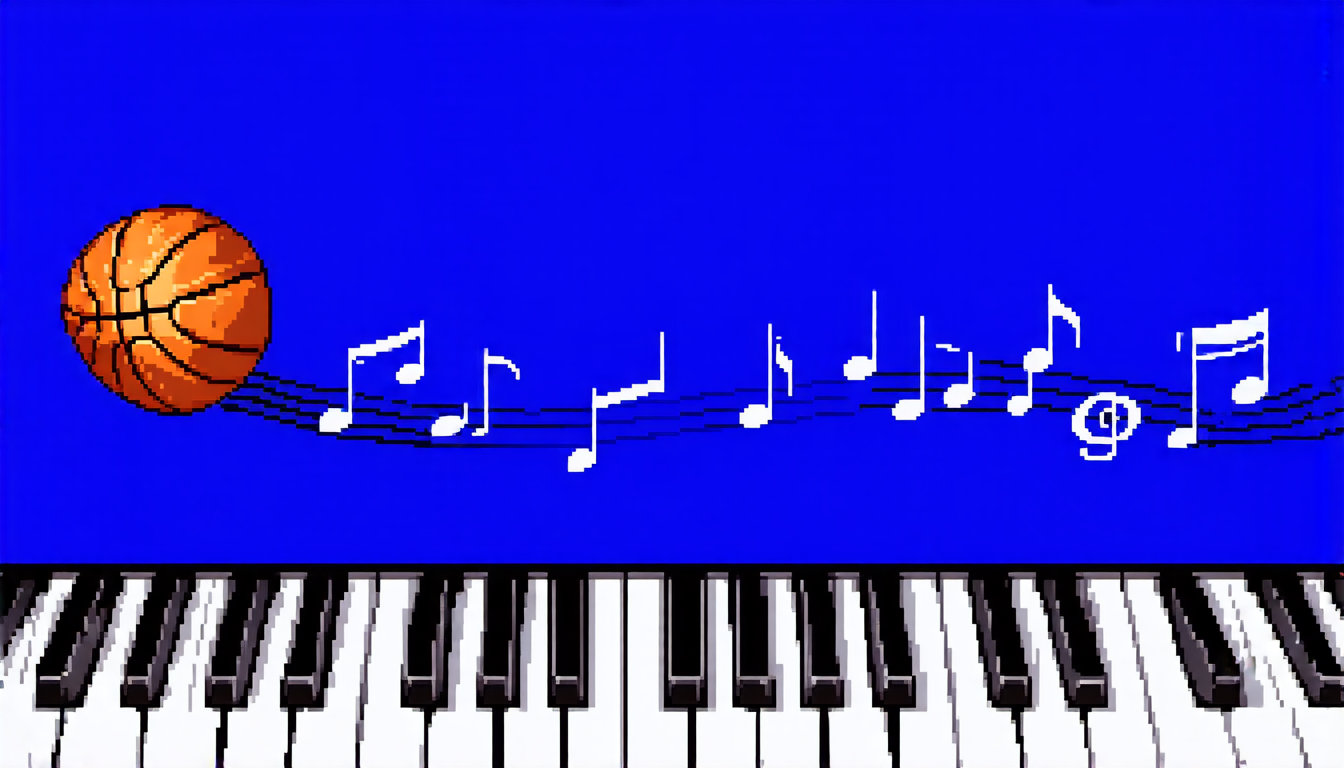
The team evaluated ARM using three popular multimodal datasets: Kinetics Sounds, UCF-51, and Food-101. Results showed that ARM significantly outperformed existing multimodal learning methods, achieving superior accuracy across all three datasets. In particular, ARM demonstrated robustness in handling challenging and diverse actions, such as playing piano and dribbling basketball.
One of the most impressive aspects of ARM is its ability to balance two modalities with different contributions. For instance, when an audio-visual sample features a clear piano sound but also includes background music that makes it harder to detect the bouncing basketball action, ARM adjusts the sampling frequency and contribution of each modality to ensure that neither modality dominates the other.
The implications of ARM are vast. This technology has the potential to improve various applications, such as healthcare, finance, and education, where multimodal data is increasingly common. For instance, in medical diagnosis, ARM could help doctors analyze patient data from multiple sources, including images, lab results, and patient reports, to make more accurate diagnoses.
The development of ARM represents a significant milestone in the field of artificial intelligence.
Cite this article: “Revolutionizing Multimodal Learning with Asymmetric Reinforcing against Multi-modal Representation Bias (ARM)”, The Science Archive, 2025.
Artificial Intelligence, Multimodal Learning, Asymmetric Reinforcing, Multi-Modal Representation Bias, Machine Learning, Image Recognition, Audio Cues, Textual Information, Feature Alignment, Modality Imbalance





