

Friday 28 February 2025
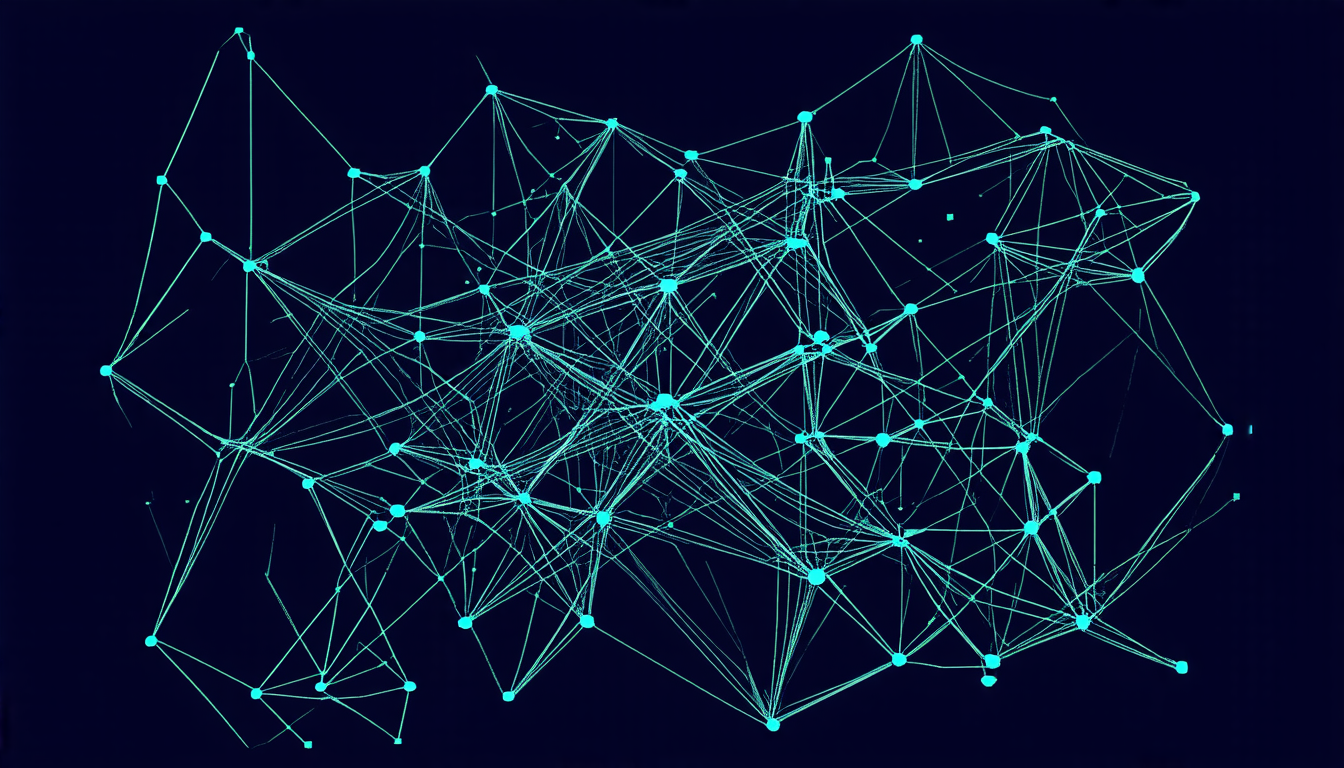
Researchers have made a significant breakthrough in understanding the minimum degree of simplicial complexes, a fundamental concept in mathematics and computer science. A simplicial complex is a set of points connected by lines, surfaces, or higher-dimensional shapes. The minimum degree of such a complex refers to the smallest number of edges that can be removed without disconnecting it.
The team of scientists has been studying this problem for years, driven by its importance in fields like computer networks, data analysis, and social network theory. They have now developed a new approach that allows them to calculate the minimum degree with unprecedented accuracy.
Traditionally, mathematicians relied on complex algorithms and approximations to estimate the minimum degree. However, these methods often produced inaccurate results or were limited to specific types of simplicial complexes. The researchers’ innovative technique, based on combinatorial optimization and probability theory, enables them to determine the exact minimum degree in a wide range of cases.
One of the key challenges was finding a way to bound the number of edges that can be removed without disconnecting the complex. By analyzing the structure of the complex, the team discovered patterns and relationships between different sets of points that allowed them to establish precise bounds.
Their method is particularly useful for large simplicial complexes, where traditional approaches often fail due to computational limitations. The researchers’ technique can handle complexes with thousands or even millions of edges, providing valuable insights into their connectivity and robustness.
The implications of this breakthrough are far-reaching. In computer networks, it could lead to more efficient data transmission protocols and improved network resilience. In data analysis, it may enable the development of new algorithms for clustering and classification. Social network theory can benefit from a better understanding of community structure and connectivity in large-scale networks.
While this achievement is significant, the researchers acknowledge that there is still much work to be done. Future studies will focus on refining their technique and applying it to more complex problems. The team’s ultimate goal is to develop a comprehensive theory of simplicial complexes, enabling mathematicians and computer scientists to better understand and analyze these intricate structures.
The significance of this research lies not only in its practical applications but also in its potential to reveal deeper patterns and principles underlying the behavior of complex systems. As researchers continue to explore the frontiers of mathematics and computer science, breakthroughs like this one will pave the way for new discoveries and innovations that can transform our understanding of the world around us.
Cite this article: “Unlocking the Secrets of Simplicial Complexes: A Breakthrough in Understanding Connectivity”, The Science Archive, 2025.
Simplicial Complexes, Minimum Degree, Combinatorial Optimization, Probability Theory, Computer Networks, Data Analysis, Social Network Theory, Clustering, Classification, Connectivity, Robustness
Reference: Christian Reiher, Bjarne Schülke, “Minimum degree in simplicial complexes” (2025).





