

Friday 28 February 2025
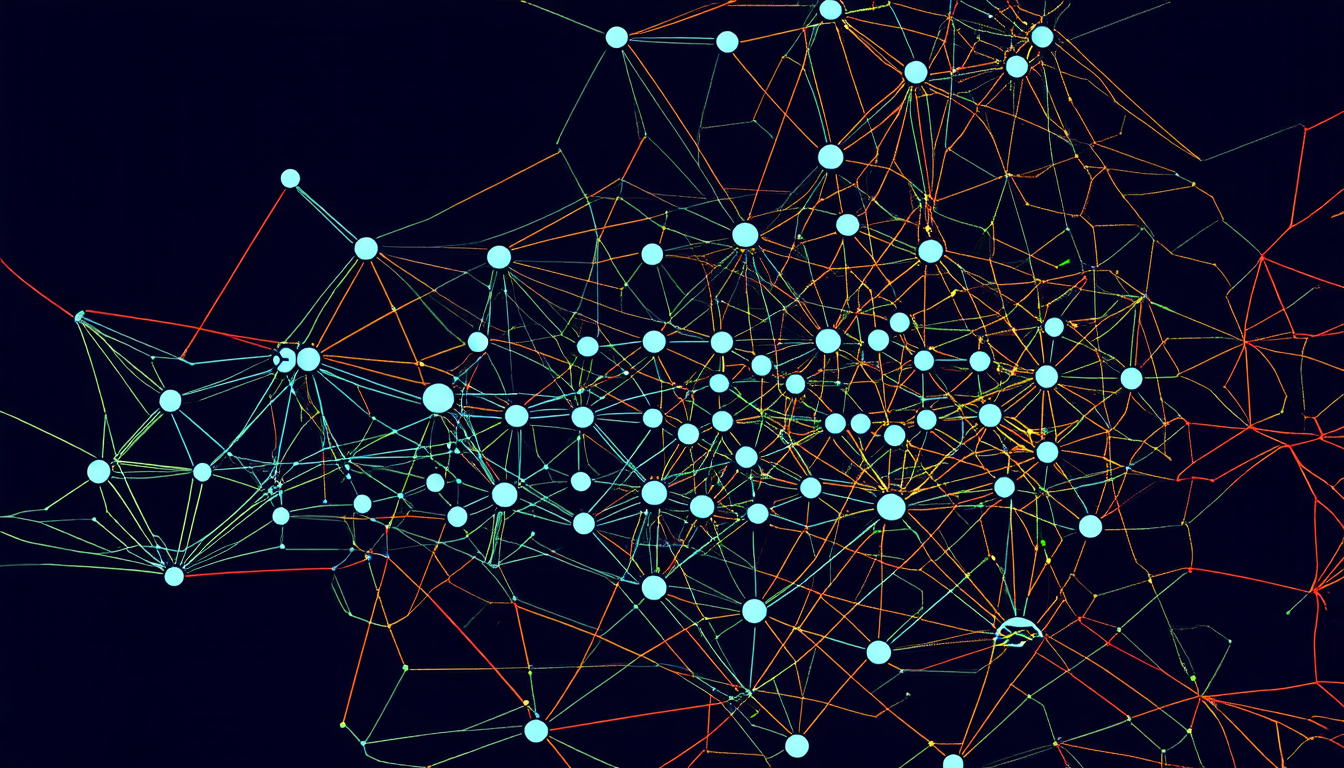
The study of complex networks is a fascinating field that has led to many important breakthroughs in our understanding of everything from social dynamics to epidemiology. A recent paper has made significant progress in this area, shedding new light on the behavior of giant components in random graphs.
For those unfamiliar with the terminology, a giant component refers to the largest connected group in a random graph. These components can be thought of as clusters or communities within the network, and understanding their properties is crucial for modeling real-world systems. In recent years, researchers have made significant progress in characterizing the behavior of these giant components, but there were still many open questions.
The new study addresses one of these open questions by examining the fluctuations in size of the giant component in random graphs. This may seem like a esoteric topic, but it has important implications for our understanding of real-world systems. For example, in epidemiology, the size and structure of social networks play a critical role in determining how quickly diseases spread.
The researchers used a variety of mathematical techniques to study the fluctuations in giant component size. One key insight they gained was that these fluctuations are not random and unpredictable, but rather follow a predictable pattern. This pattern is described by a mathematical function called the central limit theorem, which states that the distribution of the fluctuations will approach a normal distribution as the size of the network increases.
This result has important implications for our understanding of complex networks. It suggests that even in systems where there is significant randomness and uncertainty, there may be underlying patterns and structures that can be discovered through careful analysis. This could have significant practical applications, such as improving our ability to predict and mitigate the spread of diseases.
The study also highlights the importance of using a combination of mathematical techniques to understand complex systems. The researchers used a variety of methods, including random walks and generating functions, to study the fluctuations in giant component size. By combining these approaches, they were able to gain a more complete understanding of the underlying patterns and structures that govern the behavior of these networks.
Overall, this paper is an important contribution to our understanding of complex networks and has significant implications for fields such as epidemiology and social dynamics. Its findings highlight the importance of using mathematical techniques to study real-world systems and could have significant practical applications in the future.
Cite this article: “Patterns in Giant Component Fluctuations of Random Graphs”, The Science Archive, 2025.
Complex Networks, Giant Components, Random Graphs, Epidemiology, Social Dynamics, Mathematical Techniques, Central Limit Theorem, Normal Distribution, Network Size, Uncertainty.
Reference: David Clancy Jr, “A central limit theorem for the giant in a stochastic block model” (2025).





