

Friday 28 February 2025
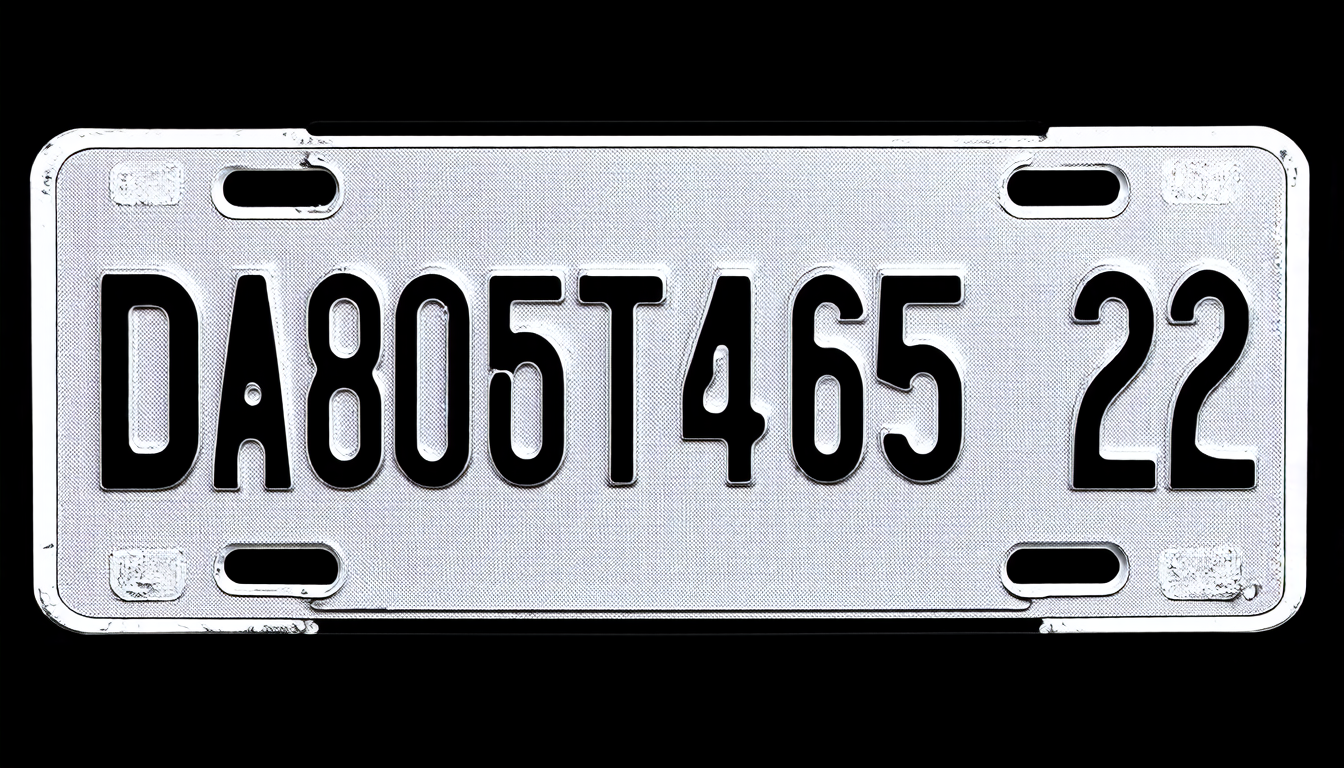
License plate recognition is a crucial task in surveillance and security systems, but it’s often plagued by poor image quality. A new approach aims to tackle this issue head-on by combining pixel- and embedding-based losses to produce high-quality super-resolved images.
The problem of low-resolution license plates is particularly pernicious because it can lead to inaccurate recognition and compromised security. Traditional methods rely on convolutional neural networks (CNNs) that learn to enhance image quality, but these often fall short when faced with extreme degradation.
Researchers have turned to a novel approach that harnesses the power of contrastive learning to enforce embedding similarity between high-resolution (HR) and super-resolved (SR) license plates. This means that the model learns to align fine-grained features across both images, rather than simply focusing on pixel-level fidelity.
The proposed framework, dubbed Pixel and Embedding Consistency Loss (PECL), combines a Siamese network with contrastive loss to optimize image reconstruction. By balancing pixel- and embedding-based losses, PECL achieves superior alignment of fine-grained features between HR and SR license plates.
Experiments on the CCPD dataset demonstrate the efficacy of PECL, which outperforms state-of-the-art methods in terms of peak signal-to-noise ratio (PSNR), PSNR-y (a measure of color accuracy) and optical character recognition (OCR) accuracy. The results highlight the importance of embedding similarity in super-resolution tasks.
The authors also provide an interesting analysis of distortion maps, which reveal that PECL reduces blur and compression artifacts while maintaining sharpness. This suggests that the model is able to effectively recover fine details without compromising overall image quality.
One potential limitation of PECL is its reliance on HR images for training, which may not be feasible in all scenarios. However, the authors suggest that future work could focus on adapting the approach to use synthetic data or self-supervised learning methods.
The implications of this research are significant, particularly in fields where accurate license plate recognition is crucial. By developing more robust and effective super-resolution techniques, researchers can improve the reliability and accuracy of surveillance systems, ultimately enhancing public safety and security.
This study offers a promising new direction in image processing and computer vision, highlighting the potential benefits of incorporating contrastive learning into super-resolution tasks. As research continues to evolve, it will be exciting to see how PECL is adapted and refined for real-world applications.
Cite this article: “Super-Resolving License Plates with Pixel and Embedding Consistency Loss”, The Science Archive, 2025.
Image Processing, Computer Vision, Super-Resolution, License Plate Recognition, Surveillance, Security, Convolutional Neural Networks, Contrastive Learning, Siamese Network, Embedding Similarity.





