

Friday 28 February 2025
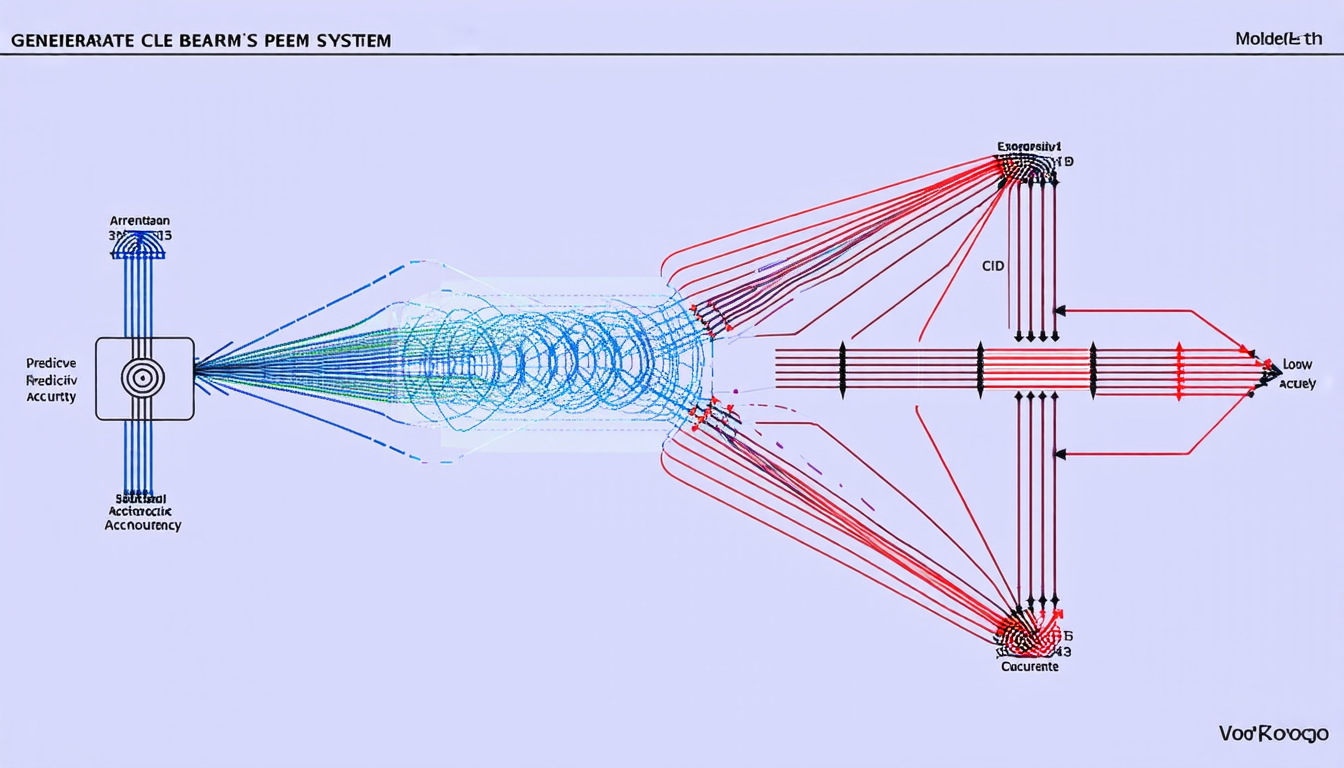
A system at Fermilab, a particle accelerator in Illinois, has successfully predicted beam outages using advanced machine learning techniques. The system, which was developed by a team of researchers, uses data from thousands of sensors monitoring the beam to predict when it will trip or experience voltage fluctuations.
The researchers used a variety of algorithms, including recurrent neural networks and attention-based models, to analyze the sensor data and identify patterns that are indicative of an impending outage. They also developed a novel method for automatically labeling outages, which allowed them to train their models on a large dataset of labeled examples.
The system was tested using real-world data from Fermilab’s Linac, a linear accelerator that produces high-energy particles. The results showed that the machine learning model was able to accurately predict when an outage would occur, with an early detection rate of around 80%. This is significant because it means that operators could potentially take action to prevent or mitigate the effects of an outage before it happens.
One of the key challenges in developing this system was dealing with the sheer amount of data generated by the sensors. The researchers used a combination of techniques, including data compression and feature engineering, to reduce the dimensionality of the data and make it more manageable for the machine learning models.
The system is designed to be deployed at Fermilab’s control room, where operators can use it to monitor the beam in real-time and take action if an outage is predicted. The researchers believe that this could lead to significant improvements in the reliability and efficiency of the accelerator.
In addition to its potential applications at Fermilab, the system has broader implications for the field of particle physics as a whole. It demonstrates the power of machine learning techniques in analyzing complex data sets and making predictions about future events.
The researchers are now working on further developing the system, including improving its accuracy and scalability. They also plan to explore other potential applications for their technology, such as predicting outages at other types of facilities or using it to monitor the behavior of particles in real-time.
Overall, this project is a significant achievement that showcases the potential of machine learning in particle physics. It has the potential to improve our understanding of complex systems and make predictions about future events with greater accuracy and reliability.
Cite this article: “Predicting Beam Outages at Fermilab Using Advanced Machine Learning Techniques”, The Science Archive, 2025.
Machine Learning, Particle Accelerator, Fermilab, Beam Outages, Sensor Data, Recurrent Neural Networks, Attention-Based Models, Data Compression, Feature Engineering, Predictive Maintenance.





