

Friday 28 February 2025
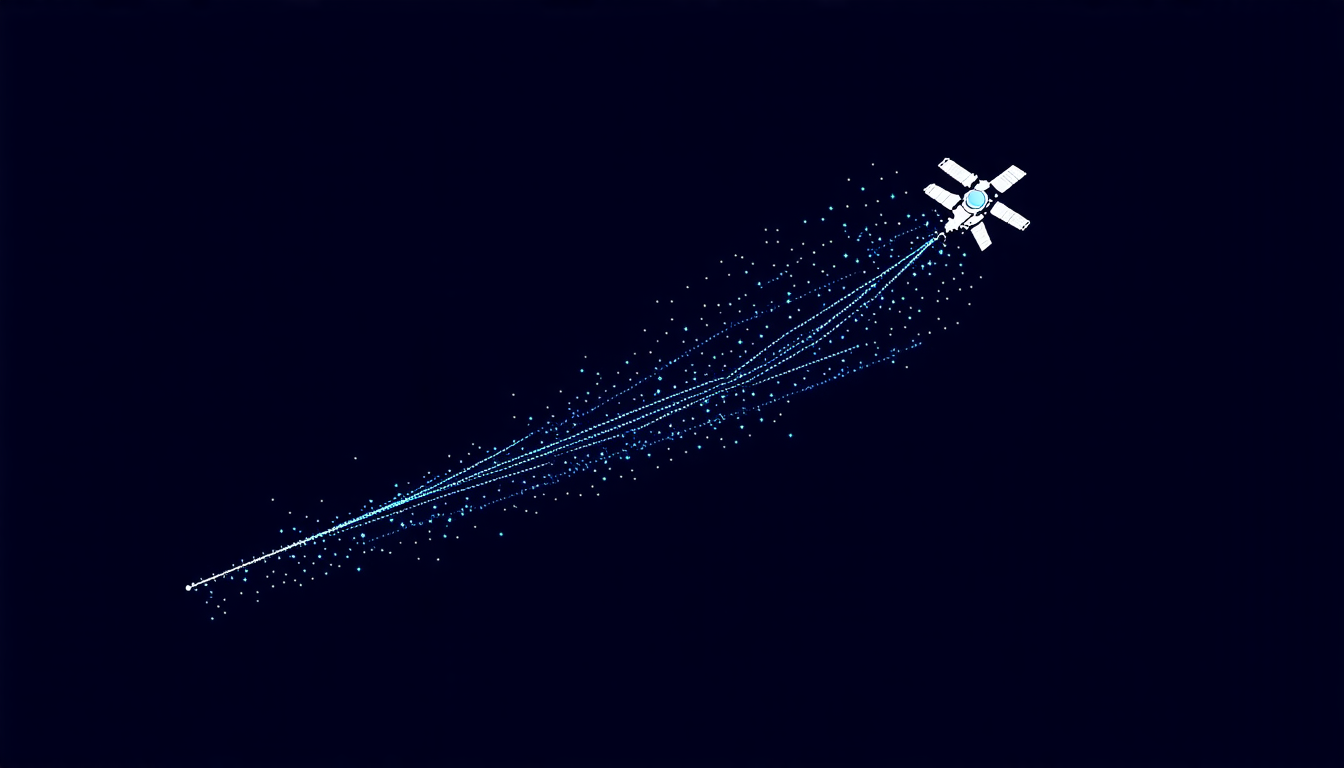
The quest for optimal space travel has long been a challenge for astronomers and engineers alike. With the increasing complexity of modern spacecraft, finding the most efficient route between celestial bodies is crucial for minimizing fuel consumption and reducing mission duration. Now, researchers have made significant progress in this field by developing a new method that can generate infinitely many iso-impulse trajectories.
The concept of iso-impulse trajectories dates back to the 1960s, when scientists first realized that multiple impulses could be used to achieve more efficient transfers between orbits. However, these early calculations were limited to simple cases and did not take into account the complexities of modern spacecraft design. The new method developed by researchers in Auburn University’s Department of Aerospace Engineering overcomes these limitations by using a novel approach to solve the problem.
The key innovation lies in the use of a technique called Δ𝑣-allocation, which allows scientists to allocate specific amounts of change in velocity (Δ𝑣) at strategic points along the trajectory. This enables them to generate a vast number of possible paths between two celestial bodies while ensuring that each path is optimal in terms of fuel consumption.
The researchers’ approach involves solving multiple Δ𝑣-allocation problems analytically, rather than relying on numerical methods. By doing so, they can identify not only the most efficient trajectories but also the characteristics of these paths that make them ideal for specific mission requirements.
One of the most significant implications of this research is its potential to revolutionize the design of interplanetary missions. With the ability to generate infinitely many optimal iso-impulse trajectories, scientists can now plan more complex and ambitious space expeditions with greater confidence.
The new method also has important implications for the development of reusable spacecraft and the optimization of fuel consumption in deep space missions. As the search for life beyond Earth continues, efficient and sustainable space travel will be crucial for exploring the vast expanse of our solar system and beyond.
The researchers’ findings have been published in a recent paper, which provides a detailed overview of their methodology and results. While further refinement is needed to fully integrate this approach into practical mission planning, the potential benefits are undeniable. As scientists continue to push the boundaries of space exploration, the development of more efficient and sustainable space travel solutions will be essential for achieving our goals in the cosmos.
Cite this article: “Optimizing Space Travel: A New Method for Generating Iso-Impulse Trajectories”, The Science Archive, 2025.
Aerospace Engineering, Space Travel, Iso-Impulse Trajectories, Δ𝑣-Allocation, Velocity Change, Fuel Consumption, Interplanetary Missions, Reusable Spacecraft, Deep Space Missions, Optimization.





