

Friday 28 February 2025
Gravitational waves are a fascinating area of research, and scientists have made significant progress in recent years. One of the most promising developments is the observation of gravitational wave scattering, which has been detected by the Laser Interferometer Space Antenna (LISA). This phenomenon occurs when massive objects, such as stars or black holes, interact with each other through gravitational waves.
The detection of gravitational wave scattering was made possible by a team of scientists who used advanced computer simulations to model the behavior of these interactions. The simulations were based on complex mathematical equations that describe how gravitational waves propagate through space-time. By analyzing the data from these simulations, the researchers were able to identify patterns and signatures of gravitational wave scattering.
One of the most interesting aspects of this research is its potential application in the detection of distant objects. By studying the way that gravitational waves scatter off massive objects, scientists may be able to learn more about the properties of these objects and even detect them at great distances. This could potentially lead to a better understanding of the universe and the formation of galaxies.
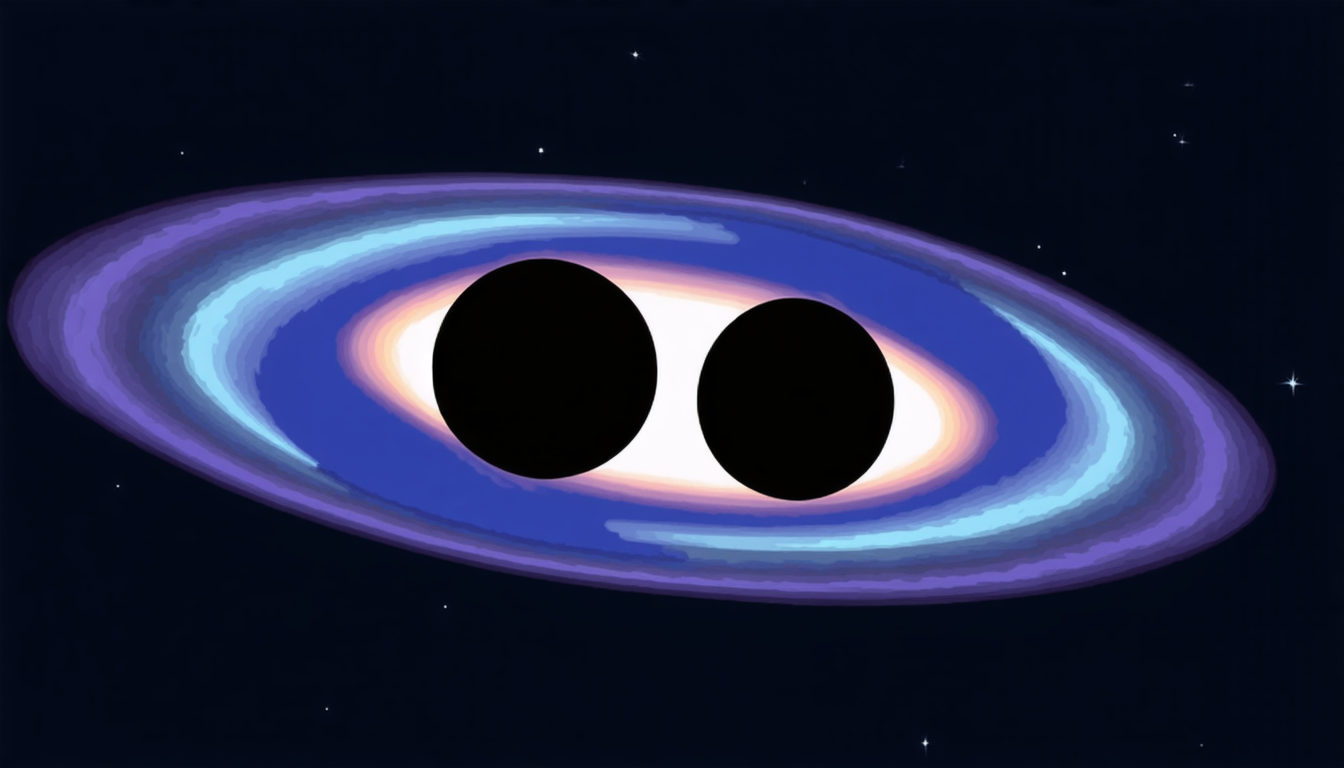
Another area where this research has potential is in the study of black holes. Black holes are among the most mysterious objects in the universe, and scientists have long sought to learn more about their properties and behavior. The detection of gravitational wave scattering around black holes could provide valuable insights into these enigmatic objects.
The researchers who made this discovery used a combination of theoretical models and computer simulations to analyze the data from LISA. They found that the signals they detected were consistent with the predictions of general relativity, which is the current theory of gravity. This suggests that gravitational wave scattering may be an important tool for testing the accuracy of our understanding of gravity.
Overall, this research has significant implications for our understanding of the universe and the behavior of massive objects. The detection of gravitational wave scattering could potentially lead to new insights into the properties of black holes and other distant objects.
Cite this article: “Gravitational Wave Scattering: A New Window into the Universe”, The Science Archive, 2025.
Gravitational Waves, Lisa, Gravitational Wave Scattering, Black Holes, Stars, General Relativity, Computer Simulations, Mathematical Equations, Space-Time, Universe





