

Friday 28 February 2025
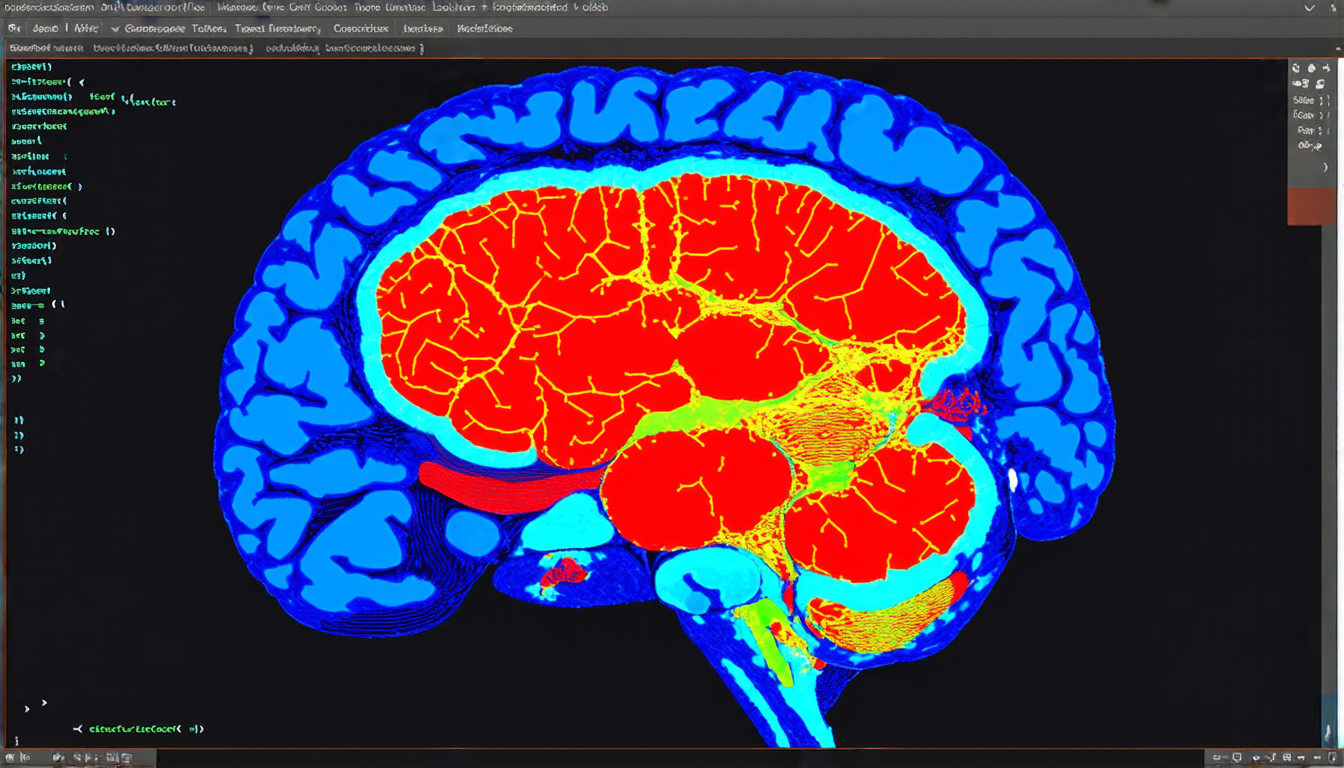
Medical imaging has come a long way since its early days, allowing doctors to visualize internal organs and diagnose diseases more accurately than ever before. However, medical image segmentation – the process of isolating specific features or structures within an image – can still be a time-consuming and labor-intensive task for healthcare professionals.
In recent years, researchers have been exploring innovative ways to improve medical image segmentation using artificial intelligence (AI) techniques. One promising approach is called Vision Mamba, which uses a novel combination of convolutional neural networks (CNNs) and attention mechanisms to identify specific features within images.
The key innovation behind Vision Mamba lies in its ability to learn complex patterns and relationships within images by processing them in a hierarchical manner. This allows the system to focus on relevant regions of interest while ignoring irrelevant information, making it more efficient and accurate than traditional methods.
To develop Vision Mamba, researchers employed a dataset of medical images, including MRI and CT scans, as well as annotations provided by medical experts. By training the system on this data, they were able to fine-tune its performance and achieve state-of-the-art results in various segmentation tasks.
One significant advantage of Vision Mamba is its ability to handle large datasets and complex image features, which can be challenging for traditional methods. This makes it particularly well-suited for applications such as tumor detection and disease diagnosis.
In addition to its technical capabilities, Vision Mamba also has the potential to revolutionize the way medical imaging is performed in clinical settings. By automating the segmentation process, healthcare professionals will have more time to focus on interpreting results and making informed decisions about patient care.
The development of Vision Mamba is a testament to the power of interdisciplinary collaboration between researchers from computer science, medicine, and other fields. As AI continues to evolve, it’s likely that we’ll see even more innovative applications in medical imaging, leading to improved patient outcomes and enhanced healthcare services.
By leveraging the strengths of both CNNs and attention mechanisms, Vision Mamba represents a significant step forward in the quest for accurate and efficient medical image segmentation. Its potential to transform clinical practice makes it an exciting development in the field of medical imaging, with far-reaching implications for the diagnosis and treatment of diseases.
Cite this article: “Revolutionizing Medical Image Segmentation with AI”, The Science Archive, 2025.
Medical Imaging, Artificial Intelligence, Convolutional Neural Networks, Attention Mechanisms, Image Segmentation, Medical Experts, Mri Scans, Ct Scans, Tumor Detection, Disease Diagnosis





