
Friday 28 February 2025
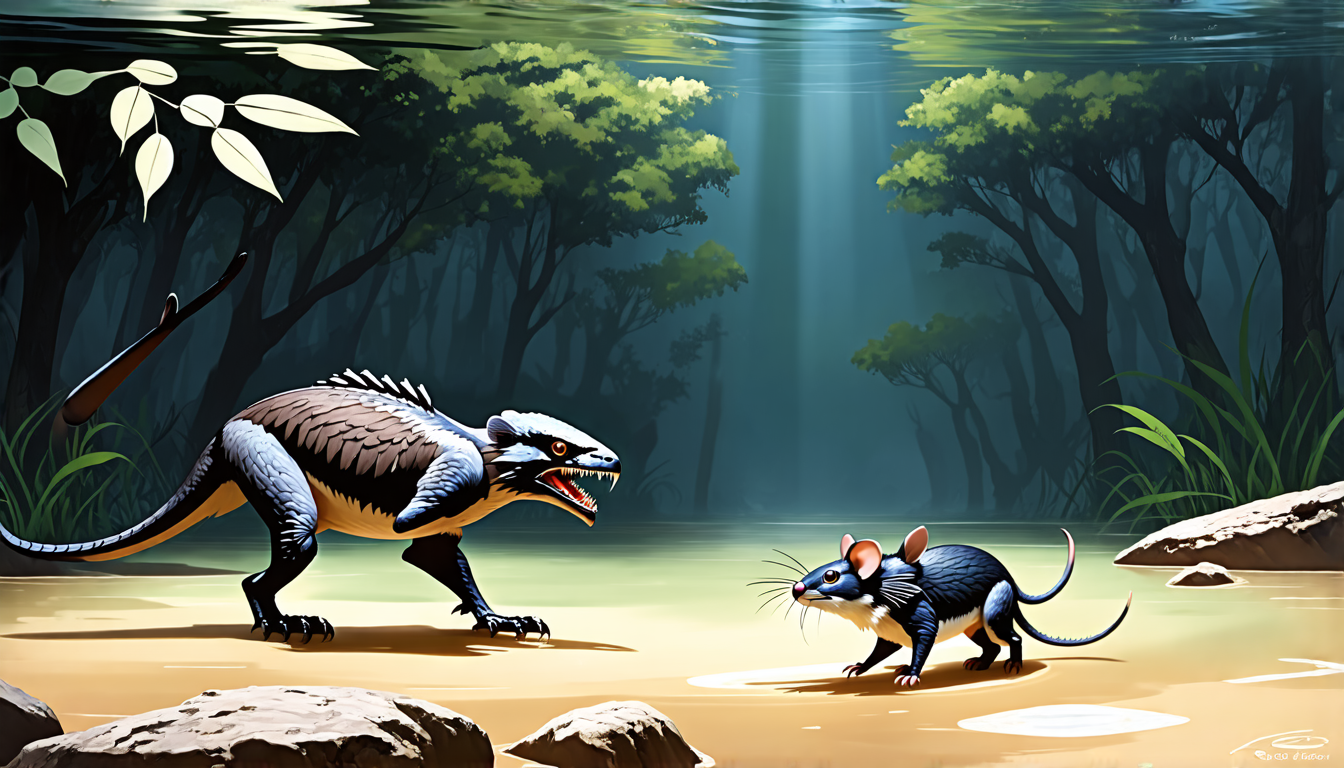
A new study has shed light on the intricate dance between predators and prey in ecosystems, revealing that the way prey respond to threats can have a profound impact on the dynamics of these relationships.
Researchers have long known that prey species can develop defensive strategies to avoid being eaten by predators. But what they’ve only recently begun to appreciate is the extent to which these defenses can shape the behavior of their would-be hunters. In fact, the study suggests that when prey exhibit inducible defenses – such as changing color or size in response to predator presence – it can actually make predators more effective at catching them.
This may seem counterintuitive, but it’s all about the way predators adapt to these defenses. When prey are able to rapidly change their appearance or behavior in response to threats, it creates an evolutionary arms race between the two species. Predators that are unable to keep up with these changes will struggle to catch their prey, while those that can adapt quickly will thrive.
The study used mathematical models to simulate the interactions between predators and prey, taking into account a range of factors such as the speed at which prey can change their defenses, the effectiveness of these defenses in deterring predators, and the impact of competition between different predator species.
What they found was that when prey are able to exhibit inducible defenses quickly enough, it can actually lead to increased predation rates. This is because predators are able to learn from their experiences and adjust their hunting strategies accordingly. In other words, if a predator fails to catch a prey species that has rapidly changed its defenses in response to the threat, it will likely try a different approach next time – one that may be more effective.
But what about the impact on ecosystem dynamics? The study suggests that when predators are able to adapt quickly to inducible defenses, it can lead to a stabilizing effect on populations. This is because predators become more effective at controlling prey numbers, which in turn reduces competition for resources and helps maintain balance in the ecosystem.
However, if prey are unable to change their defenses quickly enough, or if predators are unable to adapt to these changes, the opposite can happen – population dynamics can become unstable, leading to boom-and-bust cycles that can have far-reaching consequences for ecosystems.
The study’s findings have important implications for our understanding of predator-prey relationships and the complex interactions that shape ecosystem dynamics.
Cite this article: “Predator-Prey Dynamics: How Prey Defenses Shape the Behavior of Their Would-Be Hunters”, The Science Archive, 2025.
Predator-Prey Interactions, Inducible Defenses, Evolutionary Arms Race, Mathematical Models, Population Dynamics, Ecosystem Stability, Adaptive Behavior, Hunting Strategies, Resource Competition, Ecological Balance.