

Saturday 01 March 2025
A team of researchers has made significant strides in understanding how to design optimal sensors for monitoring complex systems, such as aircraft wings or insect flight. The breakthrough comes from a deeper understanding of how to analyze infinite-dimensional systems, like those found in nature.
Traditionally, scientists have relied on finite-dimensional models to study complex systems. These models simplify the system by reducing its dimensionality, making it easier to analyze and predict its behavior. However, this simplification can lead to inaccuracies and limitations in our understanding of the system’s behavior.
The researchers tackled this challenge by developing a new approach that combines analytical and empirical methods to construct an observability Gramian. This Gramian is a mathematical tool used to quantify how well a system’s output can be observed from its initial conditions.
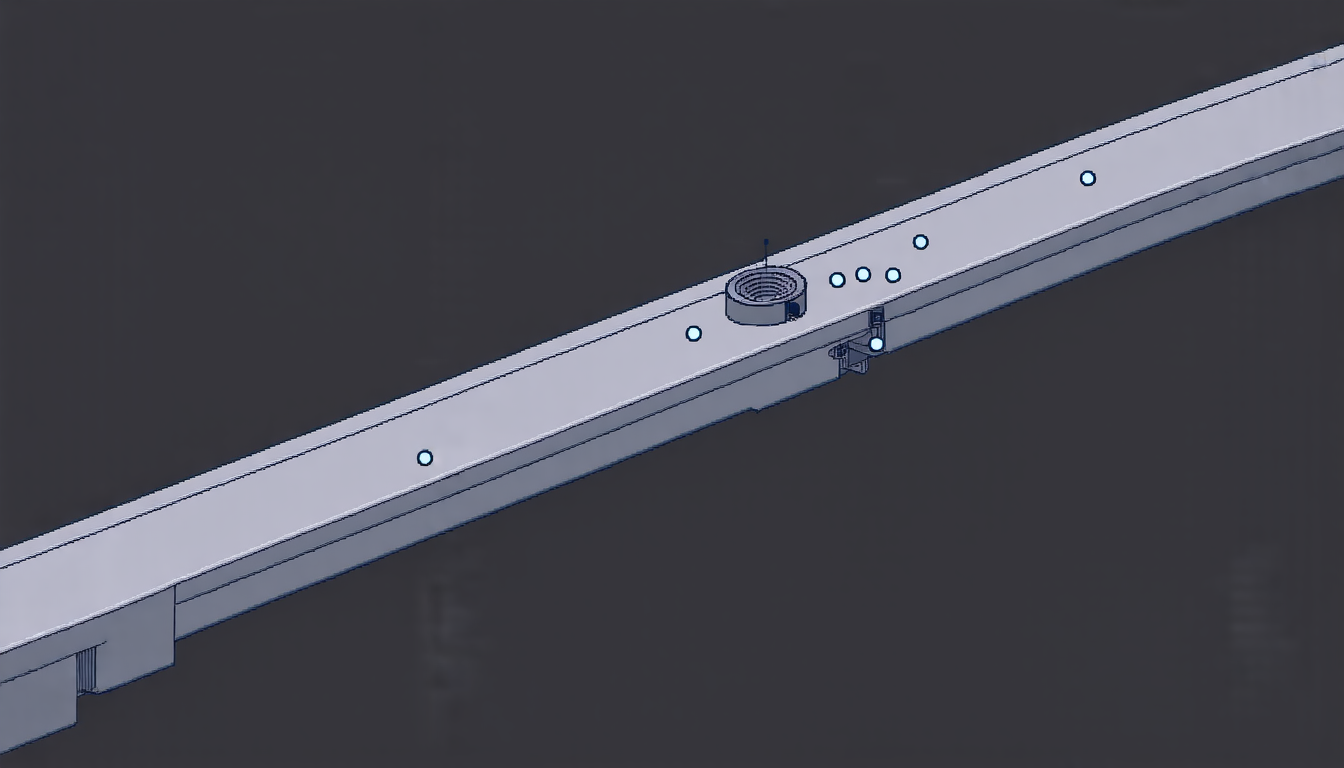
The team applied their method to a classic problem: monitoring the vibrations of a freely vibrating cantilevered beam. They found that by analyzing the infinite-dimensional system, they could identify optimal sensor locations and placement strategies that significantly improved the accuracy of their predictions.
One of the key insights from this research is the importance of considering the system’s infinite dimensionality when designing sensors. By ignoring this aspect, scientists may inadvertently create sensor placement strategies that are suboptimal or even ineffective.
The researchers also demonstrated the potential applications of their method in real-world scenarios. For instance, they showed how their approach could be used to optimize sensor placement for monitoring the vibrations of an aircraft wing during flight.
This breakthrough has significant implications for various fields, including aerospace engineering, biology, and materials science. By developing more sophisticated sensors that can accurately monitor complex systems, scientists can gain a deeper understanding of these systems’ behavior and make more informed decisions about their design and operation.
The research highlights the importance of interdisciplinary collaboration between mathematicians, engineers, and biologists to develop innovative solutions for real-world problems. As scientists continue to push the boundaries of what is possible with sensor technology, this breakthrough will undoubtedly play a significant role in shaping the future of sensing and monitoring complex systems.
Cite this article: “Optimal Sensor Design for Complex Systems”, The Science Archive, 2025.
Sensors, Complex Systems, Monitoring, Optimality, Infinite Dimensionality, Observability Gramian, Sensor Placement, Aerospace Engineering, Biology, Materials Science





