

Saturday 01 March 2025
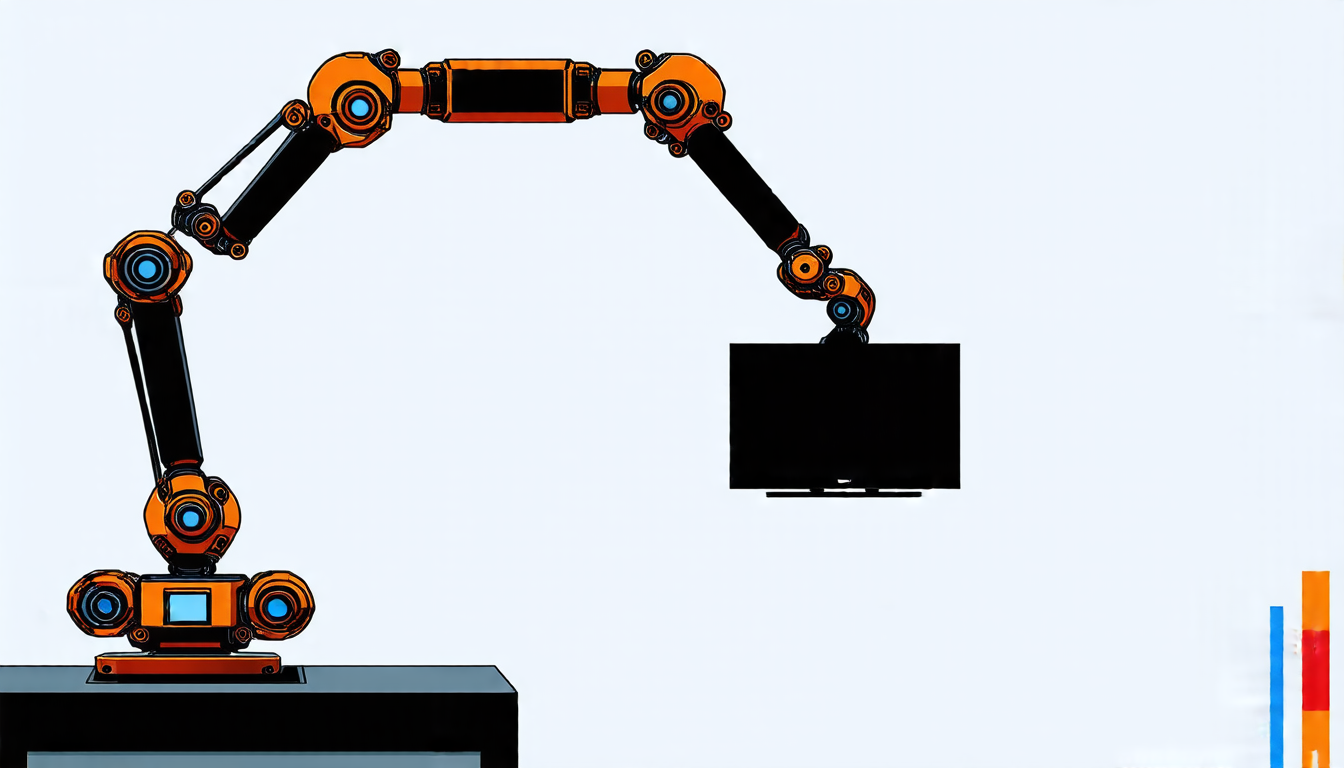
Robots are getting better at grasping and manipulating objects, even when they don’t know exactly what they’re dealing with. This is crucial for industries like recycling, where machines need to be able to disassemble complex electronic devices quickly and accurately.
The problem with current robotic systems is that they rely too heavily on visual data to perform tasks. But in many real-world scenarios, the camera’s view can be obstructed or the object’s shape and pose are uncertain. This makes it difficult for robots to adapt to changing situations and interact with objects effectively.
To overcome these limitations, researchers have developed a new approach that combines tactile feedback with force control to improve robotic grasping and manipulation. The system uses a gripper with sensitive fingers that can detect changes in pressure and orientation as the robot interacts with an object.
The gripper is equipped with sensors that provide real-time information about the object’s shape, size, and orientation. This data is used to adjust the robot’s movement and apply the right amount of force to grasp and manipulate the object successfully.
In a series of experiments, the researchers tested their system on various electronic devices, including TVs, computers, and phone batteries. They found that the robotic system was able to grasp and disassemble these objects with high accuracy, even when they were positioned at unusual angles or had complex shapes.
The results are promising for industries like recycling, where machines need to be able to quickly and accurately disassemble electronic devices to recover valuable materials. The new approach could also have applications in manufacturing, healthcare, and other fields where robots need to interact with objects in uncertain environments.
One of the key advantages of this system is that it can adapt to changing situations and learn from experience. As the robot interacts with more objects, it can refine its understanding of how to grasp and manipulate them successfully.
The researchers are now working on integrating their system into larger robotic platforms, which will enable them to tackle even more complex tasks. With further development, this technology could revolutionize the way robots interact with objects in a wide range of industries.
Cite this article: “Robots Improve Object Manipulation with Tactile Feedback and Force Control”, The Science Archive, 2025.
Robots, Grasping, Manipulation, Tactile Feedback, Force Control, Gripper, Sensors, Shape, Size, Orientation





