

Friday 28 February 2025
The latest innovation in robotics has taken a significant leap forward, as researchers have developed a new method for autonomous navigation in unstructured environments. The Traversal Risk Graph (TRG) planner is designed to safely and efficiently guide robots through challenging terrain, such as mountains, caves, construction sites, and disaster areas.
Traditional path planning algorithms often focus on avoiding obstacles, but they don’t take into account the stability and traversability of the terrain. This can lead to plans that are either too cautious or too reckless, resulting in inefficient navigation. The TRG planner addresses this issue by incorporating a novel graph representation that considers both geometric traversability and relative traversal risk.
The graph is constructed using wavefront propagation, which allows for real-time planning even in large-scale environments. Each node in the graph represents the stability and reachability of the terrain, while edges represent relative traversal risk-weighted path candidates. This enables the planner to prioritize both safe and short paths, ensuring that the robot navigates efficiently and effectively.
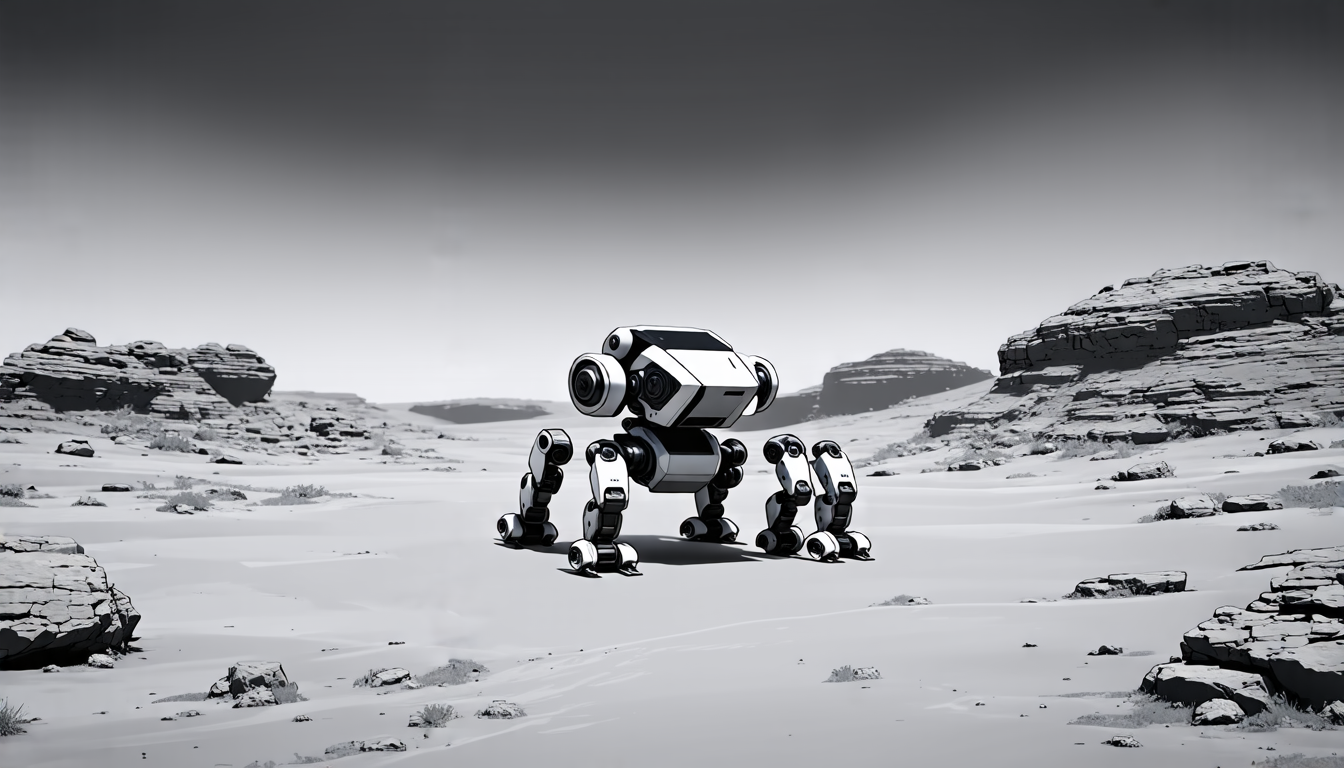
The TRG planner has been tested in several real-world experiments using a quadrupedal robot, with impressive results. The robot was able to successfully traverse challenging terrain, including steep slopes and rough passages, while avoiding risky areas and reaching its goal quickly.
One of the key advantages of the TRG planner is its ability to adapt to changing environments. As the robot moves through the terrain, it continuously updates its graph representation, allowing it to adjust its path in real-time to respond to unexpected obstacles or changes in the terrain.
The implications of this technology are significant, with potential applications in search and rescue missions, environmental monitoring, and disaster response. Autonomous robots equipped with TRG planning could quickly and safely navigate through debris-filled areas, avoiding hazardous materials and reaching trapped survivors.
The development of the TRG planner represents a major step forward in autonomous navigation, demonstrating the ability to effectively plan paths that balance safety and efficiency. As robotics continues to evolve, innovations like this will play an increasingly important role in shaping our understanding of the world and improving our lives.
Cite this article: “Autonomous Navigation Breakthrough: TRG Planner Revolutionizes Robot Exploration”, The Science Archive, 2025.
Robotics, Navigation, Autonomous, Unstructured Environments, Path Planning, Graph Representation, Wavefront Propagation, Quadrupedal Robot, Search And Rescue, Disaster Response





