

Saturday 01 March 2025
In a major breakthrough, scientists have developed a new approach to soft sensing in industrial processes. Soft sensing refers to the process of predicting key variables in complex systems without directly measuring them.
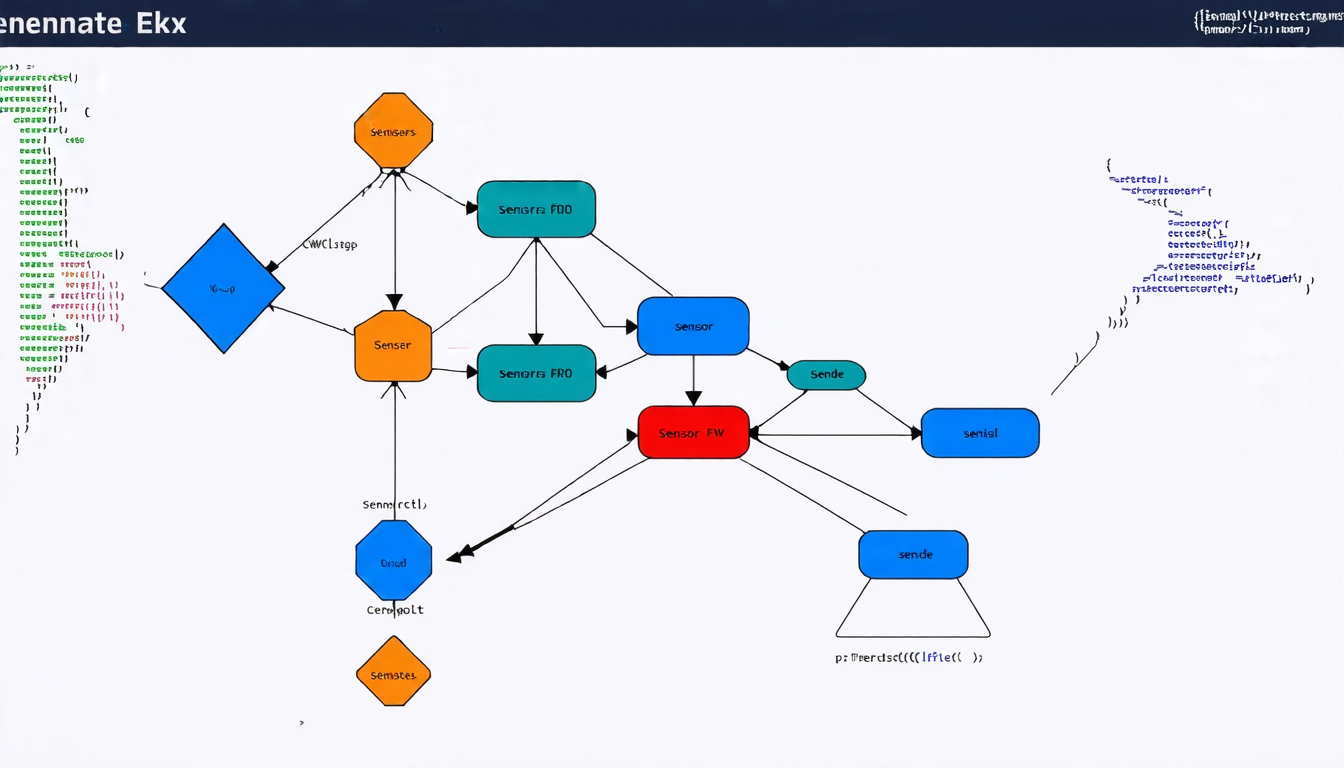
The new method, known as KANS (Knowledge Discovery Graph Attention Network for Soft Sensing), uses graph neural networks and attention mechanisms to learn the relationships between sensors and predict variables such as temperature, pressure, and flow rate.
Industrial processes are often characterized by complex interactions between multiple variables, making it challenging to accurately predict key process variables. Traditional approaches rely on physical models or statistical methods, which can be limited by their assumptions and lack of flexibility.
KANS addresses these limitations by learning patterns in the data without requiring a predefined model structure. The algorithm uses graph neural networks to represent the relationships between sensors and attention mechanisms to focus on relevant information.
In experiments, KANS outperformed existing soft sensing methods in terms of accuracy and robustness. The algorithm was tested on a multiphase flow facility, where it successfully predicted key variables such as temperature and pressure.
One of the key advantages of KANS is its ability to handle high-dimensional data and learn complex relationships between sensors. This makes it particularly useful for industrial processes with many interacting variables.
The development of KANS has significant implications for industries that rely on real-time monitoring and control of complex systems, such as chemical processing, oil refining, and power generation.
KANS can be used to improve the accuracy and reliability of soft sensing in these industries, enabling more efficient and effective operation. The algorithm also has potential applications in other areas, such as healthcare and finance, where predicting key variables is critical for decision-making.
Overall, KANS represents a significant advancement in the field of soft sensing and has far-reaching implications for industry and society.
Cite this article: “Breakthrough in Soft Sensing: Introducing KANS Algorithm”, The Science Archive, 2025.
Soft Sensing, Industrial Processes, Graph Neural Networks, Attention Mechanisms, Predictive Analytics, Process Control, Multiphase Flow, Chemical Processing, Oil Refining, Power Generation





