

Saturday 01 March 2025
Deep learning models are revolutionizing the field of soft sensing, which involves predicting key process variables in industrial settings without using traditional sensors. This approach is crucial for improving the efficiency and safety of various industries, such as chemical processing and manufacturing.
To achieve this, researchers have developed a new model called ST- HCSS (Spatio-Temporal Hypergraph Convolutional Soft Sensing). This model combines two key techniques: hypergraphs and convolutional neural networks. Hypergraphs are mathematical structures that can represent complex relationships between different sensor nodes, while convolutional neural networks are well-suited for processing time-series data.
The ST-HCSS model uses a multi-view mixer to extract features from the input data, which is then fed into a gated temporal convolution layer. This layer captures long-term dependencies in the data and selectively retains important information. Finally, the model applies a spectral hypergraph convolution layer to learn higher-order spatial relationships between sensor nodes.
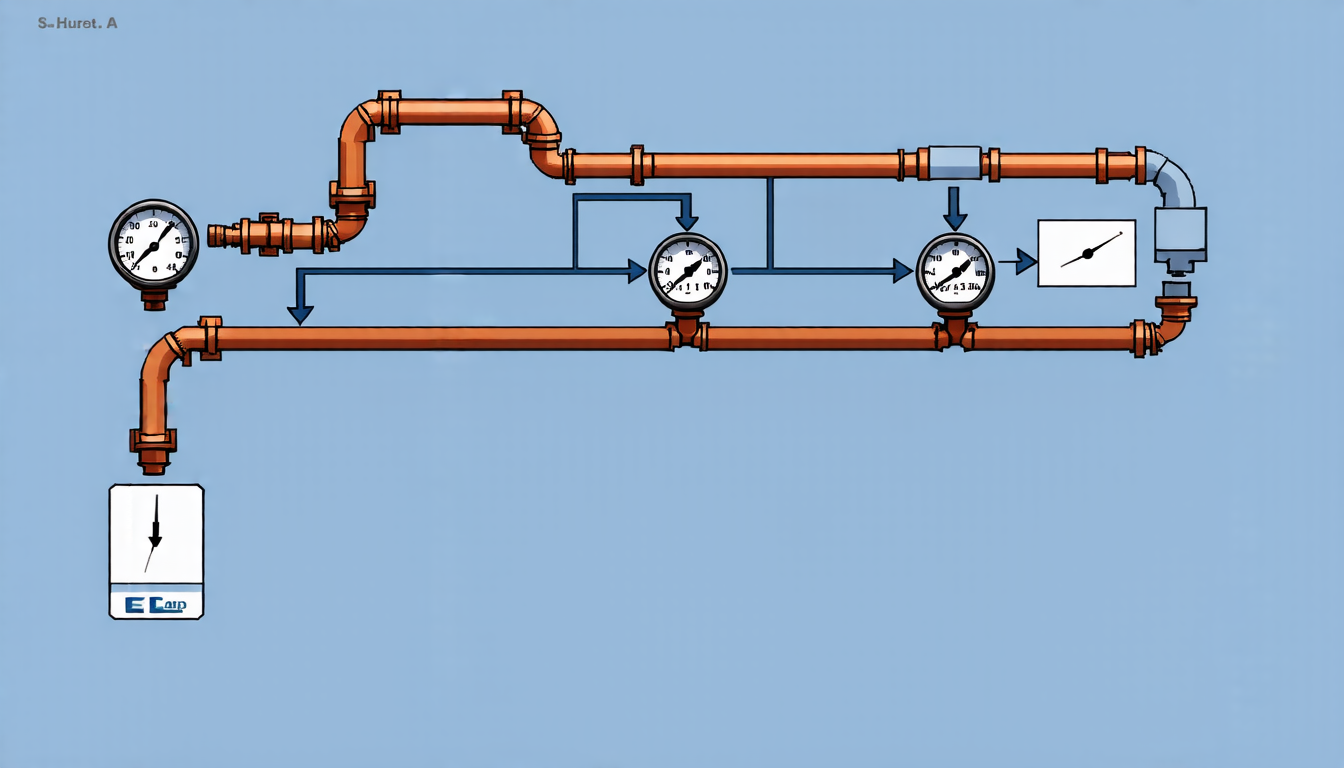
The researchers tested their model on real-world industrial data from a multiphase flow facility and compared it to several state-of-the-art soft sensing models. The results showed that ST-HCSS outperformed the other models in predicting three key process variables, including pressure, flow rate, and valve position.
This breakthrough has significant implications for industries that rely heavily on accurate predictions of process variables. By providing more reliable estimates of these variables, ST-HCSS can help improve product quality, reduce waste, and increase efficiency.
The model’s ability to learn complex relationships between sensor nodes also makes it well-suited for applications where traditional sensors are not available or are subject to noise and interference. This could include monitoring industrial processes in remote or hazardous locations, where human intervention is difficult or impossible.
Overall, the development of ST-HCSS represents a major advance in soft sensing technology and has the potential to transform various industries by providing more accurate and reliable predictions of key process variables.
Cite this article: “Revolutionizing Soft Sensing: A Breakthrough Model for Predictive Process Monitoring”, The Science Archive, 2025.
Soft Sensing, Deep Learning, Industrial Processes, Chemical Processing, Manufacturing, Hypergraphs, Convolutional Neural Networks, Time-Series Data, Multiphase Flow Facility, Process Variables.





