

Saturday 01 March 2025
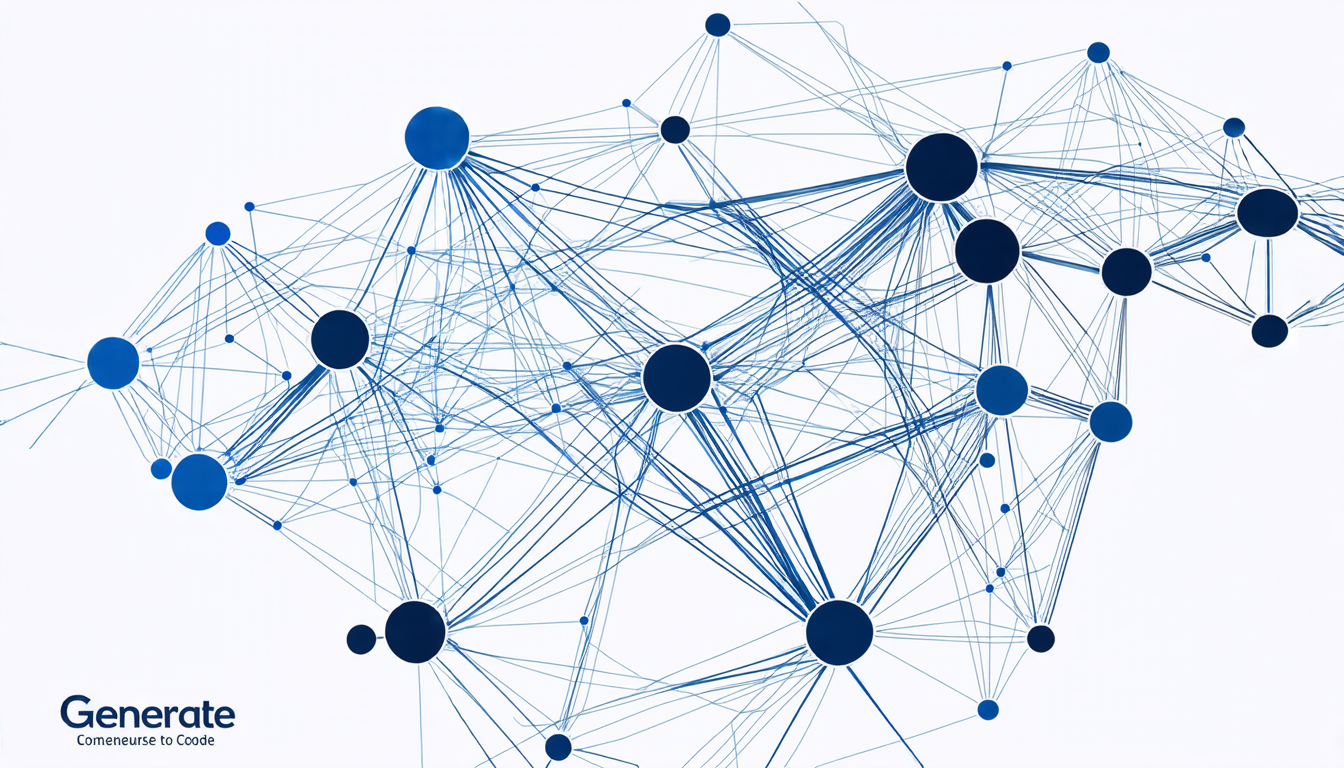
A new approach to analyzing complex networks has been developed, with potential applications in fields such as medicine and social sciences. The method, which combines machine learning with graph theory, allows researchers to identify important patterns within large datasets without requiring extensive manual annotation.
One of the key challenges in working with complex networks is that they often contain vast amounts of data, making it difficult for humans to manually analyze and extract meaningful information. This is particularly true in fields such as pathology, where images can be represented as graphs, and disease-relevant patterns need to be identified.
The new approach uses a technique called graph attention networks (GATs), which allows the model to focus on the most relevant parts of the graph during training and inference. The GAT method is particularly effective in capturing localized patterns within complex networks, making it well-suited for tasks such as node classification and graph classification.
To test the effectiveness of this approach, researchers evaluated their method on two widely used datasets: D&D and MSRC-21. The results were impressive, with the new approach achieving competitive accuracy rates compared to traditional methods.
One of the most promising aspects of this research is its potential applications in medicine. By analyzing complex networks representing medical images, researchers may be able to identify disease-relevant patterns that are currently difficult or impossible to detect using traditional methods. This could lead to improved diagnostic capabilities and more effective treatments.
The approach also has implications for social sciences, where complex networks can represent relationships between individuals or organizations. By identifying important patterns within these networks, researchers may be able to gain a better understanding of how they function and how they can be improved.
While the potential applications of this research are significant, there is still much work to be done before it can be widely adopted. However, the results so far suggest that this approach has the potential to revolutionize our ability to analyze complex networks, and could have a major impact on fields such as medicine and social sciences.
Cite this article: “Analyzing Complex Networks with Machine Learning and Graph Theory”, The Science Archive, 2025.
Machine Learning, Graph Theory, Complex Networks, Pattern Recognition, Node Classification, Graph Classification, Medical Imaging, Pathology, Social Sciences, Graph Attention Networks
Reference: Aditya Prakash, “Weakly Supervised Learning on Large Graphs” (2025).





