

Saturday 01 March 2025
A new approach has been developed to model disease progression, using a combination of neural networks and differential equations. The method, called RealDiffFusionNet, is designed to handle irregularly sampled medical data and incorporates multimodal context from various sources.
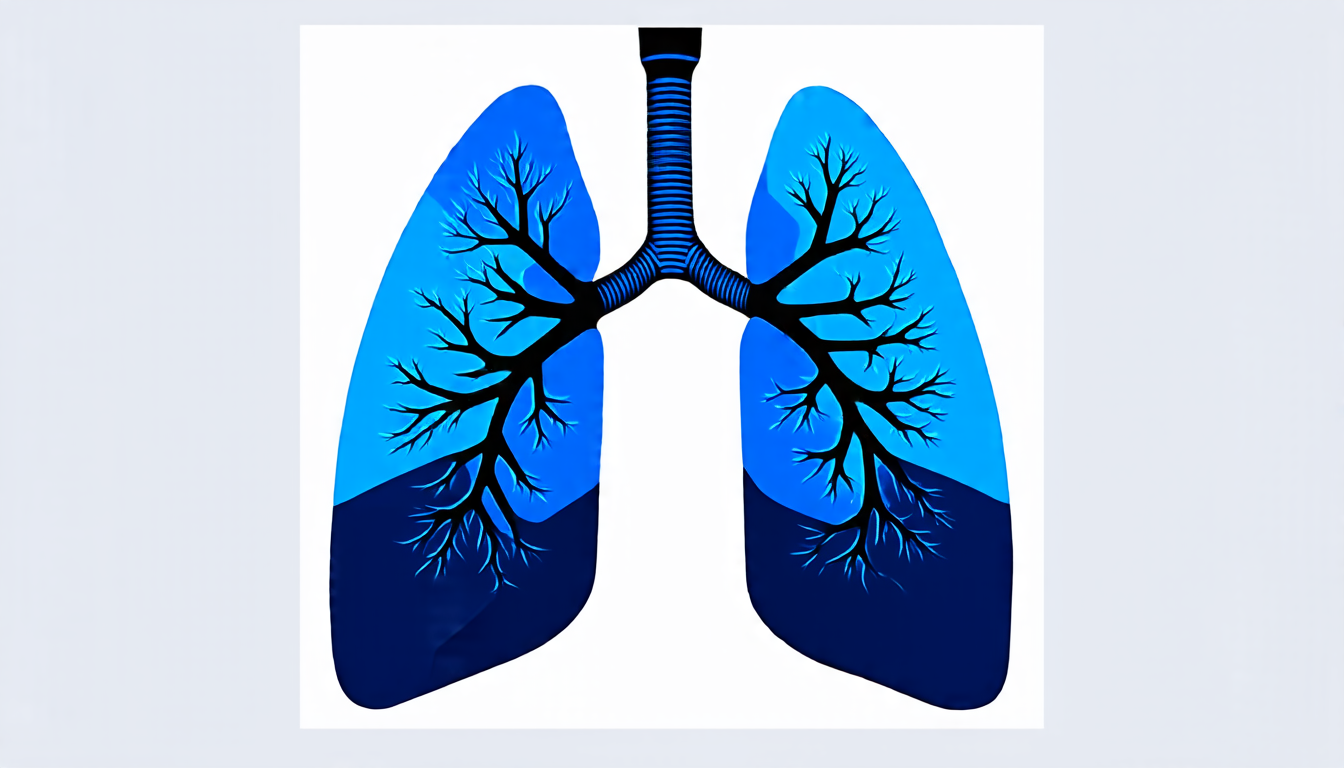
The researchers behind this work were motivated by the need for more accurate models of disease progression, particularly in conditions such as idiopathic pulmonary fibrosis (IPF). Current methods often rely on simple linear regression or machine learning algorithms, which can be limited in their ability to capture complex patterns in the data. IPF is a chronic and debilitating condition that causes scarring in the lungs, leading to breathing difficulties and reduced quality of life.
The new method uses a neural network called Neural Controlled Differential Equations (Neural CDE) to model disease progression. This type of network is particularly well-suited to handling irregularly sampled data, as it can learn to predict future values based on past observations. The researchers used this approach in combination with multimodal context from various sources, including patient demographics and imaging data.
The RealDiffFusionNet method was tested using two different datasets: one containing structured time series data of lung function from patients with IPF, and another containing a series of MRI scans along with demographics and physical examination data from patients with Alzheimer’s disease. The results showed that the new approach outperformed traditional methods in predicting disease progression, particularly when incorporating multimodal context.
One of the key innovations of RealDiffFusionNet is its ability to handle irregularly sampled data. This is a significant challenge in many medical applications, where data may be missing or incomplete due to various reasons such as patient non-adherence or equipment malfunction. The Neural CDE approach allows the model to learn from this incomplete data and make predictions based on past observations.
The researchers also explored different interpolation schemes to deal with gaps in the data. They found that using a rectilinear interpolation scheme, which fills in missing values by linearly interpolating between known points, resulted in better performance than other approaches such as cubic Hermite splines.
Overall, the RealDiffFusionNet method represents an important advance in modeling disease progression and has potential applications in a wide range of medical conditions. Its ability to handle irregularly sampled data and incorporate multimodal context makes it particularly well-suited for use in clinical settings, where accurate predictions are critical for informing patient treatment and management decisions.
Cite this article: “RealDiffFusionNet: A Novel Approach to Modeling Disease Progression Using Neural Networks and Differential Equations”, The Science Archive, 2025.
Disease Progression, Neural Networks, Differential Equations, Realdifffusionnet, Idiopathic Pulmonary Fibrosis, Alzheimer’S Disease, Multimodal Context, Irregularly Sampled Data, Interpolation Schemes, Medical Imaging.





