

Saturday 01 March 2025
The quest to predict the spread of infectious diseases has long been a challenge for scientists. A new approach, combining machine learning and mathematical modeling, is showing promise in accurately forecasting the trajectory of outbreaks.
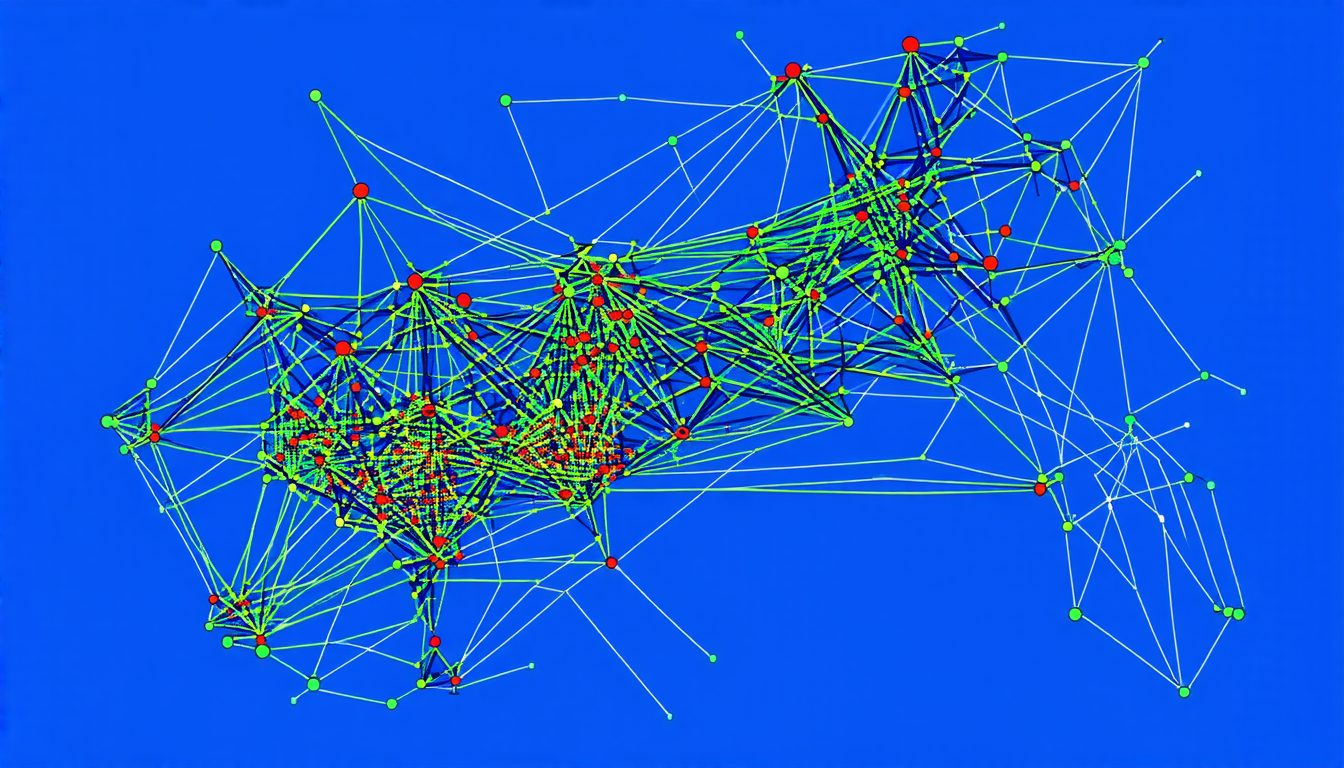
Researchers have developed a hybrid model that combines graph convolutional neural networks (GCNs) with metapopulation susceptible-infected-recovered (SIR) models. This unique fusion allows for the incorporation of complex network structures and real-time data into predictive simulations.
The GCN component learns to identify patterns in mobility data, such as travel habits and population density, which are critical factors in disease transmission. The SIR model provides a framework for understanding how these patterns influence the spread of an outbreak.
In a recent study, the researchers applied this hybrid approach to predict the spread of COVID-19 across the United States. They found that by incorporating mobility data from 48 continental states, they could accurately forecast infection rates and reproduction numbers.
One of the key advantages of this model is its ability to account for regional differences in population density, travel patterns, and policy responses. This allows for a more nuanced understanding of how these factors interact and influence the spread of disease.
The researchers used real-world data from confirmed COVID-19 cases to train their model and validate its predictions. They found that the hybrid approach outperformed traditional SIR models in predicting infection rates and reproduction numbers, particularly at shorter time horizons.
While this study focused on COVID-19, the implications are far-reaching. The model could be adapted to predict the spread of other infectious diseases, such as influenza or tuberculosis. It also has potential applications in understanding the impact of public health interventions, such as vaccination campaigns or contact tracing.
The future of disease modeling is likely to involve increasingly sophisticated fusion of machine learning and mathematical approaches. As our ability to collect and analyze data improves, so too will our capacity to predict and respond to outbreaks. This hybrid model represents a significant step forward in this effort, offering a powerful tool for public health officials and researchers alike.
The next challenge will be to scale up the approach to incorporate more granular data and to improve its real-time forecasting capabilities. However, the potential rewards are substantial – more accurate predictions could lead to targeted interventions, reduced transmission rates, and ultimately, fewer lives lost to infectious disease.
Cite this article: “Predicting Infectious Disease Outbreaks with Machine Learning and Mathematical Modeling”, The Science Archive, 2025.
Machine Learning, Mathematical Modeling, Infectious Diseases, Forecasting, Covid-19, Sir Models, Graph Convolutional Neural Networks, Mobility Data, Public Health, Disease Transmission





