

Saturday 01 March 2025
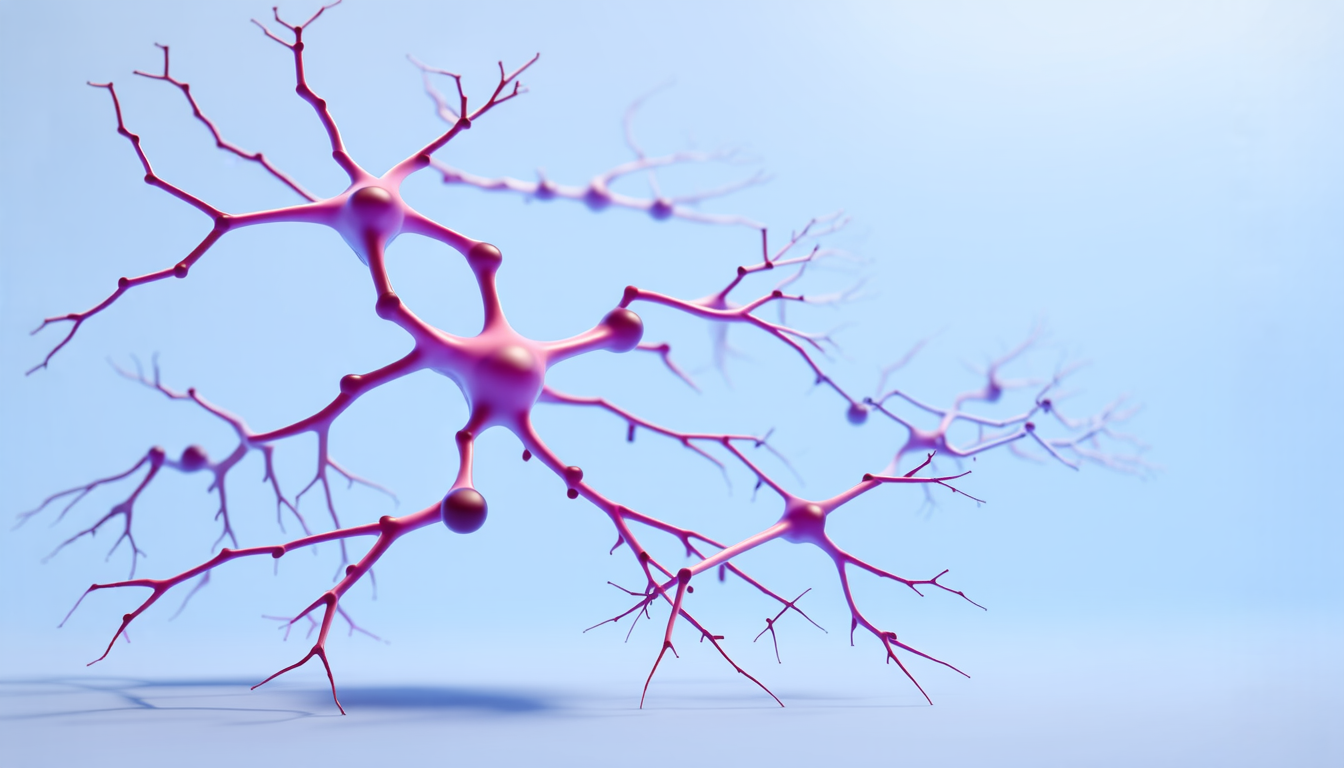
The intricate dance of brain cells has long fascinated scientists, but understanding their shape and structure has proven a daunting task. Now, researchers have made a significant breakthrough in characterizing the morphology of different types of brain cells, providing a crucial foundation for improving our grasp of brain function and disease.
To tackle this challenge, scientists analyzed over 3,500 three-dimensional reconstructions of brain cells from various species and cell types. They identified key morphological features that define the skeletal framework, shape, and topological structure of these cells. These features were then categorized into three groups: structural, which describe the overall shape; shape, which focuses on spatial organization; and topological, which breaks down cellular structure to distinguish between cell types.
The study reveals a complex interplay between these features, with certain combinations being more common in specific cell types or species. The researchers also found that some features are more correlated than others, providing insight into the underlying mechanisms driving brain development and function.
One of the most striking findings is the significant difference in morphology between different types of brain cells. For example, neurons have a distinct shape and structure compared to glial cells. This highlights the importance of understanding these differences in order to develop effective treatments for neurological disorders.
The study’s results also have implications for magnetic resonance imaging (MRI), which is often used to non-invasively visualize brain structures. By better understanding the morphology of brain cells, researchers can improve MRI techniques and potentially use them to diagnose and track diseases such as Alzheimer’s or Parkinson’s.
This research marks an important step towards a deeper understanding of brain function and disease. As scientists continue to explore the intricate world of brain cells, their findings will undoubtedly shed new light on the complex interplay between structure and function in the human brain.
Cite this article: “Deciphering Brain Cell Structure: A Breakthrough in Understanding Neurological Function and Disease”, The Science Archive, 2025.
Brain Cells, Morphology, Neuroscience, Neurology, Mri, Alzheimer’S, Parkinson’S, Neurons, Glial Cells, 3D Reconstruction





