

Saturday 01 March 2025
Water distribution networks (WDNs) are critical infrastructure, providing clean drinking water to millions of people around the world. However, contamination events can pose serious risks to public health and economic stability. To address this issue, researchers have developed a novel approach for detecting anomalies in WDNs using artificial intelligence.
The new method, called Dual-Threshold Anomaly and Drift Detection (AD&DD), combines two techniques: anomaly detection and concept drift adaptation. The former identifies unusual patterns in water quality data, while the latter adjusts to changes in the underlying distribution of that data over time. This dual approach allows AD&DD to detect contamination events with high accuracy, even when sensors are subject to measurement offsets or other types of noise.
To evaluate AD&DD’s performance, researchers simulated scenarios involving arsenite contamination and sensor measurement offsets using two realistic WDNs. The results show that AD&DD outperformed other methods, such as iForest++, LOF++, and VAE4AS, in detecting anomalies and localizing the source of contamination.
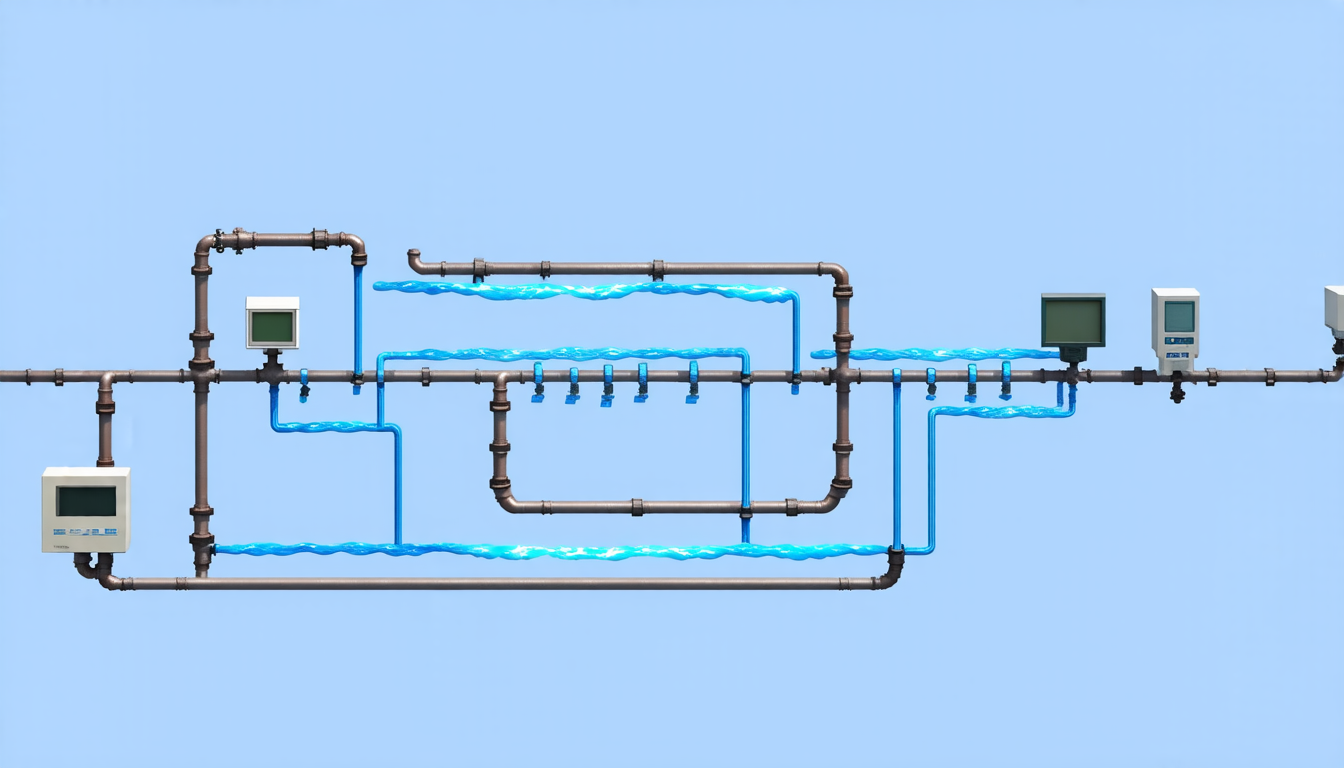
The decentralized architecture of AD&DD also enables real-time monitoring and fault localization. By deploying sensors at strategic locations, the system can detect anomalies and pinpoint their origin, allowing for swift response to contamination events.
AD&DD’s ability to adapt to changing conditions is particularly noteworthy. As WDNs are complex systems subject to various types of noise and variability, a method that can adjust to these changes is essential for effective detection and localization of anomalies.
The researchers’ approach has significant implications for the water industry. By providing a robust and adaptable method for anomaly detection and fault localization, AD&DD offers a valuable tool for ensuring the safety and reliability of WDNs. As the global population continues to urbanize and water scarcity becomes increasingly pressing, innovations like AD&DD will play a critical role in protecting public health and mitigating the impacts of climate change.
The study’s findings have important implications for the development of future intelligent water management systems. By integrating AI-powered anomaly detection with decentralized architectures, researchers can create more effective and efficient solutions for monitoring and maintaining WDNs. As the field continues to evolve, AD&DD serves as a promising example of how AI can be leveraged to address some of the world’s most pressing challenges.
Cite this article: “Artificial Intelligence-Based Anomaly Detection in Water Distribution Networks”, The Science Archive, 2025.
Water Distribution Networks, Artificial Intelligence, Anomaly Detection, Concept Drift, Sensor Measurement Offsets, Contamination Events, Public Health, Economic Stability, Real-Time Monitoring, Fault Localization





