

Saturday 01 March 2025
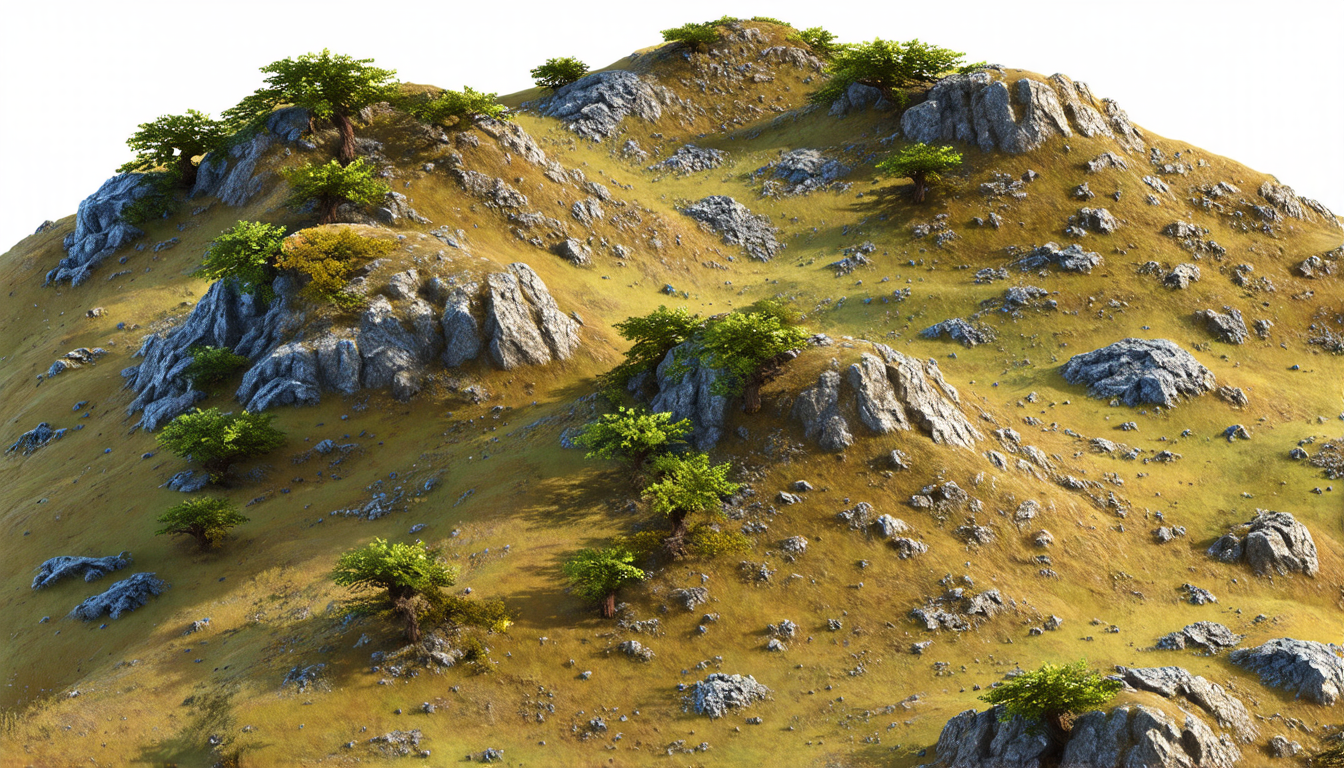
Autonomous vehicles are increasingly finding their way onto our roads, but developing effective terrain generation techniques for testing these vehicles is a significant challenge. Researchers at Michigan Technological University have developed a novel approach that uses fractal theory to generate realistic, varied, and challenging off-road terrains for autonomous vehicle simulation.
The team’s method combines digital elevation models (DEMs) of low-, mid-, and high-frequency surface roughness to create complex and dynamic terrain profiles. By adjusting the fractal dimension in the high-frequency DEM, the researchers can control the level of roughness in the generated terrain, allowing them to simulate a wide range of off-road environments.
The team tested their method using Unreal Engine, a popular game engine used for simulation and visualization tasks. They generated 60 unique terrains with varying levels of roughness and then used an autonomous ground vehicle (AGV) simulator to test its performance in these environments.
The results show that the AGV’s success rate decreases as the fractal dimension increases, indicating that the terrain becomes more challenging for the vehicle to navigate. The team also found that the AGV’s kinematics, such as vertical acceleration and pitch and roll rates, are affected by the level of roughness in the terrain.
The researchers’ approach has significant implications for the development of autonomous vehicles. By generating realistic and varied terrains, they can test these vehicles under a wide range of conditions, improving their ability to navigate complex off-road environments. This is particularly important as autonomous vehicles are increasingly being used in applications such as search and rescue, agriculture, and construction.
The team’s method also has potential applications beyond autonomous vehicle testing. The fractal theory-based terrain generation technique could be used to create realistic and varied virtual environments for gaming, simulation, or visualization purposes.
In addition to its technical merits, the team’s approach highlights the importance of collaboration between researchers from different fields. By combining expertise in computer science, engineering, and mathematics, the team was able to develop a novel solution that has significant potential benefits for a wide range of applications.
The Michigan Technological University researchers’ work demonstrates the power of interdisciplinary research and collaboration, and their innovative approach to terrain generation is an important step forward in the development of autonomous vehicles.
Cite this article: “Fractal Terrain Generation for Autonomous Vehicle Simulation”, The Science Archive, 2025.
Autonomous Vehicles, Terrain Generation, Fractal Theory, Digital Elevation Models, Unreal Engine, Simulation, Off-Road Environments, Autonomous Ground Vehicle, Kinematics, Interdisciplinary Research





