

Saturday 01 March 2025
The pursuit of simplifying complex systems has been a longstanding challenge in various fields, from physics and engineering to biology and economics. One approach that’s gained significant attention in recent years is model reduction – the process of distilling intricate dynamics into more manageable, lower-dimensional representations.
Port- Hamiltonian systems, a type of physical system characterized by energy conservation and dissipation, have been particularly tricky to tame using traditional model reduction methods. These systems are ubiquitous in nature, appearing in everything from electrical circuits to mechanical oscillators. However, their complexity often makes it difficult to accurately predict their behavior using simplified models.
Enter the world of operator inference, a technique that’s been gaining traction as a means to develop data-driven reduced-order models for complex systems. This approach involves training machine learning algorithms on datasets collected from the system in question, allowing them to learn the underlying dynamics and identify patterns that can be used to construct a lower-dimensional representation.
Researchers have now applied this method to port-Hamiltonian systems, producing a novel framework that enables the inference of reduced-order models while preserving the physical properties of the original system. This achievement has significant implications for fields such as control theory, signal processing, and computational physics.
The key innovation lies in the development of two new optimization problems, pH-OpInf-W and pH-OpInf-R, which are designed to infer reduced operators that capture the essential dynamics of the port-Hamiltonian system. These operators, in turn, can be used to construct a lower-dimensional model that accurately predicts the system’s behavior.
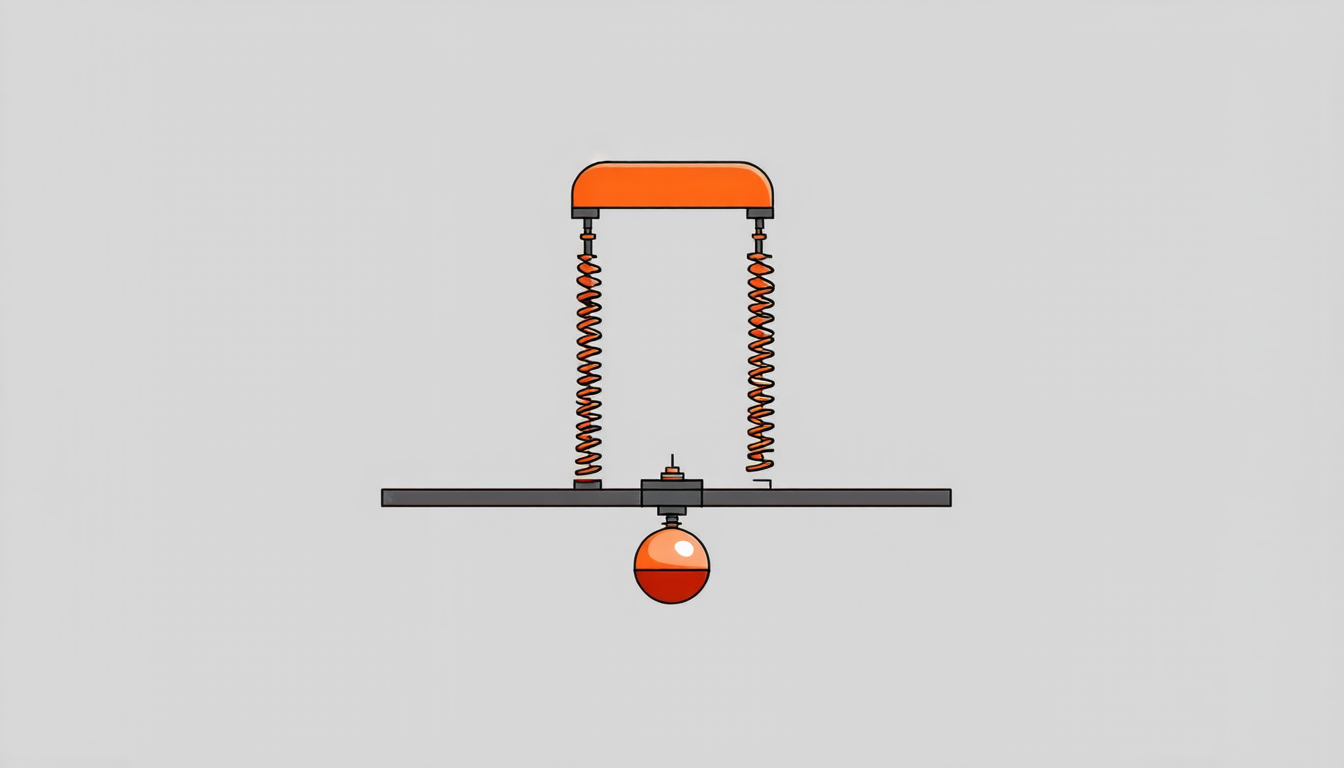
One of the most significant advantages of this approach is its ability to handle nonlinear systems, which have long been a challenge for traditional model reduction methods. The authors demonstrate the effectiveness of their framework using two distinct case studies: a linear mass-spring-damper system and a nonlinear Toda lattice model.
In the first example, the team shows that their method can accurately capture the dynamics of a simple mechanical oscillator, even when subjected to complex inputs. In the second case, they apply their approach to a nonlinear system that exhibits chaotic behavior, demonstrating its ability to identify patterns and predict the system’s evolution over time.
The potential applications of this research are vast and varied. By enabling the development of more accurate reduced-order models for port-Hamiltonian systems, researchers can improve control strategies, optimize system performance, and gain deeper insights into the underlying physics driving complex phenomena.
Cite this article: “Operator Inference for Port-Hamiltonian Systems: A Novel Framework for Reduced-Order Modeling”, The Science Archive, 2025.
Model Reduction, Port-Hamiltonian Systems, Operator Inference, Machine Learning, Reduced-Order Models, Complex Systems, Nonlinear Dynamics, Control Theory, Signal Processing, Computational Physics





