

Saturday 01 March 2025
Science has long sought to understand the intricacies of complex networks, whether they be social, biological, or economic in nature. The discovery of communities within these networks – groups of interconnected nodes that share similar characteristics – has been a crucial step in uncovering their underlying structures and behaviors.
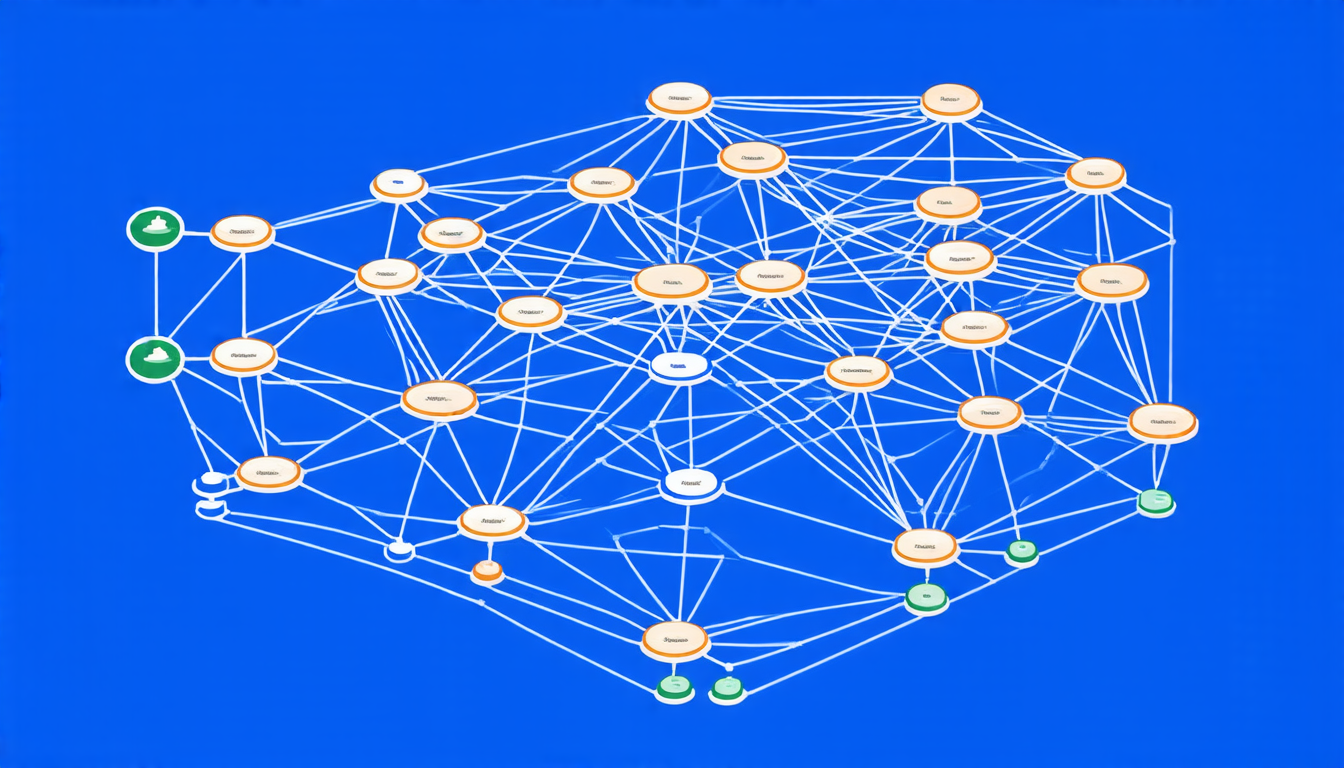
Recently, researchers have made significant strides in developing methods for identifying communities in multi-layered networks, where connections between entities exist across multiple dimensions. These networks are common in many real-world systems, such as social media platforms, transportation infrastructures, or biological pathways, where relationships can be categorized into distinct types (e.g., friendships, roadways, protein interactions).
One of the key challenges in community detection is accounting for the varying levels of relevance between nodes within each layer. In other words, some connections may be more important than others in determining a node’s membership in a particular community. To address this issue, scientists have developed ensemble-based approaches that combine multiple techniques to identify patterns and relationships across different layers.
The proposed framework, EnMCS (Ensemble- based Multilayer Community Search), is designed specifically for unsupervised community detection in multi-layered networks. By integrating two components – HoloSearch and EMerge – it offers a powerful tool for identifying cohesive subgraphs that exhibit high similarity within each layer while demonstrating low similarity across layers.
HoloSearch is responsible for searching communities within individual layers, using a graph-diffusion model to learn common and private representations of nodes. This allows the algorithm to identify patterns and relationships specific to each layer, which are then combined to form a comprehensive view of the network.
EMerge, on the other hand, merges the identified communities from each layer into a final consensus community without requiring labeled data or pre-defined community structures. By employing an Expectation-Maximization (EM) algorithm, it simultaneously estimates both true node assignments and layer error rates, optimizing these through iterative maximum likelihood estimation.
Experiments conducted on 10 real-world multi-layered networks demonstrated the effectiveness of EnMCS in identifying communities that accurately reflect the underlying network structure. The results show a significant improvement over previous methods, highlighting the potential applications of this framework in various fields, such as social network analysis, epidemiology, and recommender systems.
The development of EnMCS has important implications for our understanding of complex networks and their behavior. By providing a flexible and adaptive approach to community detection, it opens up new avenues for research into network properties, dynamics, and applications.
Cite this article: “Multilayer Community Detection with Ensemble-Based Approaches”, The Science Archive, 2025.
Networks, Community Detection, Multi-Layered Networks, Ensemble Methods, Graph Diffusion, Expectation-Maximization Algorithm, Network Analysis, Social Network Analysis, Epidemiology, Recommender Systems





