

Saturday 01 March 2025
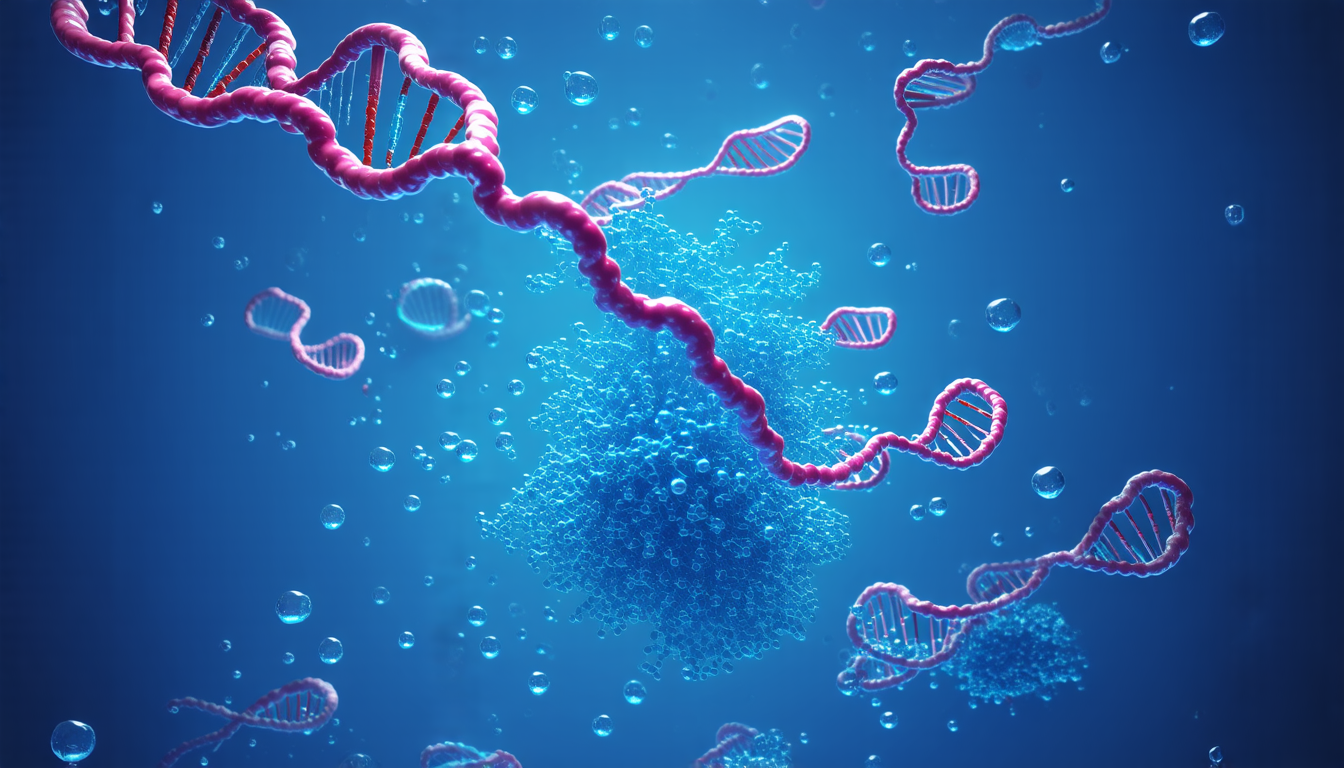
Scientists have long been fascinated by the intricate structures formed by tiny particles, like those found in DNA-coated colloids. These microscopic building blocks can come together to create crystals that are both beautiful and complex. In a recent study, researchers explored how these particles assemble into different crystal structures, revealing new insights into the fundamental forces that govern this process.
The team focused on a specific type of crystal called body-centered tetragonal (BCT), which is characterized by its unique arrangement of particles. BCT crystals are found in many natural materials, including metals and minerals, but they’re also formed in laboratory settings using DNA-coated colloids. The researchers used a combination of experiments and computer simulations to study how these particles interact with each other and form crystals.
One key finding was that the shape and size of the particles play a crucial role in determining which crystal structure forms. The team found that larger particles tend to favor more complex crystal structures, while smaller particles are more likely to form simpler ones. This discovery has important implications for the design of materials with specific properties.
Another significant result was the importance of nonspecific interactions between particles. These interactions occur when particles don’t have a strong attraction or repulsion towards each other, but still influence how they arrange themselves in space. The researchers found that these interactions can dramatically alter the crystal structure formed by the particles, even if the specific attractions and repulsions are weak.
The study also explored the role of like-particle attraction, which is when two particles of the same type interact with each other. This interaction was previously thought to be insignificant in determining crystal structures, but the researchers found that it can actually play a significant role, especially at higher concentrations of particles.
The findings of this study have important implications for the development of new materials and technologies. By understanding how particles assemble into crystals, scientists can design materials with specific properties, such as strength or conductivity. This could lead to breakthroughs in fields like energy storage and medicine.
In addition to its practical applications, this research has also shed light on fundamental questions about the nature of matter and the forces that govern its behavior. The study highlights the complex interplay between particle size, shape, and interactions, which is essential for understanding many natural phenomena.
The researchers’ use of a combination of experiments and computer simulations allowed them to gain insights into the intricacies of particle assembly at the microscopic level.
Cite this article: “Unraveling the Secrets of Particle Assembly: Insights from DNA-Coated Colloids”, The Science Archive, 2025.
Particles, Crystals, Dna-Coated Colloids, Body-Centered Tetragonal, Crystal Structures, Particle Interactions, Nonspecific Interactions, Like-Particle Attraction, Material Design, Microscopic Assembly.





