

Saturday 01 March 2025
Scientists have made a significant discovery in the field of active matter, which refers to systems where particles or objects move and interact with each other without being driven by external forces. These systems are found naturally in many biological contexts, such as flocks of birds or schools of fish, and are also being developed artificially for applications like robotics and medicine.
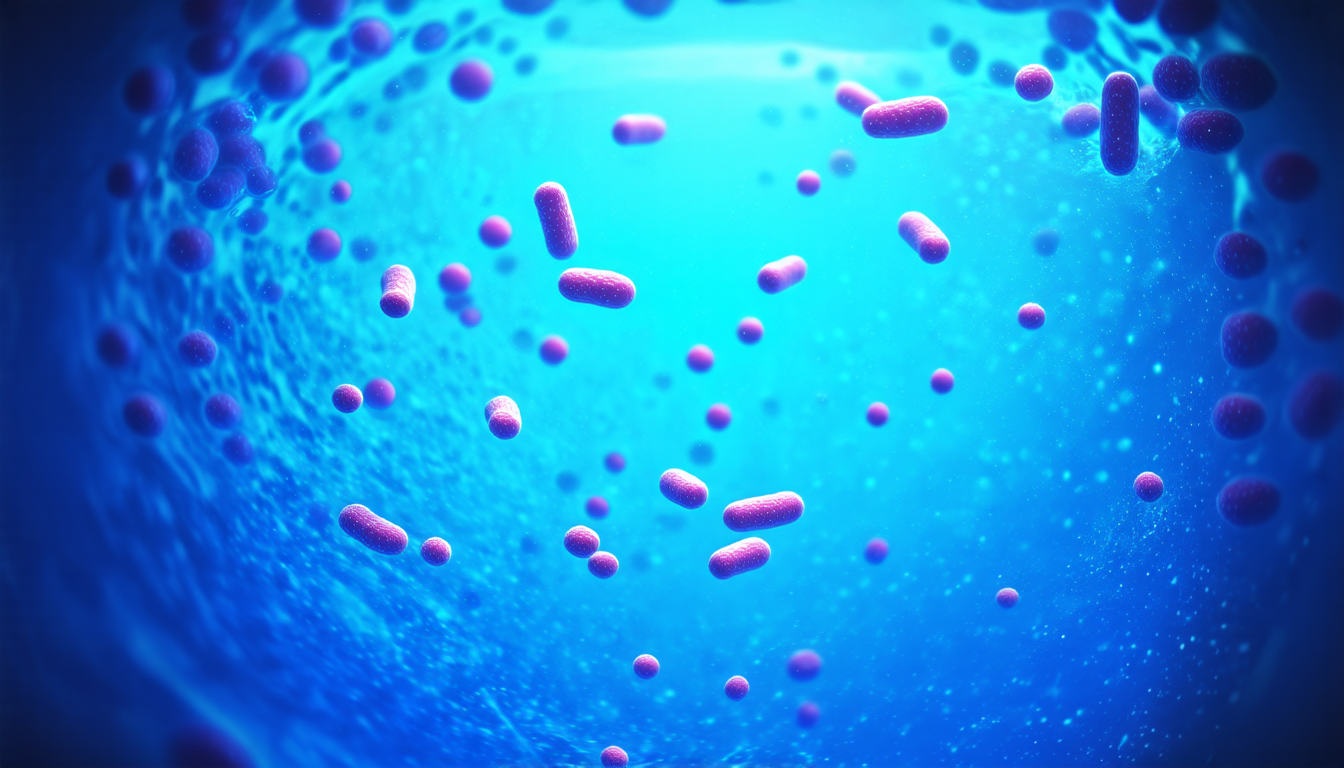
The research team used a combination of theoretical modeling and experimental techniques to study the behavior of particles suspended in a bath of actively moving microorganisms, known as E. coli bacteria. They found that the particles exhibited a unique type of diffusion, where they moved randomly but with a preference for certain directions. This behavior was not observed when the particles were placed in a traditional passive fluid, such as water or air.
The researchers used a technique called particle tracking to follow the movement of individual particles and determine their trajectories. They also analyzed the statistical properties of the particle movements, including the probability distributions of their positions and velocities.
One of the key findings was that the particles’ diffusion behavior was highly dependent on the concentration of bacteria in the bath. At low concentrations, the particles diffused randomly and freely, but as the concentration increased, they began to exhibit a strong preference for moving in certain directions. This was due to the interactions between the particles and the bacteria, which caused the particles to be pushed or pulled along specific paths.
The researchers also found that the particles’ diffusion behavior could be influenced by external factors, such as the shape and size of the container they were placed in. For example, when the particles were placed in a container with curved surfaces, their diffusion behavior changed significantly, reflecting the effects of the curvature on their motion.
These findings have important implications for our understanding of active matter systems and how they can be used to develop new materials and technologies. For example, the ability to control the directionality of particle movement could be used to create novel materials with specific properties, such as self-healing materials or shape-memory alloys.
The study also highlights the importance of considering the interactions between particles and their environment when studying active matter systems. These interactions can have a significant impact on the behavior of the particles, and ignoring them could lead to incorrect conclusions about the underlying physics.
Overall, this research provides new insights into the behavior of particles in active matter systems and has important implications for the development of novel materials and technologies.
Cite this article: “Unraveling the Dynamics of Particles in Active Matter Systems”, The Science Archive, 2025.
Active Matter, E. Coli Bacteria, Particle Tracking, Diffusion Behavior, Statistical Properties, Particle Movement, Concentration Dependence, Container Shape, Curvature Effects, Self-Healing Materials





