

Saturday 01 March 2025
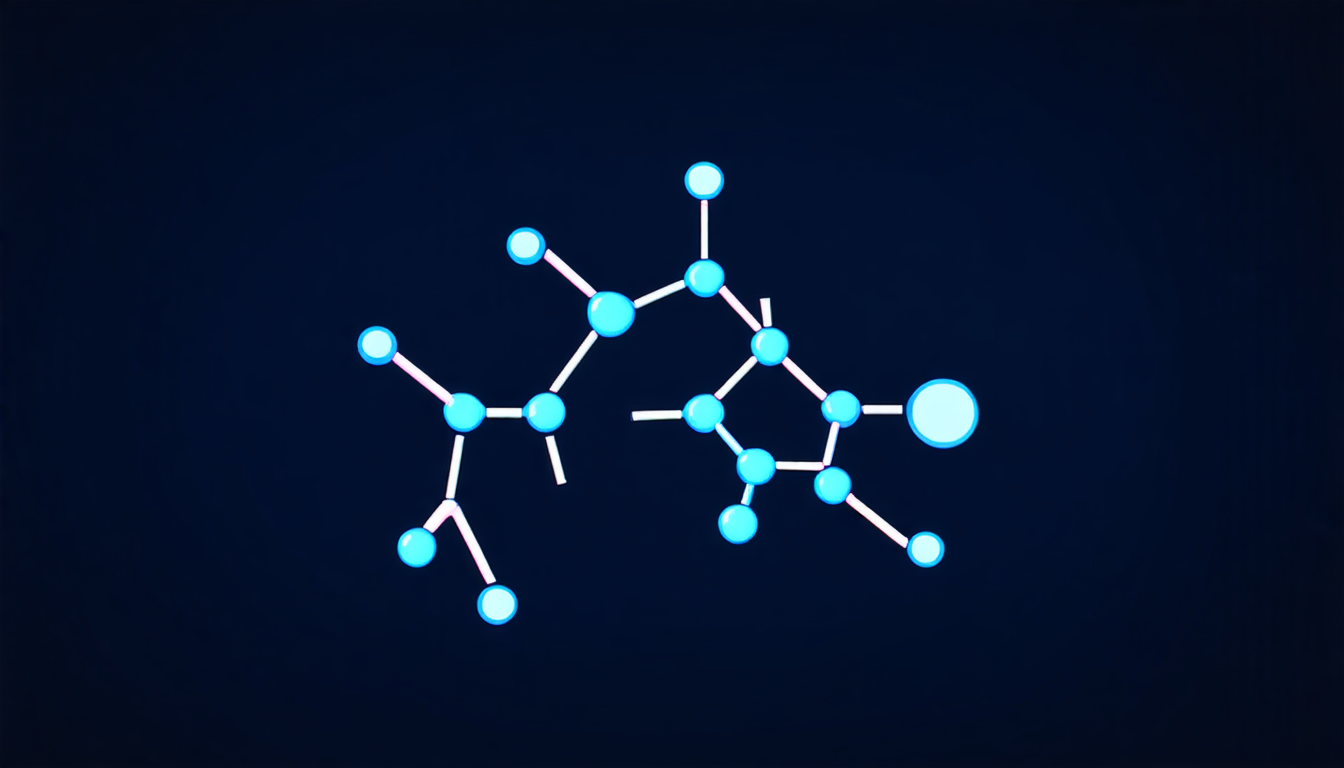
Scientists have been studying molecular structures for decades, trying to understand how they affect chemical properties and biological interactions. A new paper has shed light on a crucial aspect of this research: identifying the most extreme cases of molecular structures that maximize or minimize certain topological indices.
Topological indices are mathematical measures used to describe the molecular structure of a compound. They can be thought of as a set of numbers that summarize various properties, such as how connected the atoms in the molecule are or how many rings it contains. By studying these indices, researchers can gain insights into the chemical and biological behavior of molecules.
The new paper focuses on a specific type of topological index called degree-based topological indices. These indices use information about the number of bonds each atom is involved in to calculate its contribution to the overall molecular structure. The authors have identified five families of chemical graphs that are sufficient to characterize the extremal properties of 29 out of 33 such indices.
To put it simply, these families of graphs represent the most extreme cases of molecular structures that can maximize or minimize certain topological indices. This knowledge is crucial for understanding how molecules interact with each other and their environment, which is essential for developing new medicines, materials, and technologies.
The study’s findings are also significant because they provide a tool for quickly testing whether a new topological index has the same extremal properties as many existing indices. This can save researchers time and effort in their research, allowing them to focus on more complex problems.
One of the most intriguing aspects of this research is its potential impact on our understanding of molecular structure-property relationships. By identifying the most extreme cases of molecular structures, scientists can gain insights into how these structures affect chemical properties and biological interactions.
For example, certain topological indices have been linked to a molecule’s ability to interact with specific proteins or enzymes. Understanding which molecular structures maximize or minimize these indices could lead to the development of new drugs that target specific diseases.
The study’s findings also highlight the importance of interdisciplinary research. By combining insights from chemistry, mathematics, and computer science, researchers can tackle complex problems like understanding molecular structure-property relationships.
Overall, this research has significant implications for our understanding of molecular structures and their properties. As scientists continue to explore new topological indices and their applications, they may uncover even more surprising connections between molecular structure and function.
Cite this article: “Unlocking Molecular Secrets: New Study Reveals Extreme Cases of Chemical Structures”, The Science Archive, 2025.
Molecular Structures, Topological Indices, Chemical Properties, Biological Interactions, Mathematical Measures, Degree-Based Topological Indices, Extremal Properties, Molecular Graphs, Structure-Property Relationships, Interdisciplinary Research





