

Saturday 01 March 2025
Researchers have made a significant breakthrough in the field of artificial intelligence, developing a new framework that can effectively learn and adapt to complex relationships within data. This innovative approach has far-reaching implications for various industries, including healthcare, finance, and e-commerce.
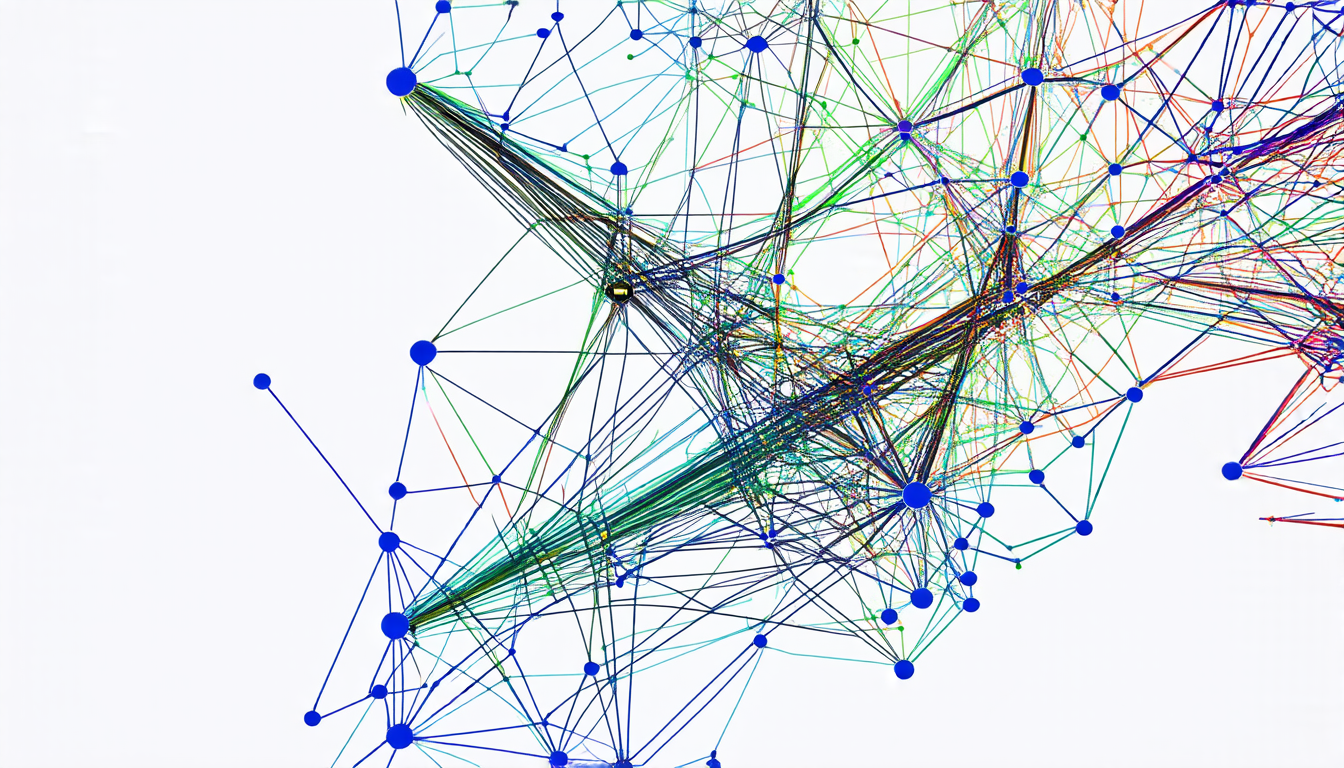
The DiffGraph framework is designed to tackle the challenge of heterogeneous graphs, which are networks consisting of different types of nodes and edges. These graphs are ubiquitous in real-world applications, but traditional machine learning algorithms struggle to effectively analyze and learn from them. The new framework overcomes this limitation by introducing a novel diffusion mechanism that captures the intricate relationships between different node types.
This mechanism is based on a probabilistic model that progressively filters out noise and irrelevant information, allowing the framework to distill essential patterns and relationships within the data. This process enables the framework to learn from multiple sources of data, including both structured and unstructured information.
The DiffGraph framework has been tested on various datasets, including those related to social media networks, recommendation systems, and biological networks. In each case, the framework demonstrated improved performance compared to traditional machine learning algorithms. The results show that the framework is capable of capturing complex relationships between nodes and edges, leading to more accurate predictions and better decision-making.
One of the key advantages of the DiffGraph framework is its ability to adapt to new data and relationships. This flexibility makes it an attractive solution for applications where data is constantly changing or evolving. For example, in healthcare, the framework could be used to analyze patient data from multiple sources, including electronic health records, medical imaging, and genomic information.
The implications of this research are far-reaching, with potential applications in various fields. In finance, the framework could be used to analyze complex financial networks and predict market trends. In e-commerce, it could be used to recommend products based on customer behavior and preferences.
While there are many potential benefits to the DiffGraph framework, there are also some ethical considerations that must be taken into account. For example, the framework’s ability to capture sensitive information about individuals raises concerns about data privacy and security.
Despite these challenges, the DiffGraph framework represents a significant step forward in the field of artificial intelligence. Its ability to learn from complex relationships within heterogeneous graphs has the potential to revolutionize various industries and improve decision-making processes. As researchers continue to develop and refine this technology, it will be exciting to see how it is applied in real-world applications.
Cite this article: “Revolutionizing Artificial Intelligence with the DiffGraph Framework”, The Science Archive, 2025.
Artificial Intelligence, Machine Learning, Graph Framework, Data Analysis, Complex Relationships, Heterogeneous Graphs, Diffusion Mechanism, Probabilistic Model, Decision-Making, Data Privacy





