

Saturday 01 March 2025
For decades, scientists have been fascinated by a peculiar group of materials known as high-temperature superconductors. These substances can conduct electricity with perfect efficiency at temperatures much higher than previously thought possible, opening up possibilities for revolutionary technologies.
One of the most enigmatic members of this group is cuprate, a class of compounds that includes materials like yttrium barium copper oxide (YBCO). Researchers have been studying YBCO and its cousins to better understand their strange properties. A recent paper has shed new light on these mysterious substances, providing insights into what makes them tick.
At the heart of the cuprates’ behavior is a phenomenon called strong electron correlation. This means that the electrons within the material interact with each other in complex ways, influencing their behavior and creating unusual properties. In YBCO, for example, the electrons form pairs known as Cooper pairs, which are responsible for its superconducting abilities.
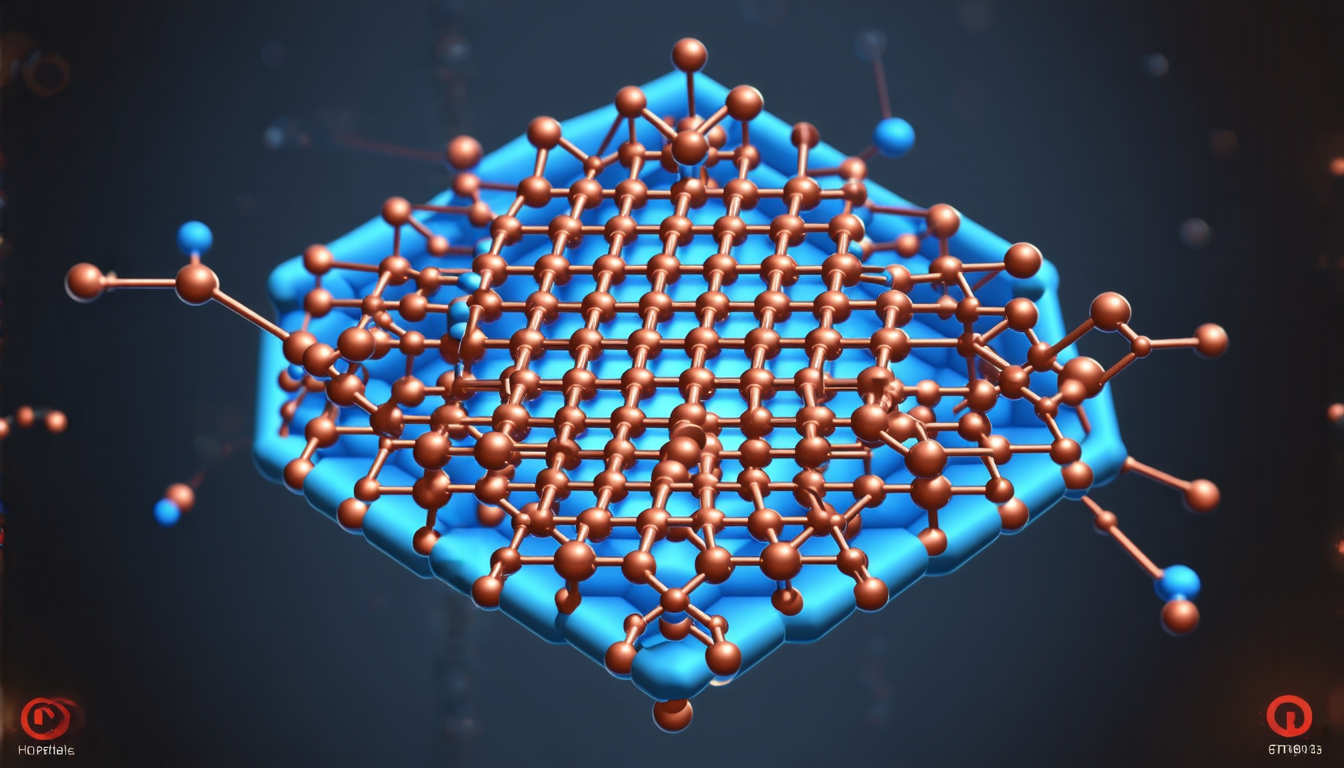
But what exactly triggers this strong correlation? The answer lies in the way the cuprates’ atoms are arranged. In these materials, the copper atoms are surrounded by a lattice of other atoms that create a unique environment for the electrons to move through. This lattice structure is thought to be responsible for the strong electron correlation, but scientists have struggled to fully understand its role.
The recent paper provides new insight into this process by examining the behavior of bosonic fluctuations – tiny oscillations in the material’s energy landscape. These fluctuations are thought to play a key role in the formation of Cooper pairs and the cuprates’ superconducting properties.
Using advanced computational methods, researchers simulated the behavior of YBCO at different temperatures and doping levels (the amount of impurities added to the material). They found that as the temperature dropped, the bosonic fluctuations became more pronounced, indicating a transition from an incoherent to a coherent state.
This finding has significant implications for our understanding of high-temperature superconductors. It suggests that the cuprates’ behavior is not just a result of their unique lattice structure, but also depends on the delicate balance between electron-electron interactions and bosonic fluctuations.
The discovery also opens up new avenues for research, as scientists can now explore ways to manipulate the bosonic fluctuations to enhance the cuprates’ superconducting properties. This could lead to the development of more efficient and practical superconductors for use in technologies such as power transmission lines and medical imaging devices.
Cite this article: “Unraveling the Mysteries of High-Temperature Superconductors”, The Science Archive, 2025.
High-Temperature Superconductors, Cuprates, Yttrium Barium Copper Oxide, Strong Electron Correlation, Cooper Pairs, Bosonic Fluctuations, Lattice Structure, Computational Methods, Doping Levels, Superconducting Properties.





