
Saturday 01 March 2025
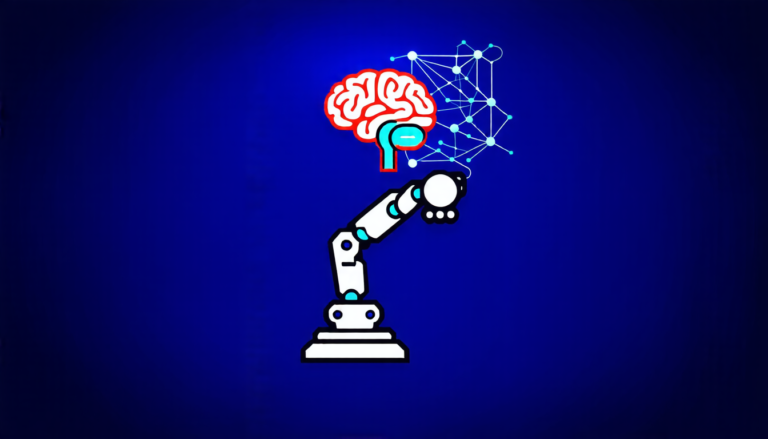
A team of researchers has made a significant breakthrough in understanding how our brains process and store information. By developing a new type of neural network that mimics the way our brains work, they have been able to create a system that can learn and adapt in real-time.
The new network is based on a type of artificial intelligence called a recurrent neural network (RNN). RNNs are designed to process sequential data, such as speech or text, by using feedback loops to connect different layers of the network. This allows them to capture patterns and relationships between different parts of the input data.
In this new system, the researchers have added an additional layer of complexity by incorporating a mechanism that allows individual neurons to learn and adapt independently. This is achieved through a process called asynchronous learning, which allows the neurons to update their weights and biases based on the activity of other neurons in real-time.
The results are impressive. The new network has been able to learn and recognize complex patterns in data with ease, and it has even been able to generalize its knowledge to new situations. This is a major improvement over traditional neural networks, which can struggle to learn and adapt in complex environments.
One of the key advantages of this new system is that it allows for much faster learning and adaptation than traditional RNNs. This is because individual neurons are able to update their weights and biases more quickly, allowing the network as a whole to adjust its behavior more rapidly.
Another advantage is that this system is more robust and resilient than traditional RNNs. Because individual neurons are able to learn and adapt independently, the network is less likely to become stuck in local minima or get trapped in loops of repetitive behavior.
The researchers believe that this new system has many potential applications, including speech recognition, natural language processing, and image classification. They also see it as a major step forward in the development of artificial intelligence, which could one day be used to create machines that are capable of learning and adapting on their own.
In short, this new type of neural network is an exciting development that has the potential to revolutionize the field of artificial intelligence. Its ability to learn and adapt quickly, independently, and robustly makes it a powerful tool for processing complex data in real-time.
Cite this article: “Breakthrough in Artificial Intelligence: A New Type of Neural Network with Independent Learning Capabilities”, The Science Archive, 2025.
Artificial Intelligence, Neural Network, Recurrent Neural Network, Asynchronous Learning, Pattern Recognition, Real-Time Processing, Complex Data, Speech Recognition, Natural Language Processing, Image Classification
Reference: Henrique Reis Aguiar, Matthias H. Hennig, “Asynchronous Hebbian/anti-Hebbian networks” (2025).