

Saturday 01 March 2025
Researchers have made a significant breakthrough in understanding the mysterious world of solid electrolytes, which could lead to the development of more efficient and sustainable batteries for electric vehicles.
Solid electrolytes are materials that can conduct ions, similar to how liquids do, but they remain solid at room temperature. This property makes them ideal for use in rechargeable batteries, as they can help increase their energy density and lifespan.
The key challenge in developing solid electrolytes is understanding the complex dynamics between the ions and the material’s structure. Ions are constantly moving and interacting with each other, which affects the material’s conductivity. Researchers have long struggled to disentangle these interactions, making it difficult to design better-performing materials.
Now, a team of scientists has developed a new approach that combines machine learning and molecular dynamics simulations to study the behavior of ions in solid electrolytes. The method allows them to identify the specific ion movements that dominate conductivity at different temperatures.
The researchers focused on six solid electrolyte compounds, including lithium- and sodium-based materials, which are commonly used in batteries. They found that the dominant ion movement changes depending on the temperature and the material’s composition.
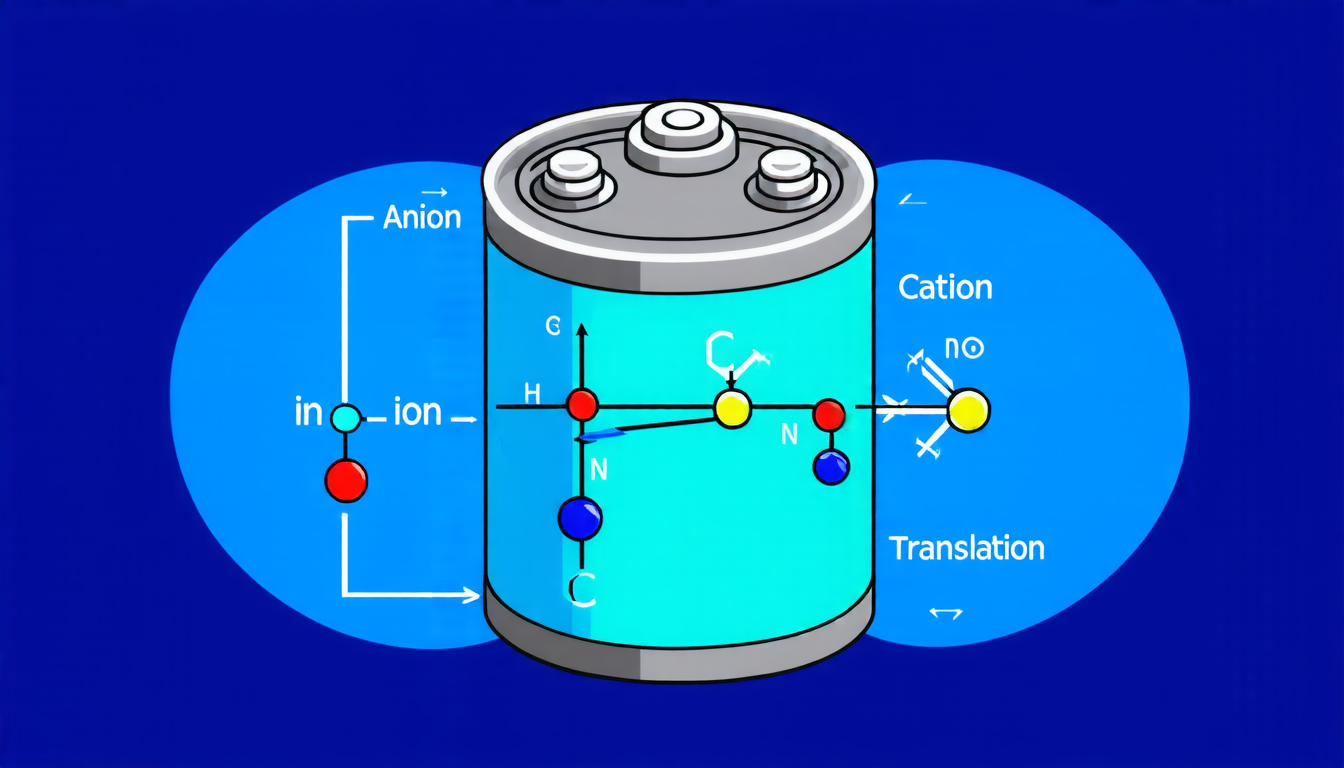
At higher temperatures, anion rotation – the spinning motion of negatively charged ions – becomes more important for conductivity. However, at lower temperatures, cation translation – the movement of positively charged ions along the material’s structure – takes over.
The team also discovered that the vibrations of individual atoms within the material can significantly impact conductivity. These vibrations can either enhance or hinder ion movement, depending on their frequency and amplitude.
These findings have significant implications for the development of better solid electrolytes. By designing materials with specific ion movements in mind, researchers can create more efficient conductors that can operate at a wider range of temperatures.
The next step is to use this new understanding to develop new materials with improved performance. This could involve creating compounds with tailored ion structures or experimenting with different synthesis methods to produce more efficient solid electrolytes.
Ultimately, the goal is to develop batteries that can power electric vehicles for longer distances and reduce their environmental impact. With these new insights, researchers are one step closer to achieving this vision.
The team’s work not only sheds light on the complex dynamics of solid electrolytes but also demonstrates the potential of machine learning and molecular dynamics simulations in materials science research. This approach could be applied to other areas of materials science, leading to breakthroughs in fields such as energy storage and catalysis.
Cite this article: “Unlocking the Secrets of Solid Electrolytes for Efficient Batteries”, The Science Archive, 2025.
Solid Electrolytes, Batteries, Electric Vehicles, Machine Learning, Molecular Dynamics Simulations, Ion Movement, Conductivity, Temperature, Materials Science, Energy Storage.





