

Saturday 01 March 2025
Mathematics is often seen as a dry and abstract field, but a recent paper has shown that even the most fundamental concepts can be explored through both theoretical analysis and computational verification.
Two of the most important theorems in calculus are Rolle’s Theorem and the Mean Value Theorem. While these theorems may seem obscure to those outside the world of mathematics, they have far-reaching implications for fields such as physics, engineering, and economics.
Rolle’s Theorem states that if a continuous function has the same value at two points, then it must have a critical point between them. This theorem is often used to prove more complex results in calculus and has important applications in optimization and physics.
The Mean Value Theorem is similar, but instead of requiring the function to have the same value, it states that a continuous function will always have a point where its rate of change equals the average rate of change over a given interval. This theorem is crucial for understanding how functions behave and has important implications for fields such as engineering and economics.
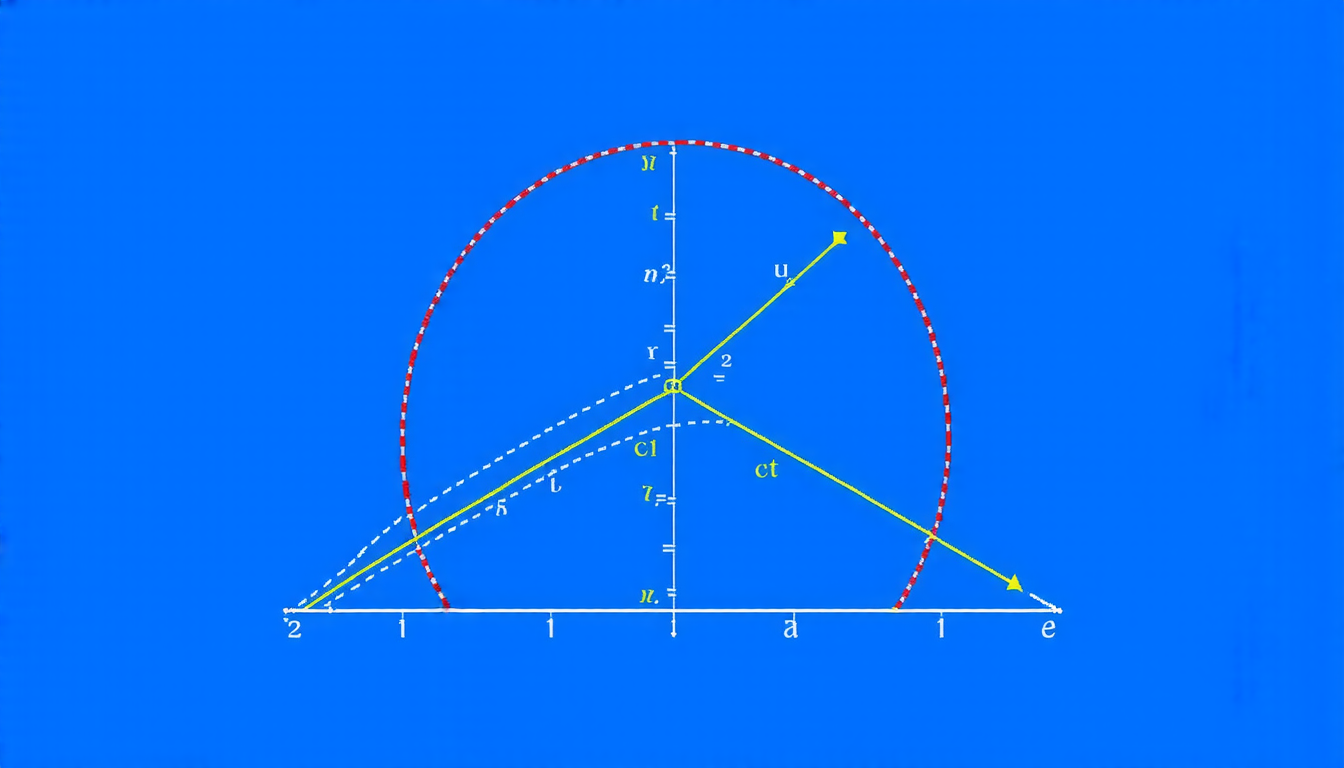
In this paper, the authors explored both Rolle’s Theorem and the Mean Value Theorem using a combination of theoretical analysis and computational verification. They presented the formal statements and proofs of the theorems, highlighting the mathematical rigor necessary for understanding them. Additionally, they discussed the geometric interpretation of both theorems, emphasizing their importance in understanding properties of differentiable functions.
The authors also developed a pseudocode algorithm to verify the Mean Value Theorem computationally. This algorithm uses the bisection method to locate the point where the derivative of the function equals the average rate of change over the given interval. This provides an efficient solution for numerically finding the point c that satisfies the condition of the theorem, when an analytical solution is not possible.
To illustrate the power of these theorems, the authors presented three examples: a simple parabolic function, a trigonometric function, and a more complex function with multiple critical points. In each case, they used the theorems to find the critical points or points where the rate of change equals the average rate of change.
The paper shows that even fundamental concepts in calculus can be explored through both theoretical analysis and computational verification. By using a combination of mathematical rigor and computational power, mathematicians can gain a deeper understanding of these important theorems and their implications for real-world applications.
The authors’ approach highlights the importance of interdisciplinary collaboration between mathematicians and computer scientists.
Cite this article: “Unlocking Fundamental Concepts in Calculus: A Theoretical and Computational Exploration”, The Science Archive, 2025.
Calculus, Theorems, Rolle’S, Mean Value, Computational Verification, Theoretical Analysis, Optimization, Physics, Engineering, Economics





