

Sunday 02 March 2025
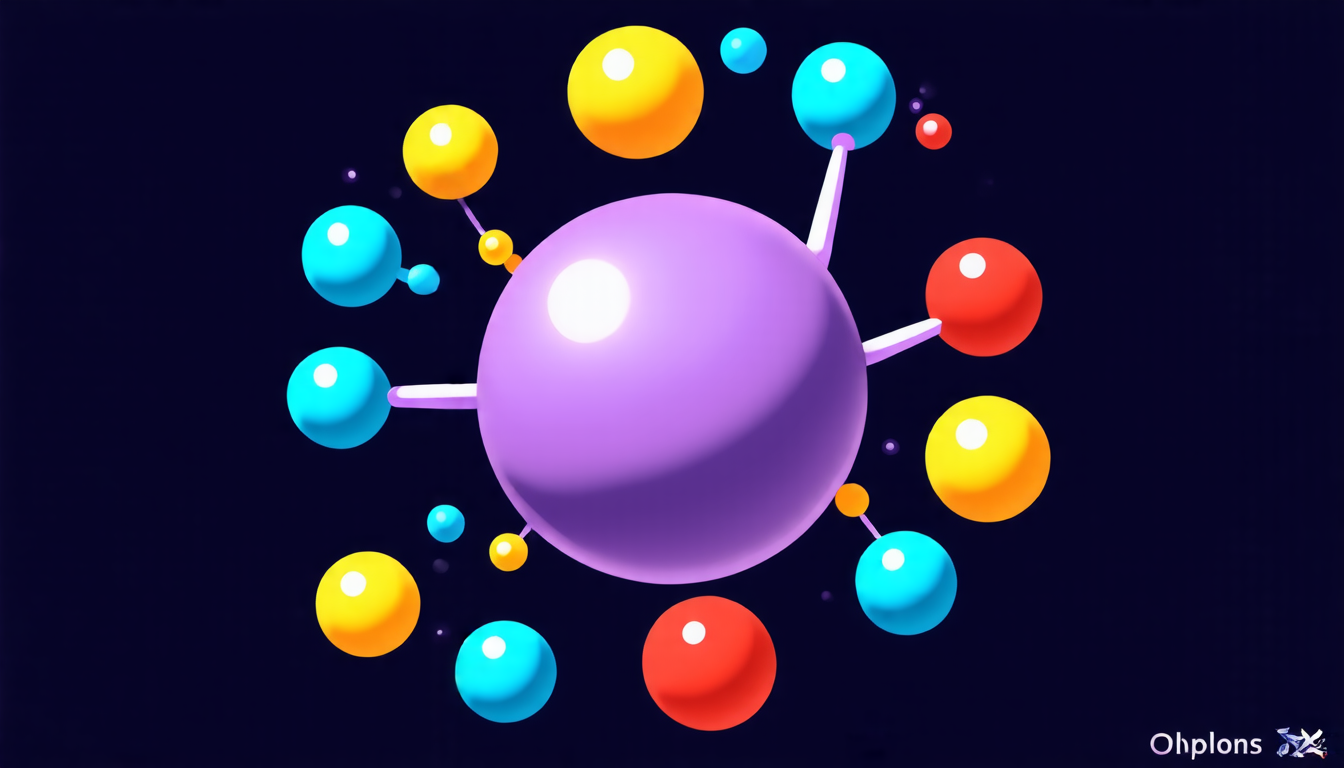
Physicists have long been fascinated by the mysteries of the universe, from the behavior of subatomic particles to the origins of dark matter. One area that has garnered significant attention in recent years is the study of gluons, tiny particles that play a crucial role in holding quarks together inside protons and neutrons.
In a new paper published this week, researchers have shed light on a long-standing puzzle surrounding gluons: their behavior at extremely low energies. This discovery could have significant implications for our understanding of the strong nuclear force, which is responsible for binding quarks together into protons and neutrons.
To understand why this study is important, it’s necessary to delve into the basics of particle physics. Gluons are one type of subatomic particle known as gauge bosons, which carry the fundamental forces of nature between particles. In the case of the strong nuclear force, gluons are responsible for binding quarks together inside protons and neutrons.
However, at extremely low energies – essentially, when the energies involved are much lower than those typically found in high-energy particle collisions – the behavior of gluons becomes unclear. This is because our current understanding of quantum field theory, which describes the behavior of particles like gluons, breaks down at these very low energies.
This has led to a long-standing puzzle: how do gluons behave when they’re not interacting with other particles at high energies? Researchers have been stumped by this question for decades, as our current models are unable to accurately predict the behavior of gluons in these situations.
The new study tackles this problem head-on by developing a new theoretical framework that takes into account the behavior of gluons at extremely low energies. By using a combination of analytical and numerical methods, researchers were able to develop a model that accurately describes the behavior of gluons in these situations.
The implications of this discovery are significant. By understanding how gluons behave at very low energies, physicists can gain new insights into the strong nuclear force and the behavior of quarks inside protons and neutrons. This could potentially lead to a deeper understanding of the fundamental forces of nature and the structure of matter itself.
Furthermore, this study highlights the importance of continued research into particle physics. By pushing the boundaries of our current understanding of the universe, physicists can uncover new secrets about the behavior of particles like gluons, which in turn can shed light on some of the most profound mysteries of the universe.
Cite this article: “Unlocking the Secrets of Gluons at Extremely Low Energies”, The Science Archive, 2025.
Gluons, Particle Physics, Strong Nuclear Force, Quarks, Protons, Neutrons, Quantum Field Theory, Subatomic Particles, Gauge Bosons, Fundamental Forces Of Nature.





