

Sunday 02 March 2025
Deep learning algorithms have long been touted as a solution to complex problems, but they often struggle when faced with novel situations or subtle variations in data. This limitation can be attributed to their reliance on meta-representations – high-level abstractions that capture the underlying structure of the problem.
Researchers have proposed various methods to overcome this issue, including the use of meta-learning and mutual learning. The former involves training a model on multiple tasks and then using it to learn new ones, while the latter involves training two models together to encourage them to converge to a common solution.
In a recent study, scientists have taken a different approach by combining these two methods in a single algorithm. They call this approach deep mutual learning (DML), and it has shown promising results in a variety of environments.
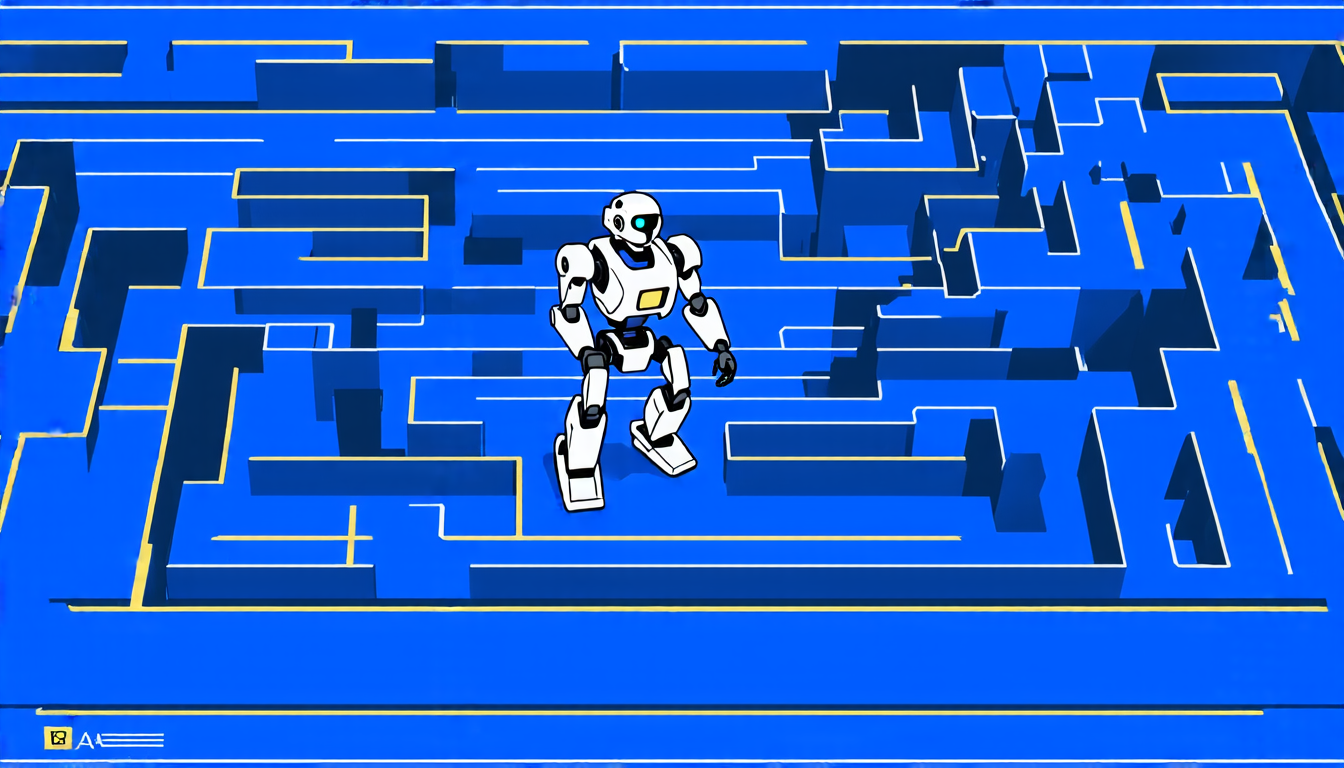
The researchers trained two agents using DML on a series of challenging tasks, including navigating mazes and avoiding obstacles. The agents were able to learn the underlying structure of each task quickly and accurately, and they were able to generalize their knowledge to new situations with ease.
One of the key benefits of DML is its ability to encourage mutual learning between the two agents. This means that if one agent learns something new, it can share this information with the other agent, which can then use it to improve its own performance.
This approach has several advantages over traditional meta-learning and mutual learning methods. For example, DML does not require a large number of tasks or data points, making it more suitable for real-world applications where data is limited.
In addition, DML can be used in a variety of domains, including robotics and healthcare. For instance, robots could use DML to learn how to navigate complex environments and avoid obstacles, while medical professionals could use it to develop new treatments for diseases.
The researchers believe that DML has the potential to revolutionize many fields by enabling agents to learn from each other and adapt to novel situations more effectively. They are now working on applying this approach to a range of real-world problems, including robotics and healthcare.
Overall, the study provides an exciting glimpse into the future of artificial intelligence, where machines can learn from each other and adapt to new situations with ease.
Cite this article: “Deep Mutual Learning: A New Approach to Artificial Intelligence”, The Science Archive, 2025.
Deep Learning, Meta-Representations, Meta-Learning, Mutual Learning, Deep Mutual Learning, Artificial Intelligence, Machine Learning, Robotics, Healthcare, Navigation





